For commercial store owners, boutique managers, and shopping center operators across Greater Houston and Texas, the fourth quarter (Q4) represents both the highest revenue window of the year and the period of greatest operational vulnerability. From Black Friday doorbusters through post-holiday returns in January, retail foot traffic surges, stockrooms overflow with high-dollar merchandise, and chaotic sales floors create prime opportunities for external theft syndicates, opportunistic shoplifters, and crowd crush accidents.
Retail shrink is widely reported to rise during the holiday season, when seasonal staff turnover, distracted cashiers, packed fitting rooms, and long checkout queues degrade natural store surveillance. Beyond merchandise loss, unchecked holiday crowds introduce severe premises liability hazards, including stampedes, doorway bottlenecks, and parking lot assaults that can expose property owners to costly legal claims under Texas law.
Surviving peak shopping periods requires moving from ad-hoc crisis response to a structured holiday retail security plan. An effective seasonal plan balances crowd dynamics, stockroom inventory protection, access control, and visible security guard deterrence. This operational guide details the exact protocols retail operators must deploy to protect revenue, customers, and staff during high-volume holiday sales.
Phase 1: Holiday Retail Risk Multipliers: What Changes in Q4
Peak shopping seasons introduce four compounding risk factors that dismantle standard retail store defenses:
| Operational Stressor | Holiday Impact on Store Floor | Required Security Mitigation |
|---|---|---|
| Extreme Foot Traffic Spikes | Customer counts can multiply several times over, overwhelming sales associates and blinding checkout sightlines. | Station dedicated entrance officers to manage ingress and maintain a calm, structured customer flow. |
| Temporary & Seasonal Staffing | Inexperienced cashiers are unfamiliar with loss prevention policies, return fraud, or booster bags. | Pair seasonal workers with veteran managers; enforce mandatory manager approval for overrides and refunds. |
| Stockroom Inventory Saturation | Backrooms and receiving bays are stacked to ceilings, blocking emergency fire exits and inviting internal theft. | Enforce strict dual-custody receiving, keep emergency fire corridors clear, and lock rear delivery exits. |
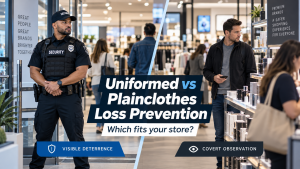
| Aggressive Retail Theft Crews | Organized retail crime syndicates exploit crowds to conduct bulk shelf sweeps and push-out thefts. | Deploy uniformed security officers to anchor high-value display corridors and deter commercial boosters. |
For retailers dealing with targeted syndicates exploiting peak holiday crowds, review legal and floor countermeasures in our guide on how store owners can combat organized retail crime.
Phase 2: Pre-Season Preparation Timeline (October through November)
An effective holiday security plan begins well before holiday shoppers arrive. Successful store operators execute this phased rollout:
1. Conduct a Physical CPTED Store Audit (October)
Evaluate sales floor sightlines before extra display tables and promotional pallet towers arrive. Verify that central shelving remains at or below 54 inches, test all Electronic Article Surveillance (EAS) exit pedestals, replace defective CCTV camera domes, and ensure eye-level Public View Monitors (PVMs) are fully operational; explore layout hardening in our manual on how to reduce retail shrinkage.
2. Lock in Contracted Security Staffing Early (Mid-October)
Licensed, professional security guards are in high demand throughout November and December. Commercial store operators who wait until mid-November often find qualified security companies fully booked. Contract your holiday guard coverage by mid-October to secure vetted, Texas DPS-licensed personnel with customer-facing experience.
3. Train Seasonal Associates on “Observe and Report” Rules (Early November)
Train temporary holiday hires on store asset protection standards. Train them to recognize distraction teams, booster bags, and fraudulent receipts, and firmly instruct them never to chase shoplifters into parking lots or physically grab suspects. Emphasize that retail staff observe and notify security, while licensed security officers handle customer stops under Texas shopkeeper statutes; see statutory parameters in our reference on Texas shoplifting laws and security guard authority.
Phase 3: Front-of-House Crowd Control & Queue Management
Crowd density creates friction, slip-and-fall hazards, customer confrontations, and easy cover for shoplifters. Active line and entry management keeps the sales floor controlled:
1. Metered Ingress at Entry Vestibules
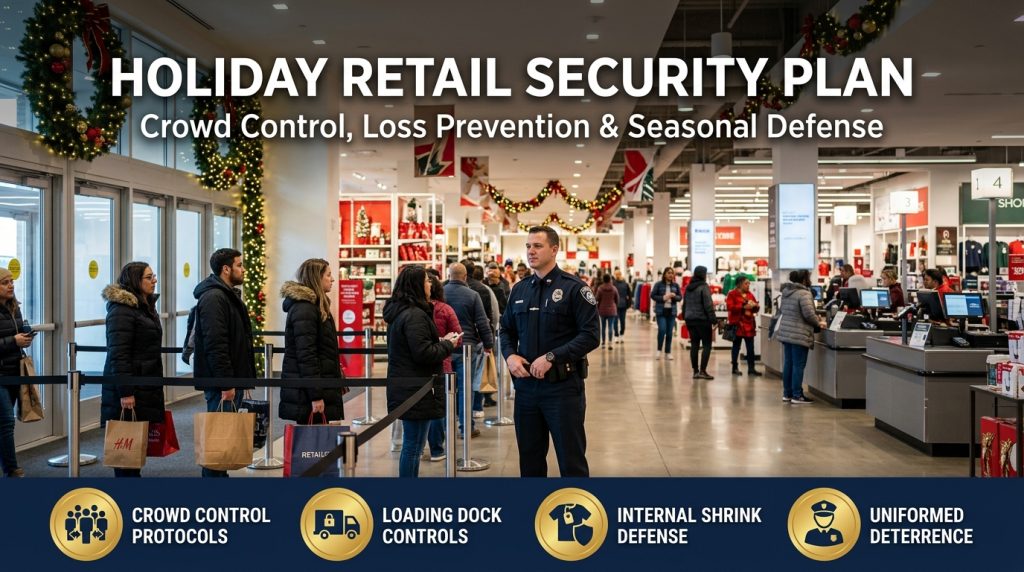
During Black Friday and major sales surges, implement a “one-in, one-out” metered entry system managed by a uniformed security guard. This prevents sales floor overcrowding and maintains clear emergency egress routes.
2. Stanchion Queue Architecture
Guide high-volume checkout lines through retractable belt stanchions in a structured serpentine pattern. This prevents queue-jumping disputes, keeps main aisles clear for foot traffic, and improves cashier line-of-sight.
3. High-Value Merchandise Checkpoints
Keep premium electronics, designer fragrance gift sets, and luxury jewelry behind locked acrylic display counters. Require customer purchases of high-theft items to be completed directly at that counter or escorted to checkout.
4. De-Escalating Customer Tensions
Holiday stress, long lines, and out-of-stock items spark aggressive verbal confrontations. Uniformed guards trained in verbal de-escalation quickly calm disputes before they trigger physical altercations.
When customer arguments flare over product availability or checkout delays, utilize proven communication tactics detailed in our guide on de-escalation techniques for retail security officers.
Phase 4: Backroom, Loading Dock, and Return Fraud Defenses
While the sales floor attracts public attention, holiday profit leakage often peaks behind closed doors:
1. High-Volume Loading Dock Receiving Protocols
Holiday freight intake increases delivery truck volume tenfold. Commercial facilities must enforce a strict dual-custody receiving policy: two employees must verify pallet piece counts before signing bills of lading. Keep rear delivery roll-up doors closed and locked whenever a delivery truck is not actively unloading to prevent walk-in thefts from rear alleys.
2. Post-Holiday Return & Exchange Fraud Controls
Late December and January bring an influx of return fraud, including returning stolen floor items for cash, presenting counterfeit receipts, and “wardrobing” (wearing holiday apparel once and returning it). Mandate photo ID verification for all non-receipt returns, require manager sign-offs on refunds over $50, and establish a dedicated return desk near the entrance under direct CCTV surveillance.
3. Scheduled Employee Exit Inspections
Internal employee theft spikes during the holidays due to high-value inventory and temporary staff turnover. Establish a clear, non-discriminatory bag inspection checkpoint at the employee exit. All staff backpacks, coats, and packages must be visually inspected by a manager or security guard before exiting the building.
Phase 5: Exterior Parking Lot & Lighting Security
Holiday shoppers carrying expensive gift bags and leaving wrapped packages in unattended vehicles make commercial parking lots prime targets for burglary rings:
1. Mitigating Vehicle Break-Ins and “Juggings”
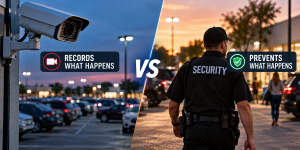
Criminals monitor shopping center lots for customers loading electronics or jewelry into vehicle trunks, then break into the vehicle once the customer walks away. Roving mobile security patrols provide visible, continuous deterrence across surface parking rows; review tactical lot countermeasures in our report on how to stop car break-ins in commercial parking lots.
2. Preventing Catalytic Converter Thefts on High-Dwell Vehicles
Shoppers and retail staff park for extended hours during holiday shifts, leaving work trucks and SUVs vulnerable to converter theft syndicates. Learn how to protect employee and customer vehicles in our guide on catalytic converter theft prevention in commercial parking facilities.
3. Protecting Property Owners Against Premises Liability
Under Texas premises liability law, commercial property managers have a duty to use reasonable care to protect shoppers from foreseeable criminal acts. Inadequate parking lot lighting or a lack of visible security during peak holiday crime seasons can lead to costly negligent security lawsuits; review liability standards in our legal analysis of parking lot crime liability for property owners.
For strip malls and open shopping plazas deciding how to balance exterior and interior guard coverage, compare operational benefits in foot patrol vs mobile vehicle patrol for large commercial lots.
Partner with God’s Armour Security for Holiday Retail Defense
Protecting your retail business through high-volume holiday sales requires experienced, disciplined security personnel who can manage heavy crowds while deterring organized theft rings. God’s Armour Security provides Texas DPS-licensed uniformed security officers, loss prevention specialists, and marked mobile vehicle patrols for retail centers, department stores, and shopping plazas across Greater Houston, Harris County, and statewide Texas.
Our supervisory leadership collaborates directly with store managers and asset protection directors to design custom holiday security schedules, manage Black Friday crowd surges, safeguard loading docks, and maintain a calm, secure shopping atmosphere. Explore our retail security services in Houston and our broader commercial property security.
Ready to secure your store before the holiday shopping rush begins? Request a seasonal retail security consultation and crowd assessment or call our Houston command operations desk directly at (713) 878-9984.
Frequently Asked Questions
When should commercial retailers begin planning holiday retail security?
Retail store operators should begin holiday security planning in early October. This timeline allows businesses to conduct physical CPTED store audits, test EAS electronic tag systems, contract licensed security guard vendors before seasonal availability sells out, and train incoming seasonal employees on loss prevention rules.
How does a retail store manage large Black Friday crowds safely?
Managing holiday crowd surges requires physical queue stanchions, designated entry and exit doors, and a metered “one-in, one-out” entry policy managed by uniformed security officers. Keeping exterior walkways well-lit and deploying visible guards prevents doorway crushing and de-escalates customer disputes.
How do retail stores reduce internal theft during the holidays?
Preventing internal employee theft during Q4 requires dual-custody piece counting on incoming supplier shipments at the loading dock, manager approval on cash refunds and price overrides, locked stockroom doors, and consistent employee bag checks at shift conclusion.
Why are parking lots more dangerous during the holiday shopping season?
Holiday parking lots experience high turnover, congested traffic, and vehicles left unattended for hours filled with purchased merchandise. Thieves target these vehicles for smash-and-grab break-ins and catalytic converter theft. Marked mobile vehicle patrols and high-output LED lighting provide the visible deterrence needed to prevent lot crime.
Key Takeaways
- Holiday retail shrinkage spikes due to extreme foot traffic, seasonal staff turnover, stockroom inventory saturation, and aggressive ORC syndicates.
- Lock in contracted Texas DPS-licensed security guard staffing by mid-October to ensure adequate holiday coverage.
- Deploy metered ingress and serpentine stanchion queues to eliminate doorway bottlenecks, manage crowd density, and prevent theft sweeps.
- Harden backrooms with dual-custody loading dock intake counts, locked rear delivery doors, and structured employee exit bag checks.
- Combine on-site entrance guards with marked mobile parking lot patrols to protect shoppers and insulate property owners from Texas premises liability claims.