
For commercial property managers, business park operators, and fleet administrators across Greater Houston and Texas, catalytic converter theft remains one of the fastest and most expensive property crimes. Armed with cordless reciprocating saws, organized theft crews can slide under a high-clearance truck or SUV, sever the exhaust pipe at both ends, and escape with the precious-metal converter in less than ninety seconds.
When multiple converters are stolen overnight from a corporate lot, hospital employee deck, or commercial logistics yard, the fallout extends far beyond repair invoices. Exhaust replacement costs routinely range from $1,500 to over $4,000 per vehicle, compounded by supply-chain lead times, rental car expenses, disrupted business operations, and frustrated tenants. If a property experiences repeated thefts without management taking action, property owners can also face costly negligent security claims under Texas premises liability law.
Stopping organized exhaust theft rings requires moving past passive signage. Effective catalytic converter theft prevention demands an integrated security strategy combining target-hardening CPTED landscaping, perimeter access control, optical camera positioning, and randomized mobile security patrols. This operational guide outlines proven defenses to protect commercial parking facilities from converter theft crews.
Phase 1: Why Commercial Facilities Are Prime Targets
Theft rings target commercial parking lots because they provide concentrated clusters of vulnerable vehicles with minimal natural surveillance. Thieves evaluate commercial properties based on four primary risk vectors:
| Vulnerability Factor | How Theft Crews Exploit It | Operational Countermeasure |
|---|---|---|
| High-Ground-Clearance Vehicles | Pickup trucks (Ford F-Series, Chevy Silverado) and work vans require no hydraulic jack to access the exhaust. | Park high-clearance trucks and fleet vans in high-visibility central corridors directly under high-lumen lighting and camera focus. |
| Long Dwell Times | Hospital shift workers, airport shuttles, and corporate fleet vehicles sit undisturbed for 8 to 24 hours. | Conduct randomized mobile vehicle patrol sweeps during late-night and pre-dawn hours to interrupt reconnaissance. |
| Perimeter Blind Spots & Shrubbery | Dense bushes, unlit corners, and solid retention walls mask lookouts and muffle the sound of saw blades. | Enforce CPTED 3-7 landscaping rules; prune shrubbery below 3 feet and elevate tree canopies above 7 feet. |
| Multiple Unmonitored Exits | Open surface curb cuts let getaway vehicles enter, cut several converters, and flee onto highways in minutes. | Channelize lot ingress through physical gates, automated barrier arms, and license-plate capture choke points. |
To understand the legal ramifications of recurring lot burglaries under Texas law, review our analysis of parking lot crime liability for property owners.
Phase 2: High-Risk Vehicles and Scrap Metal Valuation
Catalytic converters contain three rare precious metals: platinum, palladium, and rhodium. Because of their chemical composition, certain vehicle classes attract significantly more attention from organized crews:
- Commercial Fleet Trucks & Work Vans: Ford F-250/F-350 trucks, Ford E-Series vans, and Chevrolet Express vans are frequent targets because thieves can slide underneath without jacking up the vehicle, often targeting multiple work trucks parked side by side.
- Hybrid Vehicles: The Toyota Prius and other hybrid models feature combustion engines that run less frequently, leaving the catalytic converter cleaner and the precious metals less degraded, making them valuable to black-market scrap dealers.
- Large Passenger SUVs: Toyota Tundra, Sequoia, and Tacoma models often feature dual catalytic converters with high precious-metal yields, doubling the payout for thieves in a single operation.
In response to widespread converter theft syndicates across Houston and the state, Texas passed Senate Bill 224 (the Deputy Darren Almendarez Act). This statute criminalizes the unauthorized possession of unattached catalytic converters as a felony offense and increases penalties for organized theft rings. However, while legal statutes assist prosecutors post-arrest, they do not physically prevent a crew from targeting your lot tonight.
Phase 3: Physical & Architectural Defenses (CPTED)
Crime Prevention Through Environmental Design (CPTED) creates an uninviting, high-risk operating environment for converter thieves:
1. Low-Bumper Defensive Parking
Fleet managers should park high-clearance trucks tightly against building walls, perimeter fences, or low-riding passenger sedans to physically restrict crawl space beneath exhaust systems.
2. High-Lumen 5000K LED Upgrades
Thieves avoid well-lit lots where their legs protruding from under vehicles are instantly visible. Maintain 1.0 to 2.5 maintained foot-candles across general stalls, targeting up to 5.0 in high-activity bays.
3. Acoustic Sensor Integration
Battery-powered reciprocating saws emit a distinct high-frequency metallic screech. Modern commercial lots utilize acoustic audio sensors that detect saw blades and trigger immediate dispatch.
4. VIN Etching and Protective Shields
Encourage tenants and fleet operators to weld stainless steel rebar cages or plate shields over exhaust systems and engrave vehicle identification numbers directly onto converter casings.
For facility directors managing multi-level garages, explore lighting and mirror layout techniques in our technical guide on parking garage security and eliminating blind spots.
Phase 4: Why Cameras Alone Cannot Stop Catalytic Converter Crews
Many property managers believe installing high-resolution surveillance cameras solves vehicle theft. In reality, relying exclusively on cameras leaves commercial parking facilities exposed:
1. The 90-Second Speed Advantage
Experienced converter crews operate with NASCAR pit-crew efficiency. From the moment their vehicle pulls alongside a target truck to the final cut takes under ninety seconds. By the time an off-site monitoring service notices an alert or police dispatch is phoned, the thieves have already left the property.
2. Concealment and Cloned Plates
Theft crews routinely wear hoodies, face masks, and dark clothing, using stolen vehicles or cloned paper temporary tags. Standard CCTV footage provides forensic documentation of a crime, but it rarely produces actionable identification or prevents the initial property damage.
3. The Physical Interdiction Factor
Crews know static cameras cannot physically stop them. What forces a theft ring to abort is the sudden, unpredictable appearance of a marked patrol vehicle with active amber light bars and an armed, uniformed security officer. Evaluate operational patrol models in our comparative analysis of foot patrol vs mobile vehicle patrol for large commercial lots.
Phase 5: Tactical Patrol Protocols for Commercial Lots
To neutralize organized exhaust theft syndicates, licensed patrol companies execute targeted interdiction protocols:
1. Unpredictable Staggered Loops and Stand-and-Hold Sweeps
Theft rings place lookouts at commercial lot entrances. If security officers follow a predictable hourly drive-through schedule, thieves time their arrival between sweeps. Professional mobile patrols utilize randomized routes, varying intervals between 20 and 45 minutes, and conduct stationary “stand-and-hold” positions with exterior headlights trained on high-risk truck rows.
2. 360-Degree Alley Light & Undercarriage Sweeps
Patrol cruisers equipped with high-intensity LED alley spotlights sweep beneath parked commercial vehicles. Spotlights illuminate shadows beneath chassis rails, exposing individuals crouched on the pavement before they can begin cutting exhaust pipes; see adjacent vehicle tactics in our guide on how to stop car break-ins in commercial parking lots.
3. License Plate Verification and Loiterer Ejection
Security officers actively challenge idling, occupied vehicles parked in commercial lots during non-business hours. Verifying driver credentials, logging plate numbers, and issuing formal criminal trespass warnings eliminates the lookout vehicles that theft syndicates rely on to coordinate operations.
Partner with God’s Armour Security for Commercial Lot Defense
Protecting commercial parking lots and corporate vehicle fleets against catalytic converter theft requires visible, proactive physical deterrence. God’s Armour Security provides marked mobile vehicle patrols, foot patrol officers, and Texas-licensed armed security guards tailored for commercial shopping centers, industrial logistics yards, and medical decks across Greater Houston, Harris County, and statewide Texas.
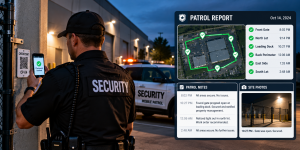
Our supervisory leadership works directly with commercial facility managers to assess property vulnerabilities, deploy GPS-tracked mobile patrol sweeps, eliminate dark blind spots, and protect your tenants from costly vehicle downtime. Explore our specialized commercial vehicle and parking lot patrol services in Houston and commercial property security services.
Ready to harden your parking facility against vehicle theft crews? Request a commercial parking lot security audit or call our Houston command center directly at (713) 878-9984.
Frequently Asked Questions
Why are catalytic converters stolen so frequently from commercial parking lots?
Catalytic converters contain valuable precious metals like platinum, palladium, and rhodium that scrap dealers buy for hundreds of dollars. Commercial parking lots provide dense rows of high-clearance pickup trucks and work vans that sit unattended for long periods, allowing thieves to cut exhaust pipes in under two minutes.
What makes pickup trucks and commercial fleet vans vulnerable to exhaust theft?
High-ground-clearance vehicles such as Ford F-Series, Chevy Silverados, and commercial cargo vans allow thieves to slide directly underneath without using a hydraulic jack. This significantly reduces the time and noise required to cut the converter compared to low-clearance sedans.
What is Texas Senate Bill 224 regarding catalytic converter theft?
Texas Senate Bill 224 (the Deputy Darren Almendarez Act) makes the unauthorized possession, purchase, or sale of a catalytic converter removed from a vehicle a state jail felony. It increases criminal penalties for organized theft rings and requires strict documentation from scrap metal recyclers.
Do surveillance cameras prevent catalytic converter theft?
Rarely on their own. Because converter theft takes less than ninety seconds and thieves conceal their faces and use fraudulent license plates, cameras usually only record the loss. Active, randomized mobile security patrols are required to physically disrupt theft crews before cuts can be made.
Key Takeaways
- Catalytic converter theft takes under 90 seconds, targeting high-clearance pickup trucks, commercial fleet vans, and hybrid vehicles.
- Texas Senate Bill 224 categorizes unattached converter theft and possession as a felony, but physical on-site deterrence remains necessary.
- Apply CPTED design: upgrade to 5000K LED lighting, trim perimeter foliage under the 3-7 rule, and park high-clearance trucks in high-visibility central bays.
- Surveillance cameras provide forensic evidence, but visible marked mobile patrols provide the active physical presence needed to stop theft crews.
- Deploying GPS-tracked security patrols creates a documented record of reasonable care, helping protect Texas property owners from premises liability claims.