
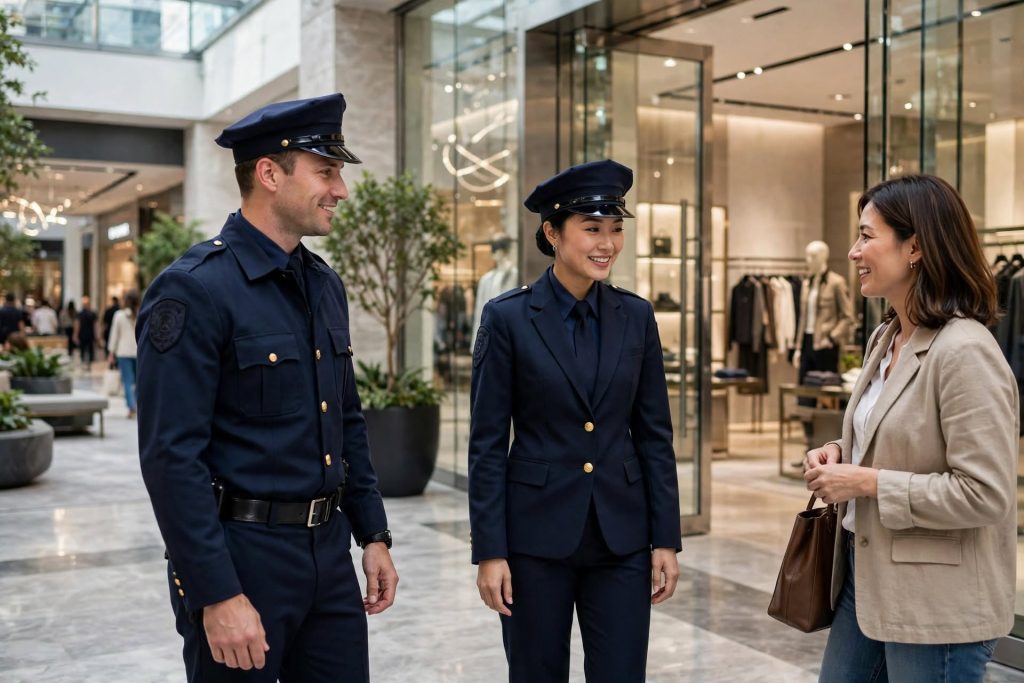
Retail shrink costs the industry over one hundred billion dollars a year, and the National Retail Federation reports that theft and organized retail crime keep climbing while incidents turn more violent. For a store, that is not an abstract figure. It is the margin on products that leave without being paid for, the staff who no longer feel safe, and the shoppers who stop coming when a location feels unsafe.
God’s Armour Security provides retail security guard services across Houston, from big-box stores and shopping centers to grocery, boutiques, and strip plazas. Our officers are licensed through the State of Texas, insured, and bonded, and they are trained for retail specifically: deterring theft at the door, reading the floor, supporting loss prevention, and handling a confrontation without turning the store into a scene.
Each retail format has its own theft pattern, its own traffic, and its own weak point. We staff for the store, not a generic post.
High-traffic floors with many exits, self-checkout, and high-value aisles that organized theft crews target.
Shared common areas, multiple tenants, and parking that need patrol and a coordinated security presence.
Self-checkout shrink, pharmacy and high-theft aisles, and long hours that stretch into the late night.
Smaller teams and high-value inventory where a single grab-and-run is a serious loss.
Multi-store plazas with shared lots, loading areas, and after-hours exposure across several tenants.
Outlet centers and mixed-use developments where retail, dining, and foot traffic all meet in one space.
Retail loss has specific sources. These are the ones that drive how we staff and where officers focus on your floor.
The day-to-day loss, from opportunistic grabs to concealment at self-checkout, worst during peak and understaffed hours.
Coordinated crews that hit a store in minutes and resell the haul, the fastest-growing and most violent retail threat.
Shrink from the inside, through the register, the stockroom, and the back door, often the largest single source of loss.
Deliveries, returns, and the back door, where product and access are easiest to lose without a presence.
Loitering at entrances, disputes at the register, and confrontations that staff should never have to handle alone.
The rare but serious event, where a trained officer and a clear emergency plan protect staff and shoppers.
Retail security is deterrence plus response plus documentation. Our officers cover the floor, the exits, and the back of house.
A visible presence at the entrance and on the floor that deters theft before it starts and reassures shoppers.
Officers who read behavior, work with your LP team and store policy, and support apprehensions the right way.
Discreet floor coverage for high-theft departments where a covert presence catches what a uniform cannot.
Patrol of common areas, storefronts, loading docks, and parking across a plaza or multi-tenant center.
Control of stockrooms, back entrances, and loading docks, where internal theft and delivery loss happen.
Clear, documented incident and activity reports for management, insurers, and police, every shift.
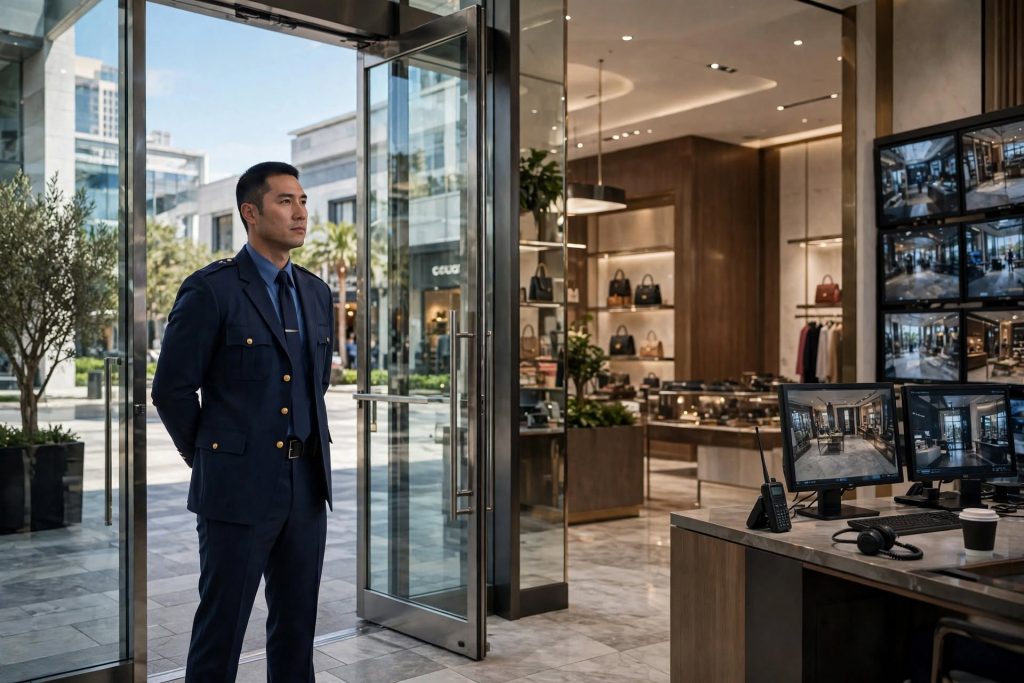
A uniformed officer at the door is the strongest everyday deterrent in retail. Most casual theft never happens when there is an officer in sight, and shoppers feel safer for the same reason. But a uniform also tells an organized crew exactly where the security is, and some loss needs an officer the thief does not see coming.
That is why the right plan often uses both. A uniformed presence at the entrance and on the floor to deter, and plainclothes observation in high-theft departments to catch concealment and organized activity in the act. We set the mix to your store, your shrink pattern, and your loss prevention policy.
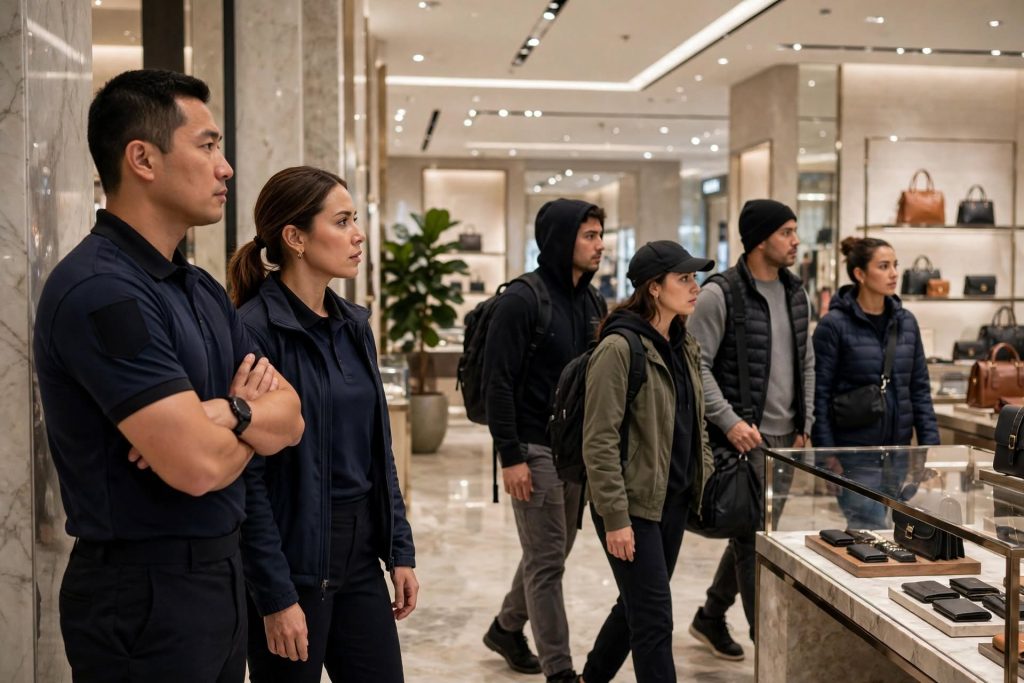
Organized retail crime is the fastest-growing loss in the industry, and it does not look like ordinary shoplifting. A crew enters together, overwhelms a department, clears high-value product into bags in under a minute, and is gone before staff can react, often leaving a frightened team behind. The goods are resold online, and the same crews hit store after store.
The counter to it is presence and readiness. A visible officer at the entrance breaks the plan before it starts, and a trained response, hold the floor, protect staff and shoppers, document, and work with Houston police, keeps a hit from becoming a dangerous event. We build that readiness into the post orders, not leave it to the moment.
Retailers focus on the shoplifter, but internal theft is frequently the single largest source of shrink. It moves through the register, the stockroom, the return desk, and the back door, and it is harder to spot because it comes from people who are supposed to be there. Left alone, it quietly outpaces everything on the sales floor.
An officer changes the math. A presence at the back entrances and loading dock, control over who moves product in and out, and support for your register and return policy all remove the easy opportunity. Paired with clear documentation, it both deters internal theft and gives management what it needs to act on a problem.
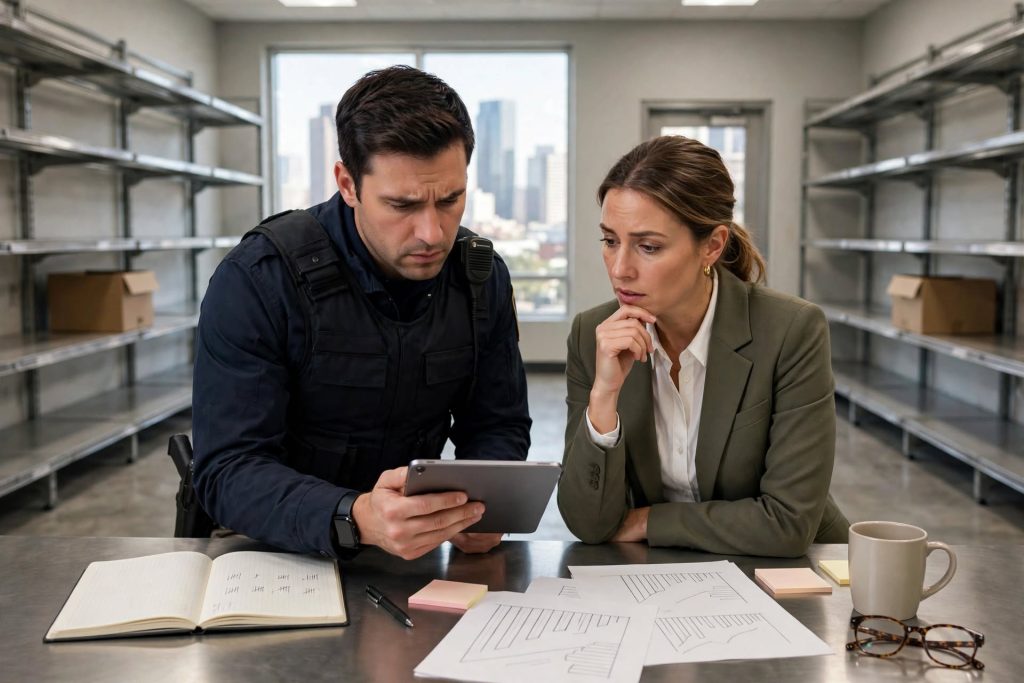
A single boutique does not need what a big-box floor needs, and the holidays are not a normal week. The right model follows the store and the calendar.
A fixed officer on the floor and at the entrance through trading hours, for stores with steady theft pressure.
Patrol of common areas, storefronts, loading docks, and parking across a plaza or multi-tenant center.
Added coverage for holiday traffic, sales events, and the hours when theft pressure is highest.
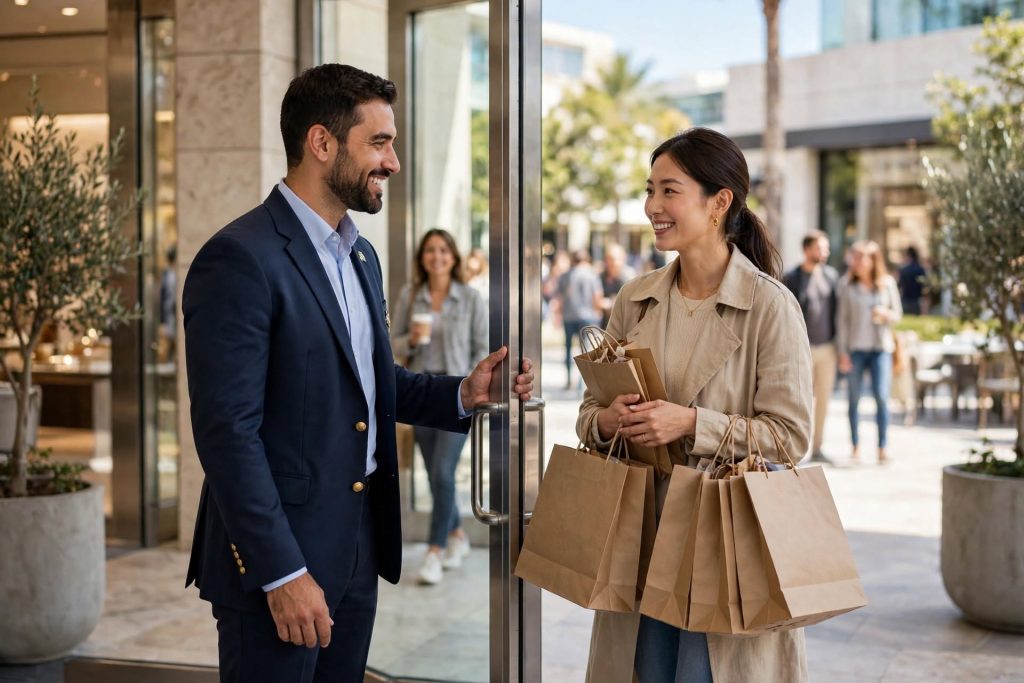
The hard part of retail security is doing it without hurting the thing you are protecting. A heavy, aggressive security presence can cut theft and also drive away the customers who pay the bills. The goal is a floor that feels safe and welcoming to a shopper and uninviting to a thief at the same time.
Our officers are trained for that balance. They greet and help customers, keep a calm and professional presence, and read the floor for the behavior that matters, so deterrence comes from attentiveness, not intimidation. The store stays a place people want to shop, and a place a thief would rather skip.
Most providers hide this behind a form. Here is how store coverage is priced in the Houston market, so you can plan before you call.
A uniformed, customer-facing officer for entrance and floor presence at most stores and centers.
A Texas commissioned officer for high-value retail, higher-risk areas, and higher-threat coverage.
Shopping-center mobile patrol billed per visit, or plainclothes loss prevention quoted by assignment.
Cost follows coverage hours, store format and size, armed or unarmed coverage, and any added loss prevention or multi-tenant patrol. Seasonal and peak-hour coverage scales up and back down. Your final quote follows a walkthrough.
God’s Armour Security is a family-owned company based in the Houston area, licensed, insured, and bonded, and staffed by officers licensed through the State of Texas. On a retail floor that difference shows: an officer who deters at the door, reads the floor, helps a customer, and handles a confrontation without turning it into a scene.
When you call, you reach our leadership directly, not a national dispatch line. Our officers know Houston retail, from the Galleria and Downtown to Westheimer corridors and neighborhood centers across the area, and we staff armed or unarmed coverage to match your store and your shrink.

Protecting Houston retail
Coverage and on-call
And unarmed officers
Texas licensed officers
In the Houston market, an unarmed store officer generally runs about $24 to $38 per hour, an armed officer about $36 to $55 per hour, and shopping-center patrol from about $40 per visit. Plainclothes loss prevention is quoted by assignment, and seasonal coverage scales up and back down. We set the final quote after a walkthrough.
Often both. A uniformed officer at the door is the strongest everyday deterrent, while plainclothes observation catches concealment and organized activity in high-theft departments. We set the mix to your store, your shrink pattern, and your loss prevention policy.
Yes. Our officers read behavior, work with your LP team and store policy, and support apprehensions the right way, within the law and your procedures, with clear documentation afterward.
Yes. A visible officer at the entrance disrupts an organized crew before it acts, and our officers are trained to hold the floor, protect staff and shoppers, document the event, and work with Houston police. We build that readiness into the post orders.
Yes. We cover back entrances and the loading dock, control stockroom and product movement, and support your register and return-desk policy. Internal theft is often the largest source of shrink, so it is part of the plan.
Both. Most stores are well served by professional unarmed officers, while high-value retail or higher-risk locations may call for an armed officer. We match the officer level to the store and your risk assessment.
Yes. We patrol common areas, storefronts, loading docks, and parking across plazas and multi-tenant centers, and we coordinate coverage so the whole property is protected rather than one store at a time.
Yes. Peak-hour and seasonal coverage reinforces the store during holiday traffic and sales events, the times theft pressure is highest, and scales back down when the surge ends.
Yes. God’s Armour Security is licensed, insured, and bonded, and every officer is licensed through the State of Texas. We staff the coverage model that fits your store or center.
Tell us the store type, the coverage you are considering, and the hours you need. We review it the same business day and put together a coverage plan and proposal for your store or center.
Prefer to call?