
Professional residential security guard services for Houston apartments, condominiums, gated communities and high-rise buildings. Coverage can combine lobby and gatehouse security, visitor management, foot or vehicle patrol, parking-garage checks, amenity monitoring and resident-focused reporting built around how your community actually operates.
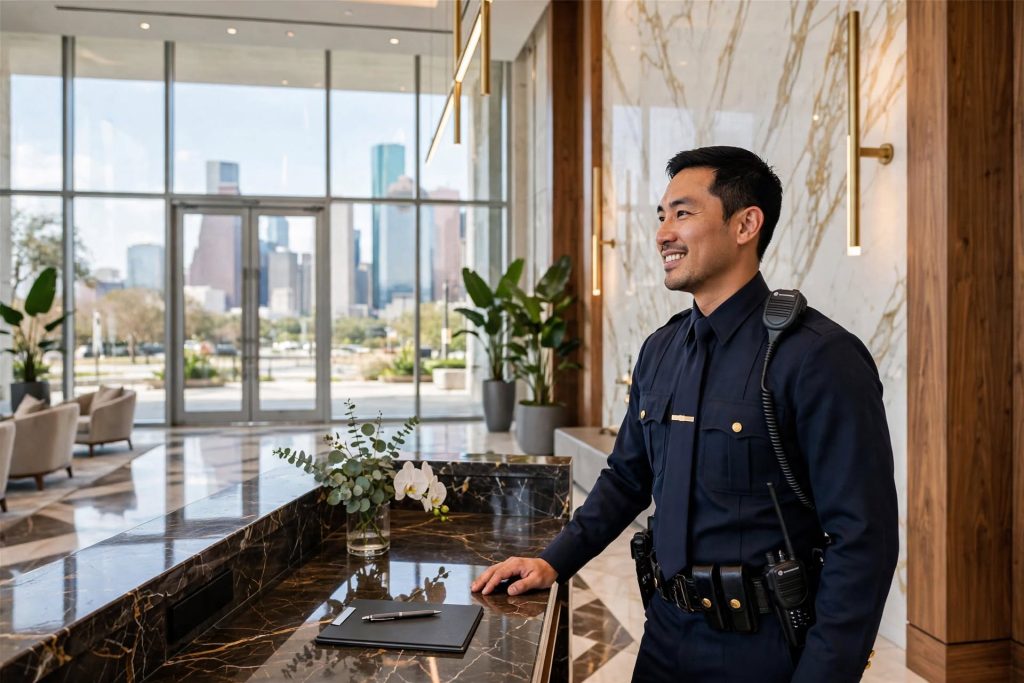
A residential officer works in a different environment from a warehouse, construction site or event venue. Residents come home late. Children use shared spaces. Food couriers and package drivers arrive all day. Contractors need temporary access. Guests expect to be welcomed, while unauthorized visitors still need to be stopped. The officer has to enforce the property’s rules without turning every resident interaction into a confrontation.
That balance—security plus resident experience—is especially important in Houston high-rises, condominiums, gated communities and multi-family properties. A strong program is built around the property’s layout and daily rhythm: who enters, where packages go, which amenities stay open late, how the parking garage is accessed, when patrol is most valuable and what property management wants documented after each shift.
The same staffing model does not fit a luxury tower, a gated subdivision and a garden-style apartment complex. Coverage should reflect the property.
Lobby access, visitor and delivery management, elevator-area awareness, garage patrol, amenities and resident-facing service for vertical communities.
Foot and vehicle patrol across buildings, parking areas, breezeways, mailrooms and shared amenities with emphasis on evening and overnight exposure.
Gatehouse staffing, visitor verification, vendor access, contractor logging and patrol through streets, common areas and association-owned amenities.
Coverage for smaller vertical buildings and mixed residential properties that need both front-entry control and interior patrol without overstaffing.
Patrol and access-control support for shared drives, guest parking, gates, mail areas and community-owned spaces.
Communities dealing with unauthorized access, vehicle break-ins, package loss, amenity misuse or repeated after-hours complaints that need a more structured response.
Post responsibilities are set with property management or the board so officers know what to watch, what to document and when to escalate.
Maintain a professional presence at the main entry, greet residents and guests, monitor access and support the building’s visitor procedures.
Confirm guest authorization, log vendors and contractors, follow delivery procedures and direct authorized visitors to the correct destination.
Support the property’s package-room, delivery and courier procedures so parcels are not left in uncontrolled areas or released without the required process.
Check pools, gyms, clubhouses, lounges, rooftop areas and other shared spaces according to community hours and property rules.
Document visitor issues, gate failures, suspicious activity, maintenance concerns, resident complaints and incidents that management needs to review.
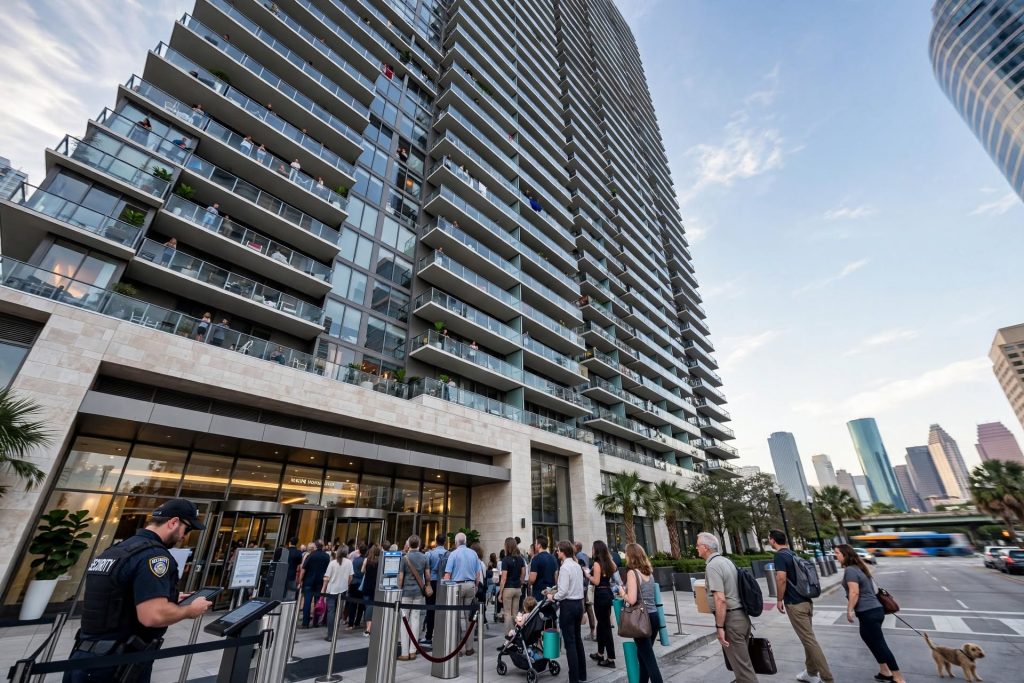
High-rise security is different because hundreds of residents, guests, couriers, contractors and service personnel can move through a relatively small number of entrances. The lobby is the natural control point, but the building’s exposure continues into elevator banks, parking levels, loading areas, package rooms, stairwells and amenity floors.
A strong high-rise plan separates front-desk responsibilities from patrol responsibilities. If the lobby officer is expected to leave the desk for garage rounds, package issues and disturbance calls, the main entrance is left uncovered. Larger properties often benefit from layered staffing—a fixed lobby position supported by scheduled interior or garage patrol.
Gated communities deal with a different traffic pattern from high-rises. Resident lanes, visitor lanes, food deliveries, rideshare drivers, contractors, landscapers and service technicians can all arrive within the same hour. The gatehouse officer needs clear rules for who may enter, how residents authorize guests, how vendors are verified and what happens when a gate or credential system fails.
The goal is not to create unnecessary delays. It is to make access predictable enough that unauthorized activity stands out. Where communities use gate codes, RFID tags, call boxes or other access-control systems, officers can work within the property’s established process rather than replacing it.
Related guide: Access Control Best Practices for Gated Communities

The best residential security plan depends on the property footprint, traffic pattern, budget and whether the biggest risk sits at one entrance or across the whole community.
Best when the community needs continuous access control, visitor processing or a consistent resident-facing point of contact.
Best when exposure is spread across parking areas, garages, multiple buildings, amenity zones and large community footprints.
Combines a fixed post with roving coverage so the entrance stays controlled while the rest of the property still receives physical checks.
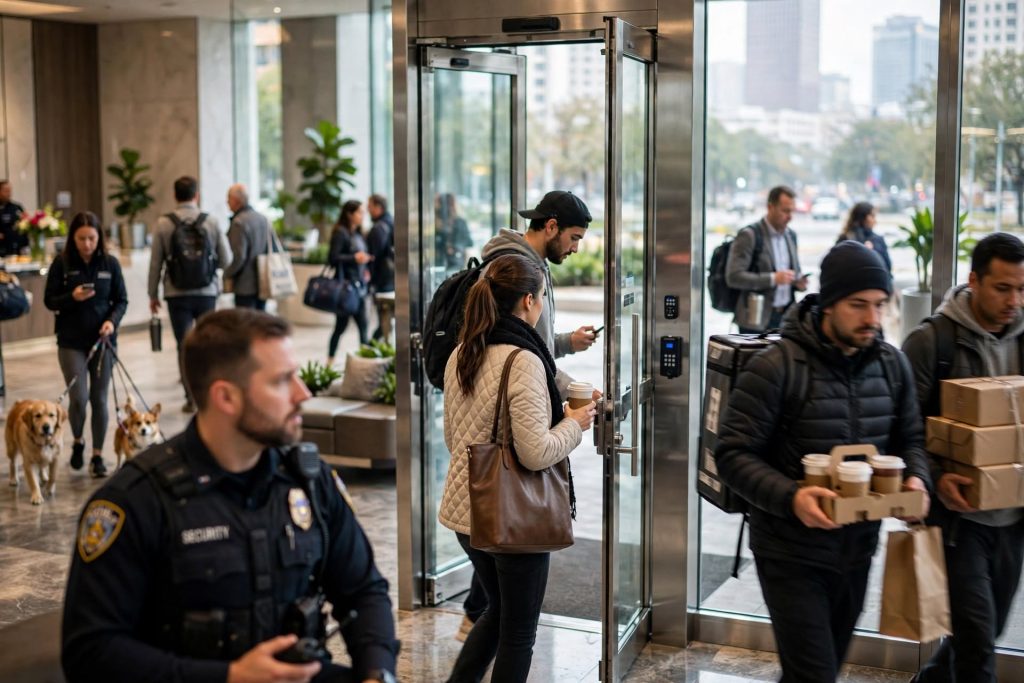
Package theft and unauthorized access frequently begin with normal-looking activity: a courier who follows a resident through the door, a contractor who was expected yesterday rather than today, a delivery left outside the secure package room, or a moving crew entering through a service area without the normal check-in process.
Security officers add judgment to the property’s procedures. They can verify where deliveries belong, follow access rules for contractors and service personnel, maintain logs where required and keep loading or move-in activity from becoming an uncontrolled path into residential floors.
Related guide: How to Prevent Package Theft in Apartment Buildings & Condos
Parking lots and garages hold residents’ vehicles for long periods and usually have more blind spots than the lobby. Apartment breezeways, stairwells, mail kiosks, side entrances and outdoor amenities can also become much quieter after management leaves for the day.
Patrol should be built around the property’s real trouble spots rather than a generic walk-around. Some communities need foot patrol through stairwells and interior common areas. Others need a vehicle covering a larger neighborhood or multi-building site. Many use both, especially when the front desk cannot be left unattended.
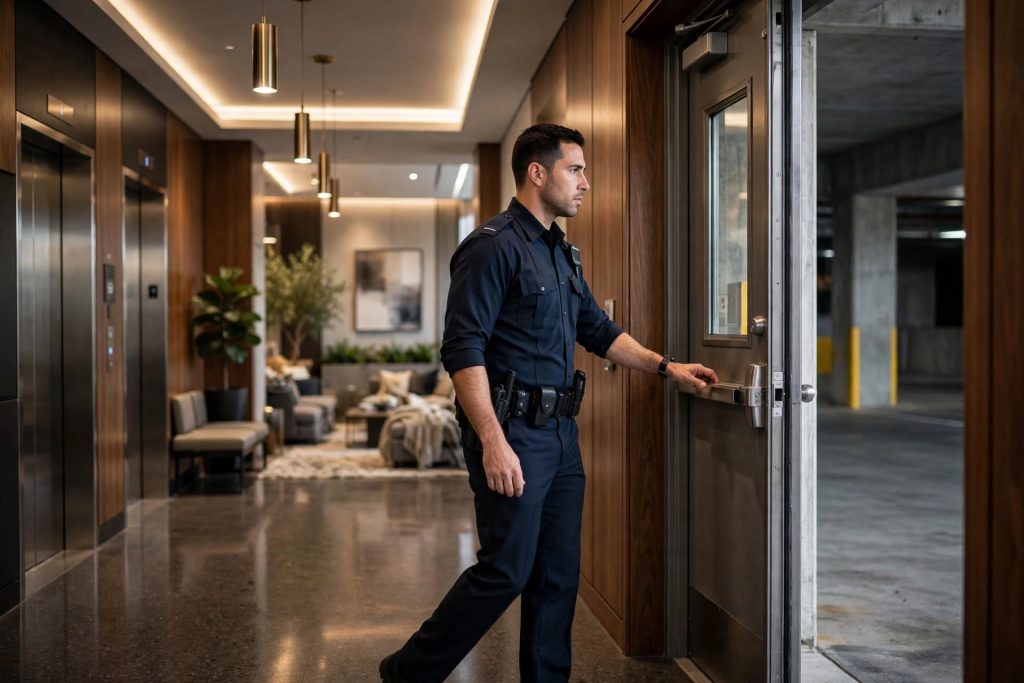
Residential security is one of the few security environments where most officer interactions are with the people being protected, not suspected intruders.
Residents should be recognized and treated with respect, while guest, contractor and delivery rules are still applied consistently.
Noise complaints, amenity disputes and rule questions often call for calm communication and documentation before escalation.
Officers should work from written post orders so parking, guest, amenity and access decisions reflect management policy rather than personal interpretation.
In a residential lobby or luxury high-rise, the officer is part of the property’s daily resident experience and should fit the environment while remaining clearly responsible for security.
Cameras, key fobs, gates, intercoms and visitor-management tools can provide visibility and records. Officers provide the human judgment needed when the system shows something that requires a decision or physical check.
Officers can work within existing gate, key-fob, resident-list and visitor procedures rather than creating a parallel process.
Cameras help show what happened or where attention is needed; officers can physically inspect the location and follow the property’s response instructions.
Where the property already uses digital visitor or package systems, the security post can support the same workflow.
Technology is most useful when logs, camera references and officer reports create one clear timeline for management to review.
Residential security is easier to manage when post orders are written clearly and each shift produces useful information.
Review entrances, garages, amenities, package areas, recurring complaints, existing systems and the hours where coverage matters most.
Set visitor procedures, patrol zones, escalation contacts, package expectations and community rules the officer is expected to support.
Choose lobby, gatehouse, foot patrol, mobile patrol or a hybrid plan based on the property’s layout and risk.
Record meaningful visitor activity, incidents, maintenance concerns, access problems and conditions management should know about.
Update priorities when access systems change, resident patterns shift, package volume rises or recurring incidents point to a new problem area.
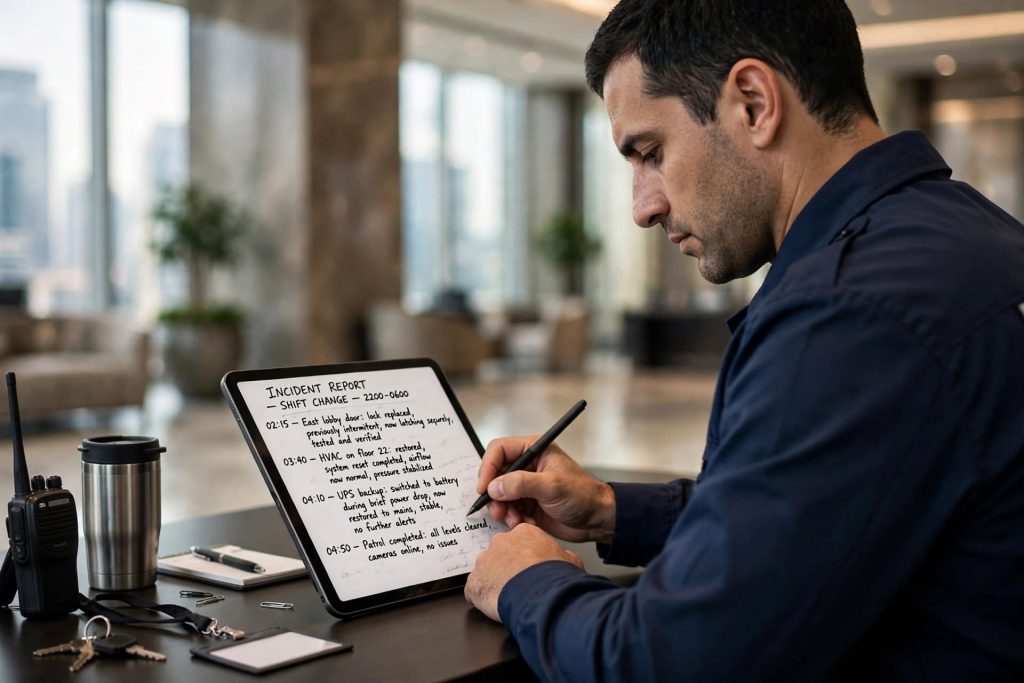
Property managers and HOA boards need documentation they can use. A report should identify recurring gate problems, access issues, unusual visitor activity, package-room concerns, parking or garage patterns, resident complaints and maintenance conditions noticed during patrol.
Over time, those reports make the security program more useful. If the same door is repeatedly found propped open, one garage level keeps generating complaints or package problems cluster around a delivery window, management can change the underlying process instead of treating every incident as unrelated.
Residential security pricing depends on how the property operates. A single overnight gatehouse post is different from a luxury high-rise using a lobby officer plus garage patrol and weekend amenity coverage.
Overnight-only, evening, weekend and continuous schedules have different staffing requirements.
A gated subdivision, high-rise tower and multi-building apartment property require different coverage models.
One gatehouse officer is different from separate lobby, garage and patrol responsibilities that cannot be handled at the same time.
Properties with heavy delivery, contractor and guest traffic may require more front-entry support.
Garage levels, amenities, multiple buildings and large community roads add time and coverage needs.
Recurring vehicle theft, unauthorized access or other incidents may justify a stronger or more visible security posture.
The best residential security program is one residents understand and management can verify. It should protect entrances, common areas and parking without creating unnecessary friction for the people who live there.
All officers are licensed by the Texas Department of Public Safety Private Security Bureau. Company license #B07347101.
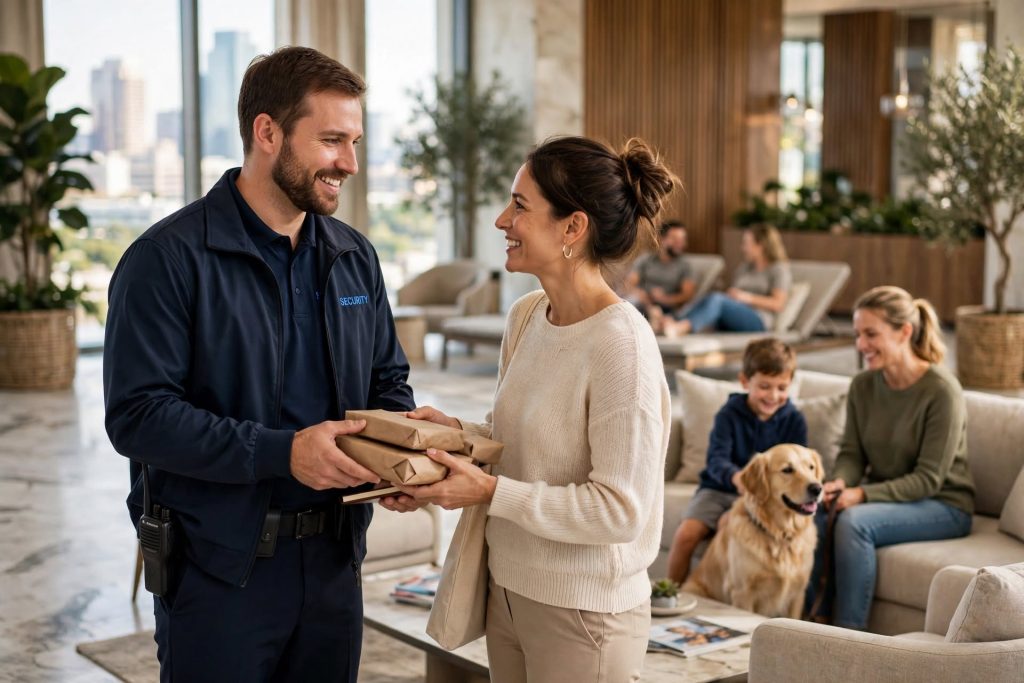
Coverage can include lobby or gatehouse staffing, visitor and vendor verification, package and delivery procedures, foot or vehicle patrol, parking and garage checks, amenity monitoring, incident response within post orders and written shift reporting. The mix depends on the property.
High-rises concentrate residents, visitors, deliveries and contractors through a small number of entrances. Coverage often focuses on the lobby, visitor management, elevator access, package areas, parking garages, loading zones and amenity floors, with separate patrol support where the main desk cannot be left unattended.
Yes, but management should decide whether one officer can realistically handle both without leaving the main entrance uncovered. Larger buildings often use a fixed lobby post plus scheduled or dedicated roving patrol.
Yes. Residential coverage can include gatehouse access procedures, guest and vendor logging, neighborhood patrol, amenity-area checks and reporting to the property manager or association based on written post orders.
Officers can support the property’s established delivery and package procedures, including directing couriers, logging activity where required and helping keep unauthorized individuals from using routine deliveries as a way into resident areas.
They can. Patrol routes may include garage levels, surface lots, stairwells, breezeways, mailrooms, pools, fitness rooms, clubhouses and other shared areas identified in the security plan.
Not every residential property needs armed coverage. The appropriate posture depends on the property’s environment, incident history, management goals and risk assessment. God’s Armour currently offers armed and unarmed security options.
Yes. Some communities need continuous staffing, while others focus on evenings, overnight periods, weekends, package-heavy periods or specific recurring problem windows. Coverage can be structured around the hours that matter most.
Cost depends on coverage hours, property size, number of posts, visitor volume, patrol requirements, armed or unarmed staffing, existing security systems and whether the property needs a fixed post, mobile patrol or a combination.
Share the property type, approximate size, main access points, coverage hours and the issues management wants security to address. We can then discuss whether the community needs a lobby post, gatehouse officer, patrol or a layered plan. You can also explore our Residential & HOA Security articles for more guides on high-rise security, gatehouse operations, and HOA patrol rounds.
Prefer to call?