A physical perimeter fence and an automated vehicular gate create an immediate perception of luxury, seclusion, and safety. However, for many master-planned subdivisions and condominium enclaves across Greater Houston and Texas, gated entry points offer little more than security theater. Automated gates left stuck open, compromised universal keypad codes, chronic vehicle tailgating, and unvetted commercial delivery traffic regularly render perimeter defenses ineffective.
When an access gate fails to regulate ingress, the entire residential neighborhood becomes vulnerable to opportunistic vehicle burglaries, catalytic converter theft crews, unauthorized solicitors, and trespassing. For Homeowners Association (HOA) board members and property management companies, securing community access points requires moving past basic clickers and adopting a multi-layered access management strategy.
This operational guide outlines engineering standards, technological integrations, visitor screening workflows, and human enforcement protocols that define modern access control best practices for gated communities.
Phase 1: The Core Ingress Vulnerabilities in Gated Communities
Modern access control failures generally trace back to four primary operational breakdowns:
1. Vehicle Piggybacking and Gate Tailgating
Tailgating occurs when an unauthorized driver accelerates closely behind an authorized resident vehicle, slipping through the barrier before the mechanical gate arm closes. Without physical anti-tailgating hardware or on-site gate attendants, unauthorized vehicles gain unrestricted access within seconds.
2. Static Keypad Code Compromise
Communities relying on four-digit visitor keypad codes face continuous security degradation. Over time, residents share universal codes with food delivery couriers, rideshare drivers, lawn care contractors, and casual acquaintances. Within months, hundreds of non-residents possess permanent, unmonitored entry access.
3. Mechanical Gate Failures and Weather Wear
Heavy mechanical swing and slide gates experience immense physical stress. Continuous cycling, vehicular collisions, and severe Gulf Coast weather conditions lead to frequent motor burnouts. When gates become stuck open for days awaiting commercial repair, community perimeters remain completely exposed.
4. Vendor and Package Courier Chaos
High daily delivery volumes from national logistics carriers, moving vans, and utility technicians create severe gate chokepoints. When delivery drivers cannot enter quickly, they block resident lanes or tailgate aggressively, increasing property damage risks; explore standardized parcel handling protocols in our guide on how to prevent package theft in apartment buildings and condos.
Phase 2: Modern Credential Technology Comparison
Evaluate the primary access credentials deployed across Texas residential communities:
| Access Technology | Operational Mechanism | Security Level | Vulnerability / Limitation |
|---|---|---|---|
| Static Keypad PINs | Physical code entered on outdoor pedestal keypad | Very Low | Easily shared with unauthorized parties; impossible to audit individual users. |
| RFID Windshield Tags | Adhesive passive sticker read by overhead scanner | High | Destructs on removal; prevents credential sharing between unregistered vehicles. |
| License Plate Recognition (LPR) | AI optical cameras cross-reference plates against whitelist | Very High | Requires clean plate visibility; can struggle with obscured tags or severe rainstorms. |
| Dynamic QR Codes via App | Resident generates temporary time-restricted digital pass | High | Pass expires automatically after a set duration, preventing unauthorized reuse. |
| Stationary Gatehouse Guard | Physical officer screens driver licenses and logs vehicles | Maximum | Provides visual human judgment, stops physical trespassers, and coordinates emergency response. |
To evaluate staffing budgets for dedicated gatehouse officers versus automated solutions, review our comprehensive pricing analysis on HOA security guard services pricing and contract guide.
Phase 3: The 4-Tier Access Control Architectural Framework
A resilient gated community does not depend on a single barrier. Leading security engineering deploys four concentric layers of perimeter access defense:
Tier 1: Lane Segregation Architecture
Divide entrance approaches into two dedicated lanes: a Resident Express Lane controlled by RFID or LPR cameras, and a Visitor/Commercial Lane routed through a call box or physical guardhouse. Physical median curbs prevent drivers from cutting across lanes.
Tier 2: Anti-Tailgating Engineering
Combine decorative ornamental gates with fast-acting, high-speed barrier arms positioned immediately behind them. The barrier arm drops within 1.5 seconds after a single vehicle passes, physically blocking trailing cars from piggybacking.
Tier 3: Optical Surveillance & LPR Capture
Position dedicated License Plate Recognition cameras at vehicle bumper height, illuminated by infrared arrays. Every entering and exiting license plate is indexed with time-stamped video, creating admissible evidence for local law enforcement during property crimes.
Tier 4: Pedestrian Perimeter Hardening
Vehicular gates mean little if pedestrians can walk through unlocked sidewalk breezeways. Install self-closing, magnetic-lock pedestrian turnstiles accessible only via encrypted key fobs or mobile digital credentials.
When selecting professional vendors to audit or manage these entry points, utilize our structured security vendor checklist for condo and HOA boards to verify vendor credentials and insurance limits.
Phase 4: Standard Operating Procedures for Gatehouse Officers
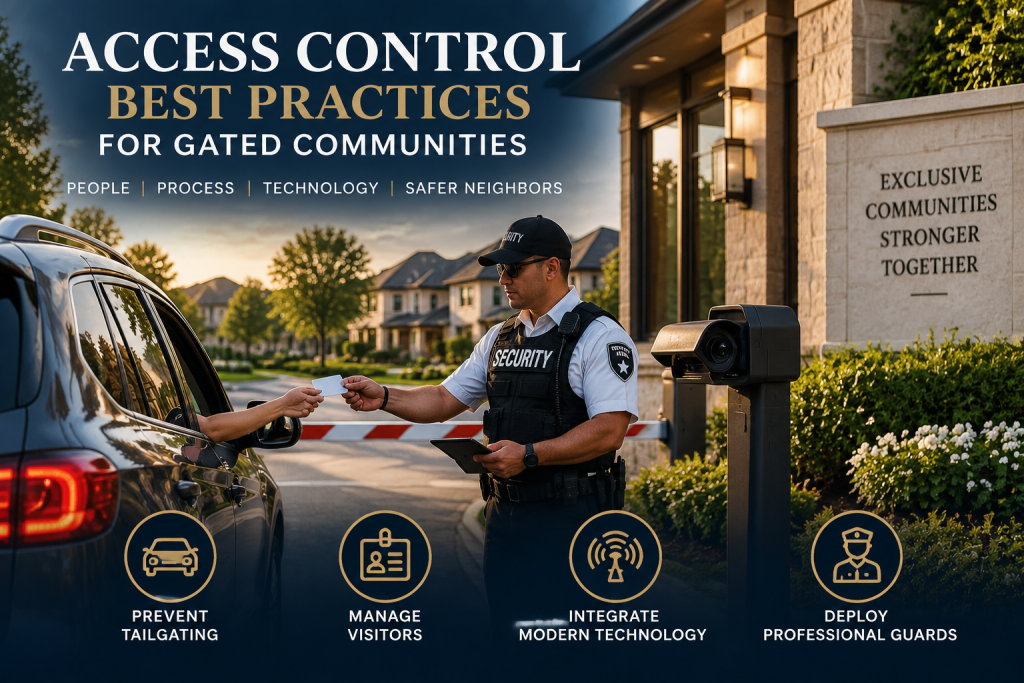
Electronic hardware is only as effective as the human oversight governing it. When communities deploy on-site security guards at entrance gatehouses, officers must execute strict written Post Orders:
1. Universal Visitor Verification Protocols
Officers must never wave unverified vehicles through the gate. For every non-resident, the officer must:
- Request and scan the driver state issued identification card.
- Cross-reference the resident visitor authorization portal or place a direct telephone call to the homeowner for verbal entry confirmation.
- Log the vehicle make, model, license plate number, and arrival timestamp into the cloud visitor log.
- Issue a temporary, color-coded dashboard visitor pass displaying the specific destination address and expiration date.
2. Commercial Vendor and Contractor Ingress Rules
Lawn care crews, remodeling contractors, and pool service companies must be restricted to authorized working hours (typically 7:00 AM to 6:00 PM, Monday through Friday). Officers verify valid contractor work orders and enforce community parking rules before permitting heavy commercial trailers into neighborhood cul-de-sacs.
3. De-Escalation and Denial of Entry
When an uninvited visitor is denied entry, confrontations can arise. Gate guards must be trained in professional verbal de-escalation, maintaining a calm demeanor while remaining physically secure inside the gatehouse enclosure. If a driver refuses to turn around, causes a disturbance, or attempts to force the gate, officers initiate established trespass procedures and coordinate immediate police dispatch.
For premier luxury properties balancing front-entrance security with high-end hospitality, explore the operational differences in our analysis on concierge vs security guard services.
Phase 5: Texas Statutes and Municipal Emergency Ingress Standards
Deploying automated gates and security personnel across Texas involves specific statutory compliance mandates:
1. Texas Health and Safety Code Emergency Access Mandate
Under Texas law, automated security gates across commercial and residential developments must provide immediate, unhindered access to first responders. Gates must be equipped with optical emergency strobe sensors (which open the gate upon detecting flashing emergency beacons) or standardized Knox Box rapid-entry key switches accessible by local fire and EMS crews.
2. Texas DPS Private Security Bureau Licensing
Under Chapter 1702 of the Texas Occupations Code, anyone providing physical gatehouse access control, verifying identification, and denying property entry must hold an active security officer license through a state-licensed security company. Employing uncertified property staff or unlicensed contractors to perform guard functions voids commercial property liability insurance during a catastrophic incident.
3. Towing and Private Roadway Enforcement
If gatehouse officers or roving patrols are tasked with tagging and towing vehicles parked in fire lanes or unauthorized stalls, the community must comply with Texas Occupations Code Chapter 2308. Proper statutory towing warning signs must be permanently installed at every community entrance point before initiating vehicle removals.
If high-profile homeowners within your gated community face targeted harassment or personal safety threats, review our diagnostic guide on 7 signs you need a personal security detail to determine if dedicated close protection is warranted.
Partner with Gods Armour Security for Gated Community Protection
Protecting a gated residential community requires combining advanced access control technology with seasoned, professional security personnel. Gods Armour Security delivers Texas DPS licensed gatehouse access control officers, marked mobile patrol fleets, and integrated residential protection solutions across Greater Houston, Harris County, and surrounding suburban master-planned developments.
Our management team collaborates directly with HOA boards, developers, and property management companies to eliminate gate tailgating, streamline visitor intake, maintain unyielding perimeter defense, and ensure your neighborhood remains a secure haven for every resident.
Ready to harden your gated community access control? Request a comprehensive access control consultation and security audit or contact our Houston command operations desk directly at (713) 878-9984.
Key Takeaways
- Relying on universal keypad codes creates severe vulnerabilities as codes are shared widely among delivery drivers and non-residents.
- Deploy a dual-lane entrance configuration separating resident express lanes (RFID / LPR) from visitor screening lanes.
- Fast-acting barrier arms dropping within 1.5 seconds provide essential physical deterrence against vehicle tailgating.
- License Plate Recognition (LPR) cameras create an indispensable forensic audit trail for local law enforcement during property crimes.
- Under Texas law, automated gates must comply with emergency Knox Box ingress mandates, and gatehouse personnel must hold active Texas DPS licenses.