
Gated residential communities, suburban subdivisions, and master-planned neighborhoods face evolving security demands across Greater Houston and Texas. From chronic vehicle burglaries and unauthorized clubhouse trespassing to package theft and perimeter gate breaches, Homeowners Association (HOA) board members carry a fiduciary duty to preserve community property values and maintain neighborhood safety.
Contracting security guard services is typically one of the single largest line items in an annual HOA operating budget. However, board members and property management companies often struggle to evaluate disparate vendor bids. A low-bid vendor quoting cut-rate pricing frequently delivers unvetted officers, chronic shift call-outs, zero field supervision, and massive uninsured liabilities.
This comprehensive operational guide breaks down real-world pricing models, hourly brackets, armed versus unarmed options, staffing structures, and critical contract terms for HOA security guard services across Texas.
Phase 1: Average HOA Security Guard Pricing in Texas
Security guard pricing is determined primarily by licensing tiers under the Texas Department of Public Safety (DPS) Private Security Bureau, shift timing, and whether coverage relies on dedicated stationary gate posts or roving patrol vehicles.
| HOA Security Model | Hourly Bill Rate (Texas) | Typical Monthly Budget Range | Primary Operational Mission |
|---|---|---|---|
| Dedicated Gatehouse Guard (Unarmed Level II) | 24 to 34 dollars / hr | 5,800 to 12,000 dollars (Part-Time to 16-hr shifts) | Visitor log verification, driver license screening, barcode lane oversight, vendor gate access. |
| Dedicated Armed Officer (Level III Commissioned) | 35 to 50 dollars / hr | 8,500 to 18,000 dollars (Evening & overnight coverage) | Visible deterrence against armed property theft, clubhouse enforcement, active trespass intervention. |
| Marked Mobile Patrol (Shared Neighborhood Model) | 45 to 70 dollars / sweep (or flat fee) | 1,800 to 4,500 dollars (3 to 6 random sweeps nightly) | Random street passes, amenity checks (pool, courts, parks), tagging unauthorized street parking. |
| 24/7 Full-Coverage Security Program | 26 to 42 dollars / hr (Blended contract) | 18,500 to 30,000 dollars / month (168 hours weekly) | Continuous round-the-clock entrance access control, roving security vehicle, dedicated supervisor dispatch. |
To compare residential community pricing against single-day event or private detail expenses, explore our comprehensive pricing guide on how much a personal bodyguard costs per day, as well as general event security costs in Houston.
Phase 2: What Drives HOA Security Guard Pricing?
Vendor bill rates reflect specific labor, equipment, and statutory compliance expenses. Five core variables determine where your community falls on the pricing spectrum:
1. Armed (Level III) vs Unarmed (Level II) Guard Requirements
Unarmed guards verify visitor credentials and enforce community rules effectively. However, in communities experiencing targeted vehicle rim thefts, catalytic converter crews, or violent criminal trespassing, HOA boards frequently demand Texas DPS Level III Commissioned Armed Security Officers. Armed officers require extensive firearms qualification, tactical re-certification, and carry substantially higher commercial general liability insurance premiums, raising the hourly bill rate by 8 to 15 dollars per hour.
2. Coverage Hours and Shift Timing
Pricing is directly impacted by shift structures:
- Overnight and Weekend Shifts: Night shifts (10:00 PM to 6:00 AM) and weekend coverage commonly carry a 10 to 20 percent differential rate to attract dependable officers and reduce guard absenteeism.
- Long-Term Annual Contracts vs Temporary Deployments: HOAs committing to a 12-month or multi-year service agreement secure discounted hourly rates compared to short-term seasonal coverage (such as summer pool monitors).
3. Vehicle Patrol Costs and Fuel Allowances
If the post requires a dedicated marked patrol vehicle (equipped with amber emergency light bars, spotlight equipment, and GPS real-time tracking), the security company must factor in vehicle lease amortization, comprehensive commercial auto insurance, maintenance, and fuel. Dedicated patrol vehicles typically add 5 to 10 dollars per hour to standard labor billing rates.
4. Guard Management and Guard Tour Verification Technology
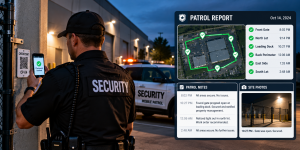
Modern residential security demands transparency. Leading security providers utilize cloud-based Guard Tour Systems (such as RFID checkpoint scanning or GPS geofencing). Officers physically scan electronic checkpoints at clubhouses, mail kiosks, tennis courts, and dead-end cul-de-sacs, giving property managers and HOA board members real-time verification that patrols are actively performed.
Phase 3: HOA Security Guard Post Models Explained
HOA communities generally choose between three core operational deployment models:
Model A: Dedicated Gatehouse Access Control
Best For: Gated communities with high daily visitor and delivery traffic.
Staffing: Stationary officer stationed at the entrance gate 12 to 24 hours daily.
Primary Focus: Stopping unauthorized gate tailgating, verifying visitor identities, and logging commercial contractor tags.
Model B: Dedicated Roving Vehicle Patrol
Best For: Sprawling, master-planned neighborhoods without perimeter gate fencing.
Staffing: Full-time dedicated marked patrol vehicle assigned exclusively to the HOA during evening/night hours.
Primary Focus: High-visibility street deterrence, clubhouse property checks, and immediate response to resident disturbance calls.
Model C: Shared Random Mobile Patrols
Best For: Budget-conscious communities seeking physical presence without full-time costs.
Staffing: Multi-client patrol vehicle conducting 3 to 6 randomized drive-throughs nightly.
Primary Focus: Tagging abandoned vehicles, checking pool gate locks, and presenting visible deterrence on a predictable budget.
For high-net-worth neighborhoods or individual board executives facing direct stalking threats, dedicated community protection can be augmented with specialized assets; review our guide on close protection and security details for families.
Phase 4: Key Clauses for HOA Security Contracts and RFPs
When drafting a Request for Proposal (RFP) or executing a Service Level Agreement (SLA) with a private security company, HOA boards must ensure the contract includes these critical safeguards:
1. Texas DPS Private Security Bureau Licensing Verification
Under Chapter 1702 of the Texas Occupations Code, private security companies and individual security officers must hold valid licenses issued by the Texas DPS. The contract must explicitly state that all assigned officers hold active Level II or Level III commissions in good standing. Demanding unlicensed “independent contractor” guards creates severe civil liability for the HOA.
2. Insurance Indemnification and Required Limits
The security vendor must name the HOA and property management company as “Additionally Insured” on their insurance certificates. Demand minimum coverage standards:
- Commercial General Liability: At least 1,000,000 dollars per occurrence and 2,000,000 dollars aggregate.
- Firearms Liability Rider: Mandatory for armed Level III officers (confirming no firearm discharge exclusions).
- Workers’ Compensation: Statutory state limits (protecting the HOA if a guard slips on property).
- Commercial Automobile Liability: At least 1,000,000 dollars for mobile vehicle patrols.
3. Specific Post Orders and Scope of Authority
Security officers are not law enforcement; they are agents of the property owner. Detailed Post Orders must define officer authority clearly:
- Authorized protocols for issuing parking citations, towing notices, and CC&R amenity violations.
- Trespass warning issuance procedures and Harris County law enforcement escalation triggers.
- De-escalation guidelines when interacting with agitated residents or uninvited guests.
- Emergency response protocols aligned with standard facility audits; see our event security checklist for venue managers.
4. Shift Minimums, Billing Billing Transparency, and No-Show Penalties
Contracts must explicitly detail invoice terms. Clarify billing rules for overtime, holiday multipliers, and weather emergencies. Most importantly, enforce a No-Show Deduction Clause: if an officer fails to report to a scheduled gate post within 30 minutes, the contractor must credit the HOA for uncovered hours and provide an immediate backup officer.
Phase 5: Common Traps HOA Boards Must Avoid
1. Choosing Solely on the Lowest Hourly Rate
Security bill rates reflect wages. If a company quotes an unrealistically low rate (such as 18 to 20 dollars per hour), the officer is likely being paid minimum wage. This leads to 300 percent annual guard turnover, guards sleeping on post, chronic absenteeism, and poor resident communication.
2. Failing to Define Emergency Towing and Parking Rules
Disputes over parked vehicles in fire lanes or resident stalls cause significant community tension. If officers are instructed to call tow trucks, ensure the HOA towing agreement complies with Texas Occupations Code Chapter 2308, ensuring proper signage is posted before security initiates any vehicle removals.
3. Neglecting Ongoing Performance Audits
Do not sign an annual contract and forget it. HOA boards should require monthly incident summaries, GPS tracking audit logs, and quarterly management reviews to ensure post orders match changing community needs.
If your community or individual residents experience escalating harassment or stalking concerns, review our diagnostic manual on 7 signs you need a personal security detail.
Partner with Gods Armour Security for Dedicated HOA Protection
Protecting residential communities demands a security partner that balances firm rule enforcement with courteous resident diplomacy. Gods Armour Security provides Texas DPS certified, insured, and professional residential security solutions across Greater Houston, Harris County, and surrounding subdivisions.
From dedicated gatehouse access control officers and marked neighborhood mobile patrols to comprehensive clubhouse surveillance and GPS tour auditing, our management team builds custom residential security programs that reduce crime, safeguard property values, and deliver genuine peace of mind.
Looking to elevate your community safety standards? Request an HOA security consultation and site audit or contact our Houston dispatch team directly at (713) 878-9984.
Key Takeaways
- HOA security guard pricing in Texas typically ranges from 24 to 34 dollars per hour for unarmed gate guards, and 35 to 50 dollars per hour for armed Level III officers.
- Roving mobile vehicle patrols offer a cost-effective alternative for large subdivisions, typically ranging from 1,800 to 4,500 dollars monthly.
- Always verify active Texas DPS Private Security Bureau licensing and demand a minimum of 1,000,000 dollars in commercial general liability insurance.
- Mandate GPS-verified guard tour technology to ensure officers complete regular patrols around pools, clubhouses, and perimeter gates.
- Ensure contracts include written Post Orders, defined tow rules, and no-show billing deduction credits.