Most property managers meet fire watch security the same way, which is a phone call from a sprinkler contractor saying the system will be down and the building needs a watch tonight. By then the clock has already started. Fire watch is one of the few security services driven by code rather than by choice, and knowing when it applies is considerably easier than arranging it under pressure.
Here is what triggers it in Texas, what the watch actually involves, and what property owners get wrong.
The Code Behind It
Texas operates on the International Fire Code, adopted at the state level and by local jurisdictions including the City of Houston, where the Houston Fire Department enforces it.
The governing provision is the section covering systems out of service. The language is direct. Where a required life safety or fire protection system is out of service, the fire department and the fire code official must be notified immediately, and where the fire code official requires it, the building is either evacuated or an approved fire watch is provided for everyone left unprotected until the system is back in service.
Two things in that sentence get missed. Notification is immediate rather than after some grace period, and the decision between evacuation and a fire watch belongs to the fire code official rather than to the building owner.
The Hour Thresholds & What They Really Mean
The numbers people quote come from NFPA standards that the code works alongside.
A required fire alarm system out of service for more than four hours in a twenty four hour period triggers the evacuate or watch requirement. For sprinkler systems, the commonly adopted window is ten hours in a twenty four hour period.
The hours do not have to be consecutive. Four hours spread across a day counts the same as four hours in a row.
Here is the part that causes trouble. Those thresholds are the point at which the requirement becomes mandatory under the common adoptions. They are not free windows. The fire code official can require protection from the moment a system goes down, and in an occupied building with a dead alarm panel, many will. Treating the four hour mark as permission to do nothing for four hours is a reading the code does not support.
What Else Triggers a Fire Watch
System impairment is the most common cause and not the only one.
Hot work in an occupied structure, meaning welding, cutting, grinding, and similar operations, carries its own fire watch requirements under the code and the related NFPA standard. The watch typically continues for a period after the work stops, since that is when most hot work fires start.
Active construction sites without complete fire protection in place fall under the construction chapter of the code and the related standard, which is why buildings under renovation often carry a watch through the phase before systems are commissioned.
Special events with temporary structures, tents, and increased occupant loads can require a watch depending on the venue and the occupancy.
A fire marshal can also impose an interim watch as a condition following a violation, pending correction.
What a Fire Watch Actually Involves
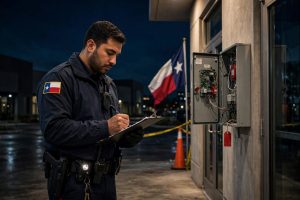
A fire watch is not an officer sitting at a desk. The definition in the standards is continuous and systematic surveillance of the building or the affected portion by trained personnel, for the purpose of identifying and controlling fire hazards, detecting early signs of fire, sounding an alarm, and notifying the fire department.
In practice that means patrol rounds covering the affected areas, commonly at least once an hour, including storage areas, equipment rooms, mechanical spaces, and anywhere else accessible. Personnel checking for accumulated combustibles, blocked exits, obstructed sprinkler heads where systems are partially active, and anything else that would make a fire worse.
Personnel must be at least eighteen and trained for the role, and they should have no other duties while on watch. An officer covering access control and fire watch simultaneously is not performing a fire watch.
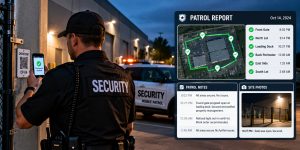
The log is not optional. Each round gets recorded with the date and time, the name and signature of the person on watch, the areas covered, and any hazard found along with what was done about it. Those logs have to be available for the fire marshal on request, and a watch without documentation is difficult to prove happened at all.
What Property Owners Get Wrong
A few errors recur.
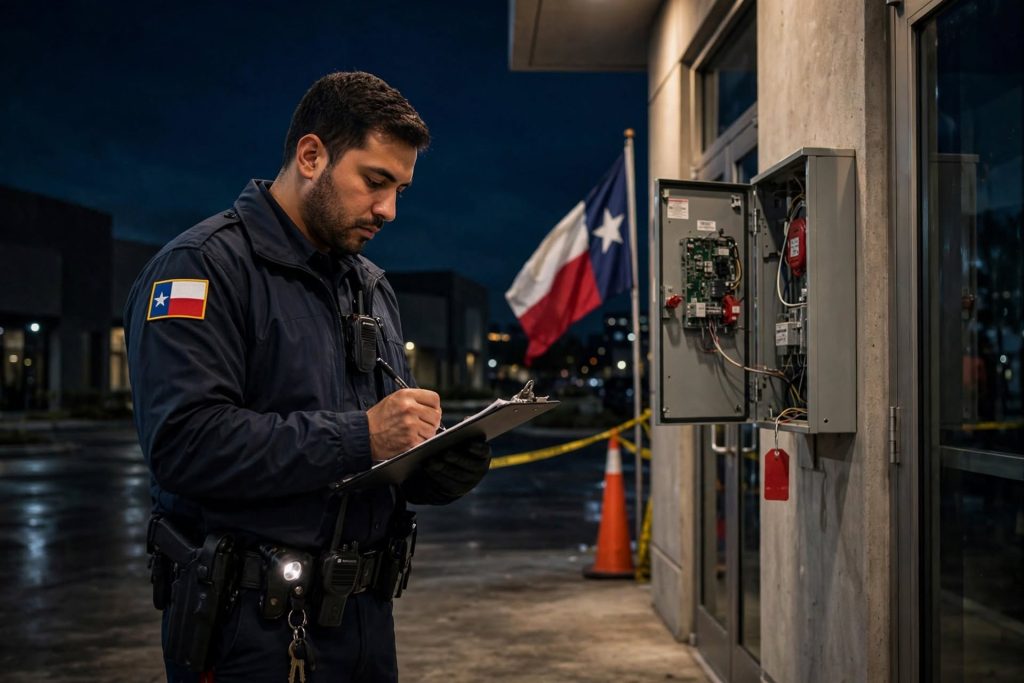
Waiting to notify. The code says immediately, and some jurisdictions set a window for formal notice. Calling after the repair is finished does not satisfy it. Skipping the impairment coordinator. The code requires the building owner to assign one, and tags have to be posted at the fire department connection, system control valves, the alarm control unit, the annunciator, and the fire command center to show what is out of service.
Assuming a planned outage is different. A scheduled repair and an unexpected failure both put the system out of service. Planned work is easier to prepare for and carries the same requirement. Using existing staff. Assigning the night maintenance person to also walk a fire watch does not meet a standard that calls for dedicated, trained personnel with no competing duties.
Stopping early. The watch runs until the system is back in service and verified, not until the repair technician leaves.
Planning for It Instead of Reacting
Any building with a sprinkler or alarm system will eventually need a watch, usually during scheduled maintenance, testing, or a system upgrade.
The practical move is to arrange coverage when the work is scheduled rather than when the system goes down. Ask your fire protection contractor how long the system will be offline before the work starts. Confirm with the fire code official what the jurisdiction expects for your occupancy, since requirements vary and the authority having jurisdiction makes the final call.
Then have a provider lined up who can staff it, document it properly, and produce logs that hold up when the fire marshal asks for them.