Managing an event space requires balancing customer hospitality with strict risk mitigation. Whether hosting a downtown corporate convention, a private wedding reception, or an outdoor concert in Greater Houston, a single security lapse can trigger severe premises liability lawsuits, municipal code fines, or property damage.
Competitor planning guides often suggest vague advice like check the locks or hire security. Professional security administration requires a structured, phase based operational audit.
This comprehensive event security checklist covers every critical operational window: pre event security auditing, day of show perimeter defense, Texas fire marshal and TABC compliance, real time crowd monitoring, and post event operational debriefs.
Phase 1: Pre Event Risk Assessment and Early Planning
A comprehensive security footprint begins weeks before the first attendee arrives. Complete these baseline evaluations during initial booking reviews.
1. Event Risk Profiling and Demographic Analysis
Evaluate the nature of the event. Is it an invitation only corporate dinner, a high volatility public rally, or an alcohol heavy celebration? High energy crowds demand active queue barriers and tighter guard to guest ratios.
2. Required Security Guard Staffing Calculations
Apply a dual layer formula rather than guessing headcounts. Review our definitive guide on how many security guards per person for an event to calculate dynamic floor guards plus fixed entrance, exit, and asset posts[cite: 1].
3. Budgeting and Security Guard Vendor Vetting
Ensure your security partner holds active licensing through the Texas DPS Private Security Bureau and carries comprehensive liability insurance. Consult our transparent breakdown of event security costs in Houston to plan officer hourly rates and shift minimums.
4. Review Alcohol Policies and TABC Requirements
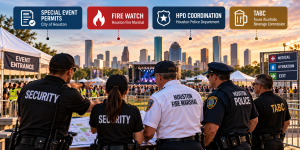
If alcoholic beverages are sold or distributed on property, ensure your vendor contracts mandate licensed security officers to monitor service stations. Walk through our legal guide on Texas liquor law event security requirements to protect against Dram Shop liabilities[cite: 1].
5. High Value Asset and VIP Security Audits
Identify whether keynote speakers, public dignitaries, or corporate executives require close personal protection. Review options for dedicated discreet executive protection in Houston to secure green rooms and transport corridors[cite: 1].
Phase 2: Physical Venue and Perimeter Security Audit
Conduct an exhaustive physical walkthrough of the facility alongside the lead security supervisor twenty four to seventy two hours prior to the event.
| Facility Zone | Audit Checkpoint | Corrective Security Action |
| Main Ingress Points | Queue flow space, turnstiles, check in tables | Set up stanchions to prevent sidewalk surges; position bag search and magnetometer wanding stations. |
| Emergency Exits | Push bars, alarm contacts, signage | Inspect exit signs; ensure all push bars open freely; remove storage boxes or vendor equipment blocking egress paths. |
| Perimeter Fencing and Gates | Exterior fence integrity, service alleys | Check perimeter latches; illuminate blind alleys; verify locks on detached storage sheds. |
| Parking Facilities | Lighting levels, sightlines, access gates | Replace burned out parking lamps; designate clear ride share pickup zones; schedule mobile roving patrols. |
| Audio Visual and Production | Cable runs, power distribution boards | Tape down rubber cable protectors across public walking corridors to eliminate slip and trip claims. |
| Cash Depots and Box Office | Safe access, point of sale terminals | Establish private back office cash drop rooms with keypad locks and assigned security escorts. |
Phase 3: Day of Event Pre Doors Security Briefing
Never open venue doors to the public without executing a coordinated team briefing two hours prior to opening doors.
1. Tactical Radio Communication and Frequency Check
Confirm that venue operations, lead security supervisors, bar managers, and medical staff operate on clear, designated two way tactical radio channels. Test radios inside concrete corridors and metal basements to eliminate dead zones.
2. Review Chain of Command and Operational Authority
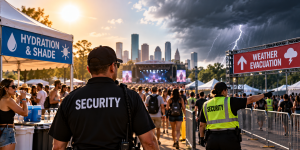
Designate the exact individual holding legal authority to pause or evacuate the event during severe weather, structural hazards, or hostile situations.
3. Security Guard Uniform and Credential Inspection
Ensure every posted officer meets professional presentation standards, displaying active Texas DPS identification cards, communication earpieces, and standard incident logging tools.
4. Coordinate Ingress Flow Rate
Verify that bag inspection and credential scanning teams can process arriving guests at a rate of 180 to 240 patrons per hour per lane to avoid pedestrian bottlenecks[cite: 1].
5. Medical Station and First Aid Readiness
Confirm clear transit pathways between the first aid room and external ambulance access bays.
Phase 4: Operational Crowd Management and Active Monitoring
Active security during the event relies on situational awareness and early intervention from doors open until show conclusion.
1. Entry Queue Management
Direct arriving crowds into organized lines. Enforce bag size restrictions and intercept prohibited items, such as weapons, glass, or outside alcohol, before patrons enter the main facility.
2. Bar Area and Intoxication Monitoring
Deploy dedicated officers near service bars to verify legal age, discourage drink tampering, and assist venue bartenders with firm, polite customer cut offs. For wedding specific celebrations, review our guide on when to hire wedding security guards in Texas.
3. Maintain Fire Code and Egress Clearances
Perform continuous sweeps of public hallways, fire stairs, and emergency exits to guarantee paths remain completely unobstructed by lingering patrons or catering carts.
4. Backstage and VIP Access Control
Station fixed guards outside dressing suites, VIP lounges, and audio visual control booths to block unauthorized guests.
5. Parking Facility and Vehicle Patrols
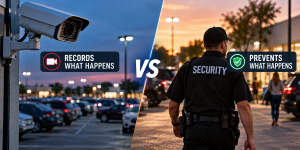
Maintain continuous foot or marked vehicle sweeps across parking lots to deter vehicle break ins, catalytic converter theft, and exterior loitering.
Phase 5: Post Event Venue Clearance and Debrief
Safety responsibilities do not conclude when the final music track fades.
-
Systematically sweep interior restrooms, lounges, and dark corners to clear remaining patrons.
-
Guide crowds outward through well lit main exit pathways to avoid crowding at doors.
-
Monitor parking lot traffic flow to prevent vehicle gridlock and impaired driving incidents.
-
Secure box office revenue and provide armed escort for end of night cash deposits.
-
Monitor loading docks while production vendors tear down heavy staging and lighting equipment.
-
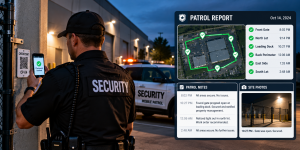
Document all patron ejections, medical calls, and property damage in an official shift log.
4 Common Compliance Mistakes Venue Managers Must Avoid
1. Locking Emergency Exit Doors to Stop Gatecrashers
Never lock an emergency panic bar exit from the outside to stop gatecrashers. Doing so violates Texas Life Safety codes, creates fatal bottleneck hazards, and leads to immediate venue shutdown by city fire marshals. Use stationary security guards at exit doors instead.
2. Employing In House Staff as Unlicensed Bouncers
Utilizing venue personnel without active Texas DPS security credentials to perform physical restraint or ejections creates massive civil exposure and invalidates commercial insurance policies.
3. Overlooking Parking Lot Premise Liability
Texas courts frequently hold property owners liable for violent crimes or property thefts occurring in adjacent parking lots if lighting or security was negligent.
4. Failing to Maintain Documented Incident Logs
Every patron ejection, medical call, or verbal de escalation must be recorded in an official operational log book with officer badge numbers, timestamps, and witness statements.
Partner with Gods Armour Security for Professional Venue Protection
Whether you manage an expansive downtown exhibition center, an upscale private event hall, or outdoor festival grounds, Gods Armour Security delivers comprehensive, compliant, and professional security management across Greater Houston.
Our command team conducts on site security audits, customizes operational checklists, and provides thoroughly vetted, Texas DPS licensed personnel trained to protect your facility while upholding exceptional guest hospitality.
Planning an upcoming gathering? Request a comprehensive venue security consultation[cite: 1] or contact our Houston dispatch desk directly at (713) 878 9984[cite: 1] to schedule an on site facility risk assessment.