Hosting a gathering with alcoholic beverages in Texas introduces complex legal exposure that goes far beyond buying liquor and hiring a bartender. Organizers frequently ask whether state law mandates licensed security personnel whenever beer, wine, or spirits are served.
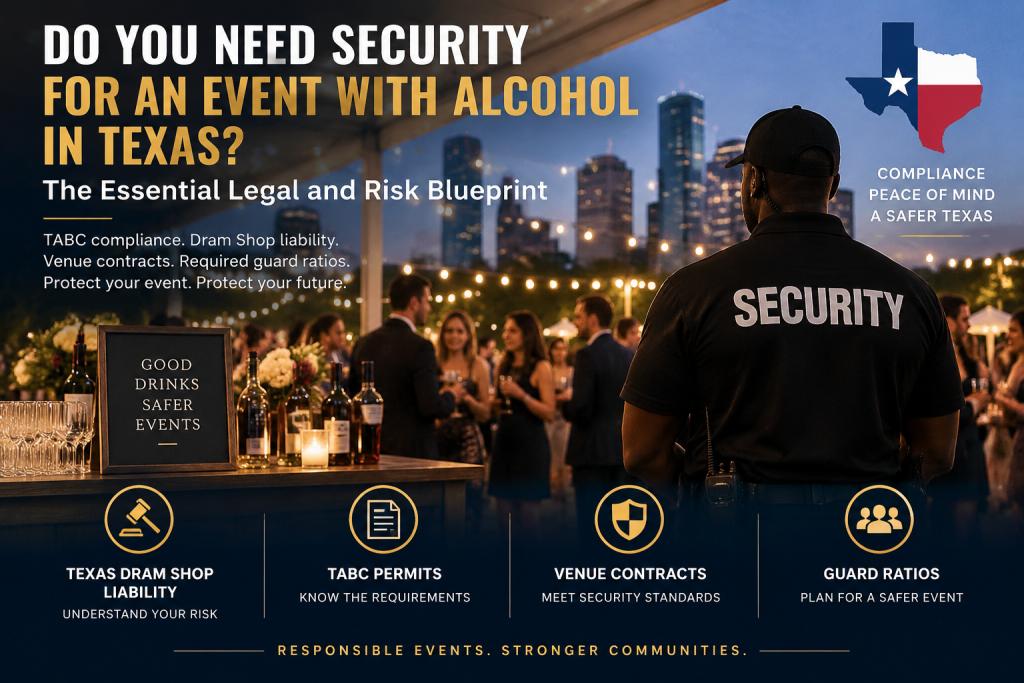
The straightforward answer: while Texas state law does not impose a single universal guard mandate for small, private backyard parties, security becomes strictly mandatory the moment you book a commercial venue, apply for a temporary event permit, sell drinks commercially, or face civil exposure under Texas Dram Shop statutes.
From liability shifting to crowd psychology, integrating professional security guards protects your financial assets, ensures compliance with the Texas Alcoholic Beverage Commission, and shields your organization from catastrophic legal claims.
Phase 1: Statutory Authority, TABC Enforcement, and Civil Liability
Understanding the statutory landscape is vital for venue coordinators, corporate planners, and private hosts operating across Harris County and Greater Houston.
1. The Texas Dram Shop Act and Third Party Civil Liability
Under Chapter 2 of the Texas Alcoholic Beverage Code, commercial providers and event organizers can be held civilly liable for damages caused by an overserved patron. If an individual is served alcohol while visibly intoxicated to the point of presenting a clear hazard to themselves or others, and subsequently causes a motor vehicle collision or physical assault, victims have legal standing to sue.
Courts examine whether the event host exercised a reasonable duty of care. Having state licensed security officers stationed across beverage zones provides immediate documented proof that the host maintained active, professional oversight to prevent overconsumption and violent behavior.
2. TABC Temporary Gathering and Concession Permits
When an event sells alcohol directly, includes alcoholic drinks within a paid ticket price, or utilizes drink ticketing systems, it falls under commercial jurisdiction. Organizers must secure a temporary permit from the Texas Alcoholic Beverage Commission.
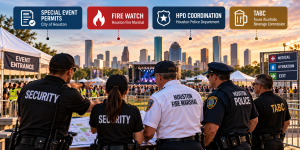
During the permit approval process, local authorities, including the city police department, county sheriff, or local fire marshal, must sign off on the operational security plan. Permits are routinely conditioned on hiring licensed security personnel or off duty peace officers.
3. Commercial Venue Lease Agreements
Commercial event venues throughout Texas operate under high value general liability policies. Insurance carriers frequently require venue management to include strict security clauses in their rental agreements:
- Mandatory guard staffing whenever alcohol service exceeds two continuous hours.
- Requirement for security officers to remain on site until the final vendor vacates the facility.
- Mandated ratios, typically one guard for every 50 to 75 attendees when hard liquor is offered.
Phase 2: Distinct Triggers That Make Alcohol Security Mandatory
Different gatherings carry unique exposure levels. Evaluate your specific framework against these four definitive operational triggers:
1. Commercial Sales vs Private Social Functions
If money changes hands in any format, whether via cash bars, prepaid wristbands, or charity fundraiser auction tickets, the event is strictly regulated. State inspectors conduct random compliance stings. Failure to post visible security at bar perimeters to prevent minor access or illicit service can lead to immediate shutdown and criminal citations.
2. Events Held on Municipal and Public Property
Reserving civic centers, public parks, historic plazas, or county pavilions in Houston, Sugar Land, or The Woodlands triggers municipal code requirements. Local parks departments require private hosts to submit an approved security plan staffed by licensed private security officers or commissioned off duty officers before issuing alcohol permits.
3. Open Bar Settings and Self Service Drink Stations
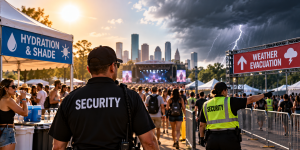
Self service kegs, unmonitored wine tables, or open bars present the highest risk index. Guests consume alcohol at a faster rate when drinks are self dispensed. Stationing security personnel next to serving stations deters underage attendees from pouring their own drinks and stops guests from taking full bottles onto dance floors or outdoor perimeters.
4. Large Headcounts Exceeding 100 Attendees
At large events, bartenders cannot pour drinks, monitor consumption rates, verify identification, and watch for patron distress simultaneously. Security guards relieve bar staff by managing perimeter lines, verifying credentials, and intervening early when guest behavior deteriorates.
Phase 3: Recommended Guard Ratios for Events Serving Alcohol
Introducing alcohol instantly tightens required staffing levels compared to dry gatherings. To calculate baseline guard requirements, consult our core operational guide on how many security guards per person for an event.
| Event Profile with Alcohol | Target Guard Ratio | Primary Guard Positioning | Key Operational Mandate |
|---|---|---|---|
| Corporate Banquet or Gala | 1 guard per 75 guests | Main entrance, bar perimeter, roaming interior | Credential check, subtle asset protection, discrete guest monitoring |
| Private Wedding Reception | 1 guard per 50 to 60 guests | Ingress point, gift table, bar station, parking lot | Deter uninvited guests, monitor bar lines, protect parked vehicles |
| Ticketed Music Concert / Club | 1 guard per 30 to 45 guests | Entry search lane, stage front barricade, bar queue | Weapon wanding, crowd surge control, patron extraction |
| Open Air Community Festival | 1 guard per 25 to 40 guests | Boundary fencing, beer garden gate, roving leads | Stop fence hoppers, check wristbands, clear emergency lanes |
When budgeting for these deployments, review our comprehensive pricing analysis on event security costs in Houston to evaluate hourly rates, shift minimums, and supervisor allowances.
Phase 4: Core Operational Duties of Alcohol Event Security Officers
Professional security officers perform specialized tasks to keep alcohol fueled gatherings peaceful without creating an intimidating environment.
1. Primary Entry Age Verification and Tamper Proof Wristbanding
Checking IDs repeatedly at high volume bars slows beverage service and frustrates guests. Security officers establish dedicated age verification checkpoints at the main entrance:
- Inspecting physical identification using ultraviolet scanners to catch sophisticated counterfeit cards.
- Fastening tamper evident, non transferable wristbands to verified patrons of legal drinking age.
- Allowing bartenders to focus purely on portion control and service speed.
2. Bar Line Crowd Control and Queue Management
Bar stations are natural friction points where pushing, cutting in line, and verbal disputes occur. Stationary guards maintain structured queue pathways, ensure patrons do not crowd the service counter, and prevent guests from loitering around the pouring area.
3. Early Behavioral De-Escalation and Conflict Mitigation
Trained officers monitor early behavioral indicators: slurred speech, aggressive posturing, uncoordinated motor skills, and elevated voices. Intervening with verbal de-escalation while a disagreement is minor prevents physical brawls and property damage.
4. Safe Patron Ejection Protocols
When a patron must be removed due to aggressive behavior or extreme intoxication, officers execute a coordinated, quiet ejection. Guests are escorted out through discreet service doors rather than the main ballroom floor, protecting the dignity of the event and avoiding crowd agitation.
5. Parking Lot Monitoring and Impaired Driving Interception
Liability does not end at the venue door. Roving parking lot officers watch for intoxicated patrons attempting to drive away. Officers coordinate with on site event planners, designated drivers, or rideshare services to ensure impaired individuals leave safely, eliminating fatal roadway liability.
Phase 5: Critical Compliance Traps and Licensing Realities
Organizers often make critical operational mistakes when arranging security for gatherings with alcohol:
1. The Peril of Unlicensed Bouncers and Volunteers
Tasking off duty athletic friends, family members, or venue ushers to manage intoxicated individuals is extremely risky. Under Chapter 1702 of the Texas Occupations Code, providing security services without an active license issued by the Texas DPS Private Security Bureau is a Class A misdemeanor.
If an unlicensed guard physically restrains an attendee, insurance carriers will deny coverage, leaving the host and venue personally exposed to battery, unlawful restraint, and personal injury lawsuits.
2. Neglecting Outdoor Perimeters and Parking Areas
Intoxication often spills into exterior pathways and parking areas. Vehicle break ins, property vandalism, and physical altercations occur most frequently where lighting is dim. A complete operational footprint always balances indoor bar monitors with outdoor roving patrols. For a comprehensive operational walk through, utilize our event security checklist for venue managers.
3. Overlooking Special Etiquette for Celebrations
Formal family functions demand a distinct security presence compared to crowded nightclubs. When planning wedding receptions, guards must balance firm safety standards with refined hospitality. Review our specialized guide on when to hire wedding security guards in Texas for ceremony and reception protocols.
Partner with Gods Armour Security for Compliant Event Protection
Serving alcohol at an event should enhance the guest experience, not generate legal risk or safety concerns. Gods Armour Security delivers certified, fully insured, and highly trained security personnel throughout Houston, Harris County, Fort Bend County, and surrounding Texas regions.
Our operations leadership evaluates your venue layout, guest demographics, and beverage service schedule to build a compliant security plan. Whether you require suit attired guards for an upscale gala or structured crowd control for an open air festival, our team guarantees professionalism and safety.
Planning an upcoming event serving alcohol? Request a free event security consultation or call our Houston command center directly at (713) 878 9984 to finalize your operational details.
Key Takeaways
- Security is practically and legally necessary in Texas whenever alcohol is served in commercial venues, public parks, or ticketed gatherings.
- The Texas Dram Shop Act holds organizers, venues, and hosts accountable for damages caused by overserved patrons.
- Serving alcohol reduces planning ratios from 1 guard per 100 guests down to 1 guard for every 50 to 75 attendees.
- Professional security duties include UV age verification, bar queue management, early verbal de-escalation, and parking lot impaired driving intervention.
- Never deploy unlicensed bouncers; always verify active credentials with the Texas DPS Private Security Bureau to ensure valid insurance coverage.