For multi-family apartment complexes across Greater Houston and Texas, nighttime represents the highest-risk operational window. Between the hours of 10:00 PM and 6:00 AM, on-site leasing offices close, on-site management departs, and residential properties become prime targets for organized criminal crews. From recurring catalytic converter thefts and vehicle window smashes to unauthorized pool gatherings, domestic disturbances, and package theft, unmonitored complexes experience severe security degradation.
Chronic overnight incidents do more than cause insurance claims; they erode tenant retention, spur negative online leasing reviews, and elevate liability exposures. When prospective tenants read reviews citing midnight vehicle break-ins or unaddressed loitering, occupancy rates drop. Property managers face the urgent operational challenge of protecting sprawling parking lots, breezeways, and shared amenities without straining operating budgets.
Deploying dedicated overnight security patrols provides the visible deterrence, rapid physical response, and GPS-verified accountability required to safeguard multi-family communities. This operational guide examines patrol models, patrol workflows, parking enforcement rules, and vendor contracting standards across Texas.
Phase 1: Nighttime Vulnerabilities in Multi-Family Communities
Criminal targeting of apartment complexes follows distinct overnight behavioral patterns that property managers must address:
1. Coordinated Vehicle Break-Ins and Parts Theft
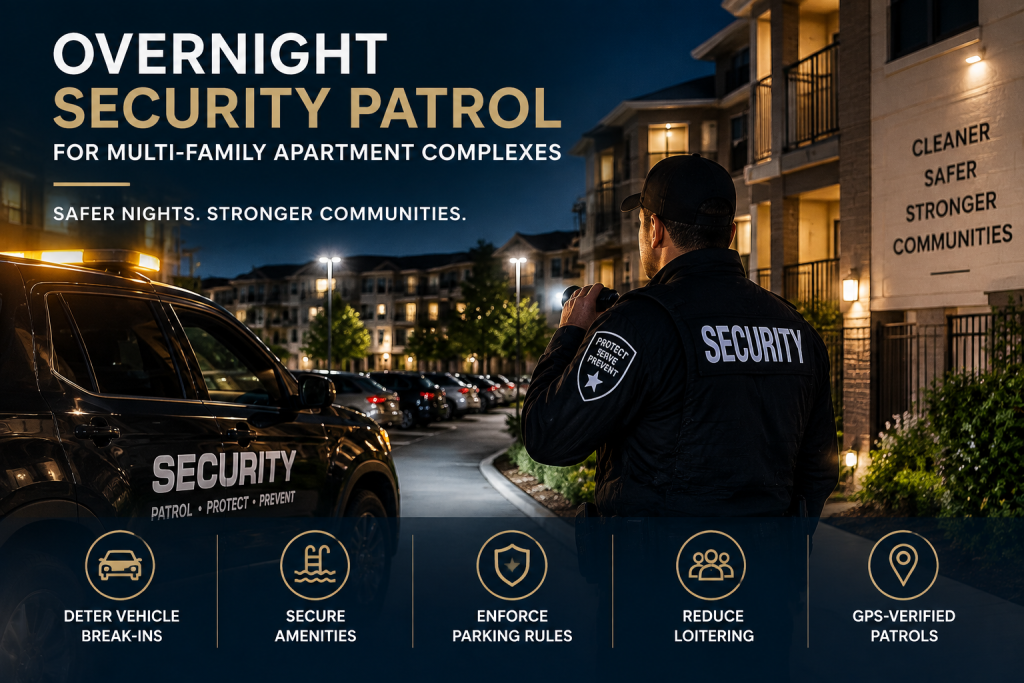
Modern vehicle burglary crews move through multi-family surface lots and parking garages in minutes. Targeting high-value vehicle wheels, catalytic converters, and visible personal belongings, these actors exploit expansive, unpatrolled parking bays. Marked patrol vehicles with amber emergency light bars create active visible deterrence that disrupts organized theft operations.
2. Amenity Trespassing and After-Hours Noise
Clubhouse pools, fitness centers, barbecue pavilions, and rooftop lounges invite after-hours trespassing, loud parties, and underage drinking. Unmonitored amenities frequently suffer severe vandalism, broken glass hazards, and furniture destruction, exposing the property to premature repair costs and premises liability claims.
3. Dark Stairwell and Breezeway Loitering
Complexes with open-breezeway floor plans feature numerous blind corners, recessed doorways, and dimly lit stairwells. Unauthorized individuals exploit these hidden areas for loitering, illegal substance use, and package theft. To eliminate parcel vulnerabilities, review our operational guide on how to prevent package theft in apartment buildings and condos.
4. Gate Breaches and Unauthorized Vehicle Staging
Subdivision gates and perimeter arms often experience mechanical failures or tailgating during late hours. Intruders use tenant tailgating to park stolen or unvetted vehicles on site; explore modern gate management in our manual on access control best practices for gated communities.
Phase 2: Mobile Patrol vs Dedicated On-Site Guards: Operational Comparison
Multi-family property managers typically choose between two primary overnight staffing models:
| Operational Dimension | Dedicated On-Site Night Guard (8 to 12 Hours) | Dedicated Roving Mobile Patrol (Shared or Dedicated Vehicle) |
|---|---|---|
| Physical Presence | Continuous, uninterrupted on-site footprint for the entire shift. | Periodic, randomized sweeps (typically 3 to 6 hits per night). |
| Typical Texas Bill Rate | 25 to 38 dollars / hr (Unarmed) | 35 to 50 dollars / hr (Armed) | 45 to 75 dollars / visit (or 1,800 to 4,500 dollars flat monthly fee) |
| Primary Strength | Immediate incident intervention, static gatehouse control, continuous foot patrol. | High-visibility vehicular deterrent covering large acreage on an economical budget. |
| Ideal Property Profile | High-density mid-rise, urban luxury complexes, properties with elevated crime history. | Sprawling garden-style suburban complexes, multi-acre communities, budget-limited HOAs. |
For complete contract structures, licensing mandates, and budget formulas, examine our comprehensive guide on HOA security guard services pricing and contract guide.
Phase 3: The 5-Step Overnight Patrol Routine
Effective overnight security cannot rely on random driving. Professional security companies follow a structured, multi-point patrol methodology during every shift:
1. Perimeter and Gate Audits
Verify that all vehicular entry and exit gates cycle correctly. Inspect pedestrian breezeway turnstiles and emergency crash gates for evidence of propping, tampering, or mechanical failure.
2. Amenity Lockdowns & Clearances
At 10:00 PM, officers physically sweep pool enclosures, outdoor kitchens, fitness centers, and business lounges. Clear uninvited guests, ensure doors deadbolt, and verify security cameras are unblocked.
3. High-Visibility Parking Sweeps
Conduct low-speed vehicular patrols through surface carports and parking structures using roof-mounted amber beacons. Illuminate dark rows with spotlights to deter loitering and identify prowlers.
4. Foot Sweeps of Breezeways
Officers dismount from vehicles to conduct physical foot sweeps of residential breezeways, mail kiosks, trash compactors, and dark stairwells, scanning NFC checkpoints along the route.
5. Maintenance and Lighting Audits
Document security lighting outages, irrigation water leaks, abandoned vehicles, and property hazards. Deliver daily digital reports directly to maintenance supervisors every morning.
When selecting a vendor to execute these patrol procedures, utilize our structured security vendor checklist for condo and HOA boards to vet provider credentials and operational capacity.
Phase 4: Parking Enforcement and Noise De-Escalation Protocols
Interacting with residents during late-night hours requires clear post orders, tactical patience, and legal adherence:
1. Texas Statutory Towing and Parking Enforcement
Parking conflicts represent a major operational friction point. If overnight patrols are tasked with tagging vehicles parked in fire lanes, blocking trash dumpsters, or parked in reserved tenant spaces, the property must strictly follow Texas Occupations Code Chapter 2308. Clear, statutory warning signage must be installed at all property entrances, and officers must take time-stamped photographs before initiating a commercial tow request.
2. Noise Complaints and Domestic De-Escalation
When responding to tenant noise complaints, patrol officers must prioritize verbal de-escalation over confrontation. Officers announce themselves professionally, inform the resident of community quiet-hour violations, and request voluntary compliance. If an incident involves active domestic violence, physical weapons, or direct threats, officers do not engage alone; they contact municipal law enforcement immediately while maintaining perimeter observation.
For premier urban high-rises balancing firm enforcement with high-end hospitality, explore the benefits of hybrid staffing in our guide on concierge vs security guard services.
Phase 5: Technology, Proof of Patrol, and Texas DPS Compliance
Property managers cannot manage what they cannot verify. A professional overnight patrol program relies on state regulatory compliance and transparent tracking software:
1. GPS Geofencing and Real-Time Guard Tour Systems
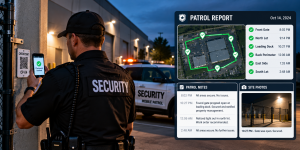
Reject providers relying on verbal assurances. Professional security companies employ cloud-based Guard Tour Verification Systems. Using mobile handheld terminals, officers scan electronic RFID or QR checkpoints placed across property checkpoints (e.g., pump houses, mail rooms, rear fence lines). Property managers receive real-time digital dashboards showing exact patrol routes, timestamps, and GPS geofence breadcrumbs.
2. Texas DPS Private Security Bureau Mandates
Under Chapter 1702 of the Texas Occupations Code, operating an overnight mobile patrol or guard service requires an active Class B or Class C security contractor license issued by the Texas DPS. Individual patrol officers must hold active Level II (Unarmed) or Level III (Commissioned Armed) security licenses. Employing uncertified night watchmen voids commercial property insurance during a major catastrophic loss.
3. Insurance Endorsements and Automobile Liability
Because mobile patrol involves operating motor vehicles across private residential property, verify that the security provider carries at least 1,000,000 dollars in Commercial Automobile Liability insurance alongside standard 1,000,000 dollar General Liability policies, naming the management company as Additionally Insured.
If high-profile corporate tenants or executives within your property experience direct personal threats or stalking, explore dedicated individual details in our guide on 7 signs you need a personal security detail.
Partner with Gods Armour Security for Multi-Family Patrols
Safeguarding your multi-family community overnight requires a disciplined, accountable security partner. Gods Armour Security provides Texas DPS certified security officers, marked mobile patrol fleets, and state-of-the-art GPS tour verification across Greater Houston, Harris County, and surrounding residential corridors.
Our supervisory leadership collaborates directly with property managers and regional directors to eliminate vehicle thefts, enforce parking rules, maintain perimeter defense, and protect community reputations. We deliver transparent digital reports every morning, ensuring your property is protected while you sleep.
Looking to secure your multi-family complex tonight? Request a free multi-family security patrol assessment or contact our Houston dispatch operations center directly at (713) 878-9984.
Key Takeaways
- Multifamily property crimes peak between 10:00 PM and 6:00 AM, targeting parking carports, dark breezeways, and after-hours amenities.
- Marked mobile patrols provide an economical, high-visibility deterrent for expansive complexes, while dedicated guards suit high-density urban properties.
- Mandate GPS geofencing and electronic RFID checkpoint tour scanning to receive verified proof of every overnight physical sweep.
- Texas Occupations Code Chapter 2308 requires compliant statutory signage before security can execute vehicle towing for parking violations.
- Ensure your provider maintains active Texas DPS Private Security Bureau licensing and comprehensive commercial auto and general liability insurance.