For commercial property owners, shopping center managers, and corporate facility directors across Greater Houston and Texas, parking structures and surface lots represent their single largest liability exposure. According to municipal crime data and the FBI Uniform Crime Reporting program, over 70 percent of commercial property crimes occur in exterior transition areas, with vehicular burglary (smash-and-grab theft) ranking as the most persistent threat.
A string of vehicle break-ins does far more than frustrate visitors. It degrades tenant retention, depresses retail foot traffic, damages property reputation, and exposes facility operators to catastrophic negligent security lawsuits under Texas premises liability doctrines. When property managers fail to take reasonable precautions in known high-crime corridors, courts hold them accountable for foreseeable criminal acts.
Eliminating vehicle break-ins requires moving beyond passive warning signs. Commercial facilities must implement a proactive defense combining Crime Prevention Through Environmental Design (CPTED), advanced surveillance technology, physical perimeter hardening, and visible mobile patrol officers. This actionable guide details proven operational strategies to stop car break-ins and protect commercial parking assets.
Phase 1: Why Commercial Parking Lots Attract Vehicle Burglary Crews
Professional auto burglary syndicates do not choose targets at random. They conduct brief counter-surveillance sweeps across shopping plazas, corporate office parks, and medical centers, hunting for four specific vulnerabilities:
| Vulnerability Vector | How Criminals Exploit It | Required Physical Countermeasure |
|---|---|---|
| Multiple Unmonitored Ingress/Egress | Unfenced surface lots with open perimeter curb cuts allow getaway vehicles to enter and flee in seconds. | Channelize traffic using landscaped berms, perimeter bollards, and monitored single-point access choke points. |
| Sub-Standard Foot-Candle Illumination | Dim sodium lighting, burned-out lamps, and heavy tree shadows provide concealment for window punches. | Upgrade to 5000K daylight LED arrays maintaining a minimum of 2.0 to 5.0 maintained foot-candles across all bays. |
| Zero Human Patrol Presence | Crews know static cameras cannot physically intervene; they break 10 to 20 windows within 4 minutes uninterrupted. | Deploy marked vehicle mobile security patrols conducting unpredictable physical loops and spotlight sweeps. |
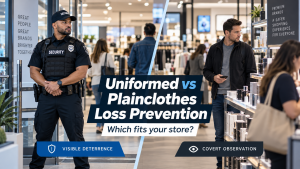
| High-Value Target Density | Medical complexes, fitness centers, and corporate lots where laptops, gym bags, and firearms are left under seats. | Enforce proactive visitor awareness campaigns alongside visible uniformed lobby and courtyard interdiction. |
For multifamily communities and residential compounds facing the same parking lot challenges, review our tactical guide on overnight security patrols for multifamily apartment complexes.
Phase 2: Architectural Hardening Through CPTED Principles
Crime Prevention Through Environmental Design (CPTED) relies on altering the physical environment to influence offender decisions before a crime occurs. Apply these three structural fundamentals:
1. Natural Surveillance and Sightline Clearing
Perpetrators target vehicles concealed from public view. Property managers must enforce the 3-7 Rule of security landscaping: prune tree canopies up to at least 7 feet from the ground and trim perimeter shrubs down below 3 feet. This eliminates blind spots and ensures that passersby, lobby staff, and security officers maintain clear lines of sight from property entrances to vehicle aisles.
2. Lighting Standards and Elimination of Deep Shadows
Vehicle burglaries thrive in poor lighting. Upgrading from outdated high-pressure sodium bulbs to modern LED fixtures reduces energy consumption while dramatically improving camera sensor rendering and facial recognition. Focus illumination on exterior stairwells, elevator lobbies, dumpster enclosures, and secluded rear parking pads.
3. Territorial Reinforcement and Access Channelization
Surface parking lots should not function as cut-through thoroughfares for public street traffic. Use physical boundaries such as decorative wrought-iron fencing, masonry retaining walls, and controlled entry gates to establish a psychological threshold indicating private property. Discover access control design techniques in our resource on access control best practices for commercial properties.
Phase 3: Tactical Layering: Surveillance Cameras vs Marked Security Patrols
A common error among facility managers is relying solely on electronic security cameras to stop parking lot crime:
1. The Camera Reality
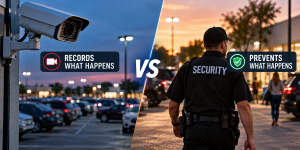
Surveillance cameras are passive forensic tools. Masked burglary crews using stolen vehicles or cloned paper license plates break vehicle glass and depart before police dispatch can react. Cameras record the loss; they rarely stop it.
2. Marked Mobile Patrol Deterrence
A marked security patrol cruiser with high-visibility amber roof beacons, LED alley spotlights, and a uniformed Texas DPS officer instantly alters criminal risk calculations. Burglary crews avoid active, unpredictable patrols in favor of unguarded lots.
3. Active Interdiction vs Passive Recording
Patrol officers physically challenge loiterers, record suspicious license plates, escort late-night retail employees, and notify vehicle owners of exposed valuables or unlocked doors before criminals strike.
4. Integrated Security Ecosystem
The ideal setup pairs high-resolution License Plate Recognition (LPR) cameras at entrance gates with mobile patrol units dispatched to investigate alerts immediately.
For an in-depth financial and operational comparison of electronic monitoring against guard forces, read our detailed report on security guards vs surveillance cameras for commercial facilities.
Phase 4: Operational Patrol Protocols to Neutralize Break-In Crews
To eliminate car break-ins, security guard companies must execute rigorous, randomized patrol tactics:
1. Abolish Fixed Timing and Predictable Patrol Routes
Criminal lookouts monitor security guard movements. If a patrol vehicle circles a commercial plaza every 60 minutes on the hour, thieves time their operation for minute 15. Patrol routes must be completely randomized, incorporating frequent stop-and-hold stationary positions, sudden reversals, and foot patrols through covered garage ramps.
2. Deploying High Lumen Spotlight Sweeps
Patrol vehicles equipped with 360-degree LED spotlights illuminate dark corners, alcoves, and spaces between parked SUVs. Lighting up vehicle rows from multiple angles strips thieves of the darkness they rely on to look inside tinted vehicle windows.
3. Rapid Coordination During High-Risk Transition Shifts
Break-ins spike during specific transition windows: evening retail closing hours, restaurant shift changes, and morning gym rush hours. Stationing dedicated officers during these windows provides customer safety and deters opportunistic predators; explore operational transition timing in our manual on opening and closing security protocols for commercial facilities.
When selecting a patrol vendor to protect your commercial parking lots, use our structured security vendor evaluation checklist to verify active state licensing, GPS patrol tracking capabilities, and liability coverage.
Phase 5: Texas Premises Liability: Protecting Property Owners from Lawsuits
In Texas, property owners have a legal duty to protect business invitees from foreseeable third-party criminal acts. If a commercial property has a documented history of car break-ins, smash-and-grabs, or armed robberies, courts view subsequent attacks as foreseeable.
Failing to implement reasonable security measures, such as repairing lighting, fixing perimeter fences, or hiring professional patrol officers, exposes owners to substantial civil liability under Chapter 1702 of the Texas Occupations Code. Implementing documented, GPS-logged mobile security patrols establishes a strong legal defense, proving that management took proactive, reasonable steps to mitigate criminal exposure on their premises.
For corporate executives, retail developers, or property managers seeking transparent pricing for vehicle patrols and guard staffing in Texas, explore our budget guide on security officer hourly costs in Houston.
Partner with Gods Armour Security for Commercial Parking Lot Defense
Stopping vehicle break-ins requires dependable, highly visible physical deterrence. Gods Armour Security provides marked mobile vehicle patrols, foot patrol officers, and Texas DPS licensed armed security guards designed specifically for commercial shopping centers, corporate office parks, medical facilities, and parking garages across Greater Houston, Harris County, and statewide Texas.
Our supervisory leadership collaborates directly with commercial property managers to perform site-specific CPTED lighting audits, eliminate blind spots, deploy GPS-tracked patrol sweeps, and shut down criminal syndicates before they compromise your property.
Ready to secure your commercial parking lots and protect your tenants? Request a commercial parking lot security consultation and site audit or call our Houston command operations desk directly at (713) 878-9984.
Frequently Asked Questions
What is the most effective way to stop car break-ins in commercial lots?
The single most effective deterrent is highly visible, randomized marked vehicle mobile patrols. While cameras record forensic video after the incident, uniformed security officers driving marked patrol cars with active light bars actively disrupt criminal reconnaissance and force thieves to abandon the property.
What is CPTED in parking lot security?
Crime Prevention Through Environmental Design (CPTED) is a multi-disciplinary approach that uses physical design to reduce crime. In parking lots, it involves trimming vegetation to maintain clear sightlines (the 3-7 rule), eliminating dark shadows with bright LED lighting, and using fencing and bollards to control vehicle entry and exit points.
Are commercial property owners liable for parking lot break-ins in Texas?
Yes. Under Texas premises liability laws, if criminal acts are deemed foreseeable due to previous crime in the area or prior incidents on site, property owners have a legal obligation to take reasonable security precautions. Failure to address known hazards like broken lights or lack of security patrols can result in civil negligence lawsuits.
Do dummy cameras or warning signs reduce car break-ins?
No. Professional auto theft and smash-and-grab crews easily spot fake cameras and ignore standard warning signs. Relying on fake security equipment actually increases premises liability exposure because it creates a false sense of security without providing actual defense.
Key Takeaways
- Over 70 percent of commercial property crimes occur in parking lots, with auto burglary being the most common offense.
- Surveillance cameras provide post-incident evidence, but only marked mobile security patrols provide real-time physical deterrence against smash-and-grab crews.
- Apply CPTED design standards: enforce the 3-7 landscaping rule, upgrade to 5000K LED illumination, and eliminate multiple unmonitored escape routes.
- Randomize security patrol schedules to prevent criminal lookouts from timing patrol gaps.
- Documented security patrols protect Texas property owners from costly negligent security premises liability lawsuits.