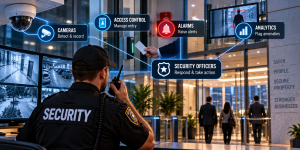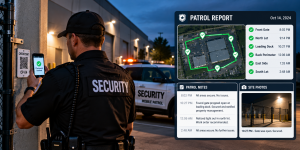
Securing an active commercial construction site or civil infrastructure project across Greater Houston and Texas presents a persistent budget and operational challenge. General contractors and developers manage millions of dollars in staging assets, including earthmoving machinery, copper reels, and commercial power tools. Deciding how to protect those assets generally boils down to a core debate: should you deploy uniformed on-site security guards, invest in solar mobile surveillance camera trailers, or implement an integrated hybrid model?
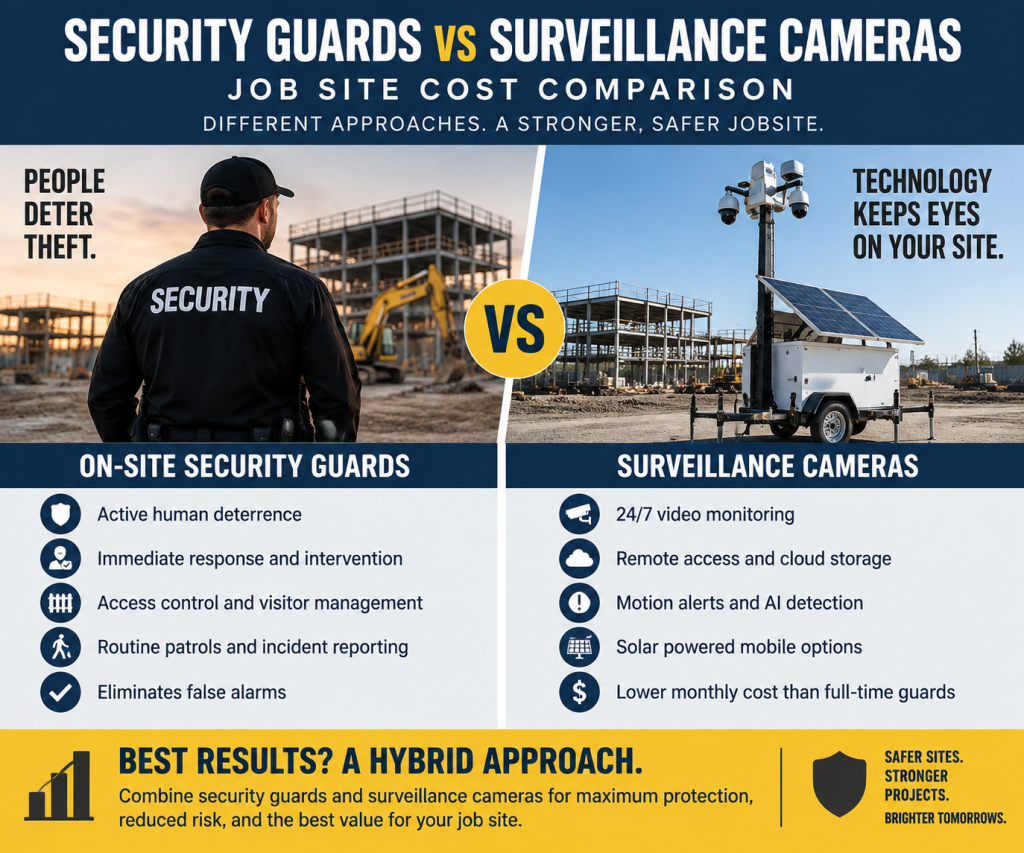
Proponents of camera trailers point to reduced monthly line-item expenses and 24/7 video recording. Conversely, advocates for physical security guards highlight active human deterrence, immediate physical intervention, access gate control, and the elimination of police-ignored false alarms. Choosing incorrectly leads to wasted budget on systems that thieves easily circumvent, or overspending on unnecessary static guard posts.
This operational analysis provides an unvarnished cost comparison, breakdowns of real-world equipment capabilities, operational limitations, and guidelines for deploying the most cost-effective security framework for Texas jobsites.
Phase 1: Direct Financial Cost Comparison: Guards vs Cameras
Evaluating the true financial footprint requires looking beyond initial bill rates to understand equipment leases, monitoring fees, and labor overtime:
| Security Solution | Standard Texas Pricing Model | Estimated Monthly Cost | Included Features & Hidden Costs |
|---|---|---|---|
| Mobile Solar Surveillance Trailer (Monitored) | 2,500 to 4,500 dollars / month (Turnkey lease) | 2,500 to 4,500 dollars / unit | Covers solar mast, AI thermal cameras, and cloud monitoring. Hidden costs: cellular data limits and municipal false alarm fines. |
| Dedicated Overnight Security Guard (Unarmed Level II) | 24 to 34 dollars / hr (Texas bill rate) | 8,500 to 12,500 dollars (12-hr overnight coverage) | Provides human presence, gate ingress logging, active confrontation, and physical foot sweeps of dark interior structures. |
| Dedicated Armed Security Guard (Level III Commissioned) | 35 to 50 dollars / hr (Texas bill rate) | 12,500 to 18,000 dollars (12-hr overnight coverage) | Maximum deterrence against armed syndicates, catalytic converter rings, and organized equipment haulers. |
| Marked Mobile Security Patrol (Vehicle Sweeps) | 45 to 75 dollars / sweep (or flat rate) | 1,800 to 4,200 dollars (3 to 6 sweeps nightly) | Periodic physical presence, lock verification on Conex boxes, perimeter fence inspection, and spotlight sweeps. |
| Integrated Hybrid Model (Trailer + Mobile Patrol) | Combined tech lease and patrol SLA | 4,500 to 7,500 dollars / month | Continuous camera coverage backed by dedicated mobile security officers dispatched to verified alarms. |
For more details on hourly guard structures across commercial and event environments, explore our foundational rate guide on event and commercial security costs in Houston.
Phase 2: Operational Capabilities and Failure Points
Assessing security options requires looking beyond line items to examine how each solution performs during an active criminal incident:
1. Surveillance Cameras: Strengths and Critical Blind Spots
Solar-powered mobile camera trailers equipped with optical and thermal pan-tilt-zoom (PTZ) units deliver distinct advantages: they never sleep, offer continuous perimeter recording, and cost less than dedicated guard shifts. However, cameras suffer from operational limitations:
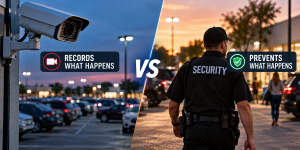
- Passive Recording vs Active Prevention: Cameras record crimes; they rarely stop them. Masked burglary crews wearing generic hoodies and driving unplated pickup trucks can hook up a trailer or strip copper in under six minutes, long before local law enforcement arrives.
- The Police Response Dilemma: In major metropolitan jurisdictions like Houston and Harris County, municipal police prioritize in-progress violent emergencies. An automated call reporting a video alarm at an unoccupied construction site is treated as a low-priority property call, with response times often exceeding 45 to 90 minutes.
- Structural Blind Spots: Cameras placed on 20-foot masts cannot see inside framed wood structures, enclosed stairwells, underground utility trenches, or locked Conex storage containers. Once an intruder enters a building rough-in, camera trailers provide zero situational awareness.
2. Security Guards: Human Intervention and Field Authority
A licensed physical security officer provides dynamic physical capabilities that electronic systems cannot duplicate:
- Immediate Physical Deterrence and Intervention: The physical presence of a uniformed officer or marked security vehicle causes opportunistic thieves to abort break-in attempts immediately. If a trespasser enters, the guard challenges and detains them under Texas law.
- Gatehouse Access Control: Officers verify delivery drivers, inspect subcontractor bills of lading, log commercial tags, and prevent unauthorized haul trailers from entering material storage compounds; see ingress protocols in our manual on access control best practices for gated communities.
- Dynamic Foot Sweeps: Guards physically patrol dark interior corridors, inspect padlock integrity on jobsite storage containers, and prevent high-value wiring losses; review storage hardening in our guide on how to stop copper wire and tool theft on active job sites.
- Labor Cost and Absenteeism: Guards represent a larger ongoing operational payroll expense. Selecting a low-bid vendor often leads to guard absenteeism, sleeping on post, or unvetted guards lacking proper state registrations.
Phase 3: Direct Feature Comparison Matrix
Compare how guards and surveillance systems address common jobsite threats:
| Operational Threat / Task | Surveillance Camera Trailers | Dedicated Security Guards |
|---|---|---|
| Stopping In-Progress Copper Theft | Triggers strobe and automated loudspeaker voice warnings; cannot physically detain thieves. | Physically intercepts intruders, detains suspects, and directs responding police units directly to the scene. |
| Preventing Heavy Machinery Tow-Away | Records flatbed trailer movement; see recovery data in our construction equipment theft statistics report. | Locks main vehicle access gates, inspects transport haul paperwork, and denies after-hours machinery release. |
| Managing Jobsite Access & Deliveries | No physical access gate control capabilities. | Screens subcontractor badges, logs visitor IDs, and enforces safety PPE mandates. |
| Jobsite Safety & Hazard Monitoring | Limited to optical line-of-sight view from fixed mast position. | Identifies water main leaks, smoldering fires, fuel spills, unsecured scaffolding, and breached fencing. |
When selecting a guard contractor to partner with, use our structured security vendor checklist for boards and contractors to verify state licensing, insurance limits, and supervision standards.
Phase 4: The Ideal Solution: The Integrated Hybrid Security Model
Modern commercial developers across Texas are moving away from choosing one single method. Instead, they deploy the Hybrid Jobsite Security Model, combining the continuous coverage of surveillance cameras with the responsive authority of mobile security patrols:
1. Mobile Camera Perimeter Coverage
Solar mobile trailers monitor outer fence lines and main equipment staging compounds 24/7, using thermal sensors to catch perimeter breaches immediately.
2. Dedicated Alarm Dispatch Response
When an alarm trips, the video monitoring center does not place an unverified call to municipal 911. Instead, they immediately dispatch an on-duty marked patrol officer who arrives on site within minutes.
3. Randomized Overnight Mobile Sweeps
Marked security patrol vehicles conduct multiple randomized sweeps between 10:00 PM and 5:00 AM, physically checking storage container puck locks and gates; see multi-acre sweep procedures in our guide on overnight security patrols for properties.
This hybrid approach reduces total monthly expenditures by 40 to 60 percent compared to staffing a 24/7 static guard post, while ensuring real human intervention when an active breach occurs.
Phase 5: Decision Framework: What Does Your Jobsite Actually Need?
Select your jobsite defense strategy based on clear project parameters:
Deploy Solar Surveillance Cameras When:
- The project is in early civil site preparation (dirt moving, grading) with minimal copper or tools stored on site.
- The total project security budget is strictly capped below 3,500 dollars per month.
- The property layout allows a clear, unobstructed line of sight across the entire perimeter from a single elevated mast.
Deploy Dedicated On-Site Security Guards When:
- The building has entered rough-in stages, with thousands of feet of exposed copper wire and stacked electrical switchgear.
- High-value equipment (skid steers, excavators, telehandlers) remains parked on site over extended weekends.
- The jobsite is located in an urban area with high property crime, chronic trespassing, or organized tool theft rings.
- Subcontractor delivery traffic requires hands-on gate access control and vehicle credential verification during shift transitions.
If high-profile developers or executives visiting your jobsite face contentious labor strikes or targeted safety threats, explore dedicated protection options in our diagnostic manual on 7 signs you need a personal security detail.
Partner with Gods Armour Security for Jobsite Protection
Safeguarding active construction developments requires an adaptable security strategy that balances budget discipline with dependable physical protection. Gods Armour Security provides Texas DPS certified security officers, marked mobile patrol fleets, and integrated jobsite defense solutions across Greater Houston, Harris County, and statewide Texas.
Our management team collaborates directly with general contractors and project managers to assess vulnerability profiles, prevent copper and tool theft, control contractor ingress, and design custom hybrid security plans that keep projects on schedule and within budget.
Need a customized cost assessment for your active jobsite? Request a free jobsite security consultation and risk audit or contact our Houston command operations center directly at (713) 878-9984.
Key Takeaways
- Solar surveillance trailers cost between 2,500 and 4,500 dollars monthly, providing continuous recording but lacking the ability to physically intervene.
- Dedicated overnight security guards cost between 8,500 and 18,000 dollars monthly, delivering direct physical deterrence, gate access control, and immediate incident intervention.
- Cameras suffer from interior building blind spots and slow municipal police response times for unverified property alarms.
- An integrated hybrid model combining surveillance trailers with randomized mobile patrols provides dependable protection at a 40 to 60 percent lower cost than 24/7 static guards.
- Ensure any security provider operates under an active Texas DPS Private Security Bureau license and carries full commercial liability insurance.