Every commercial construction project moves through distinct developmental stages, and each stage introduces unique vulnerabilities. During early excavation, a general contractor risks the loss of fuel and heavy equipment. During rough framing, the risk shifts to uninstalled lumber and scaffolding. When mechanical, electrical, and plumbing (MEP) trades arrive, the site faces catastrophic exposures to copper wire theft, HVAC condenser raids, and gang box tool burglaries.
Treating job site security as a static, one-size-fits-all line item is a costly mistake. Retaining a full 24/7 dedicated guard force during early dirt work wastes thousands of dollars in operating budget. Conversely, relying only on padlocks during interior finishes leaves millions of dollars in finished switchgear, appliances, and trade tools completely unprotected.
To optimize risk mitigation and budget allocation, construction managers must execute a scalable, phased security blueprint. This comprehensive operational guide provides an industry-tested, phase-by-phase job site security plan template designed specifically for commercial and residential contractors across Greater Houston and Texas.
Phase-by-Phase Construction Security Master Matrix
Align security countermeasures, physical barriers, and personnel deployments directly with each project milestone:
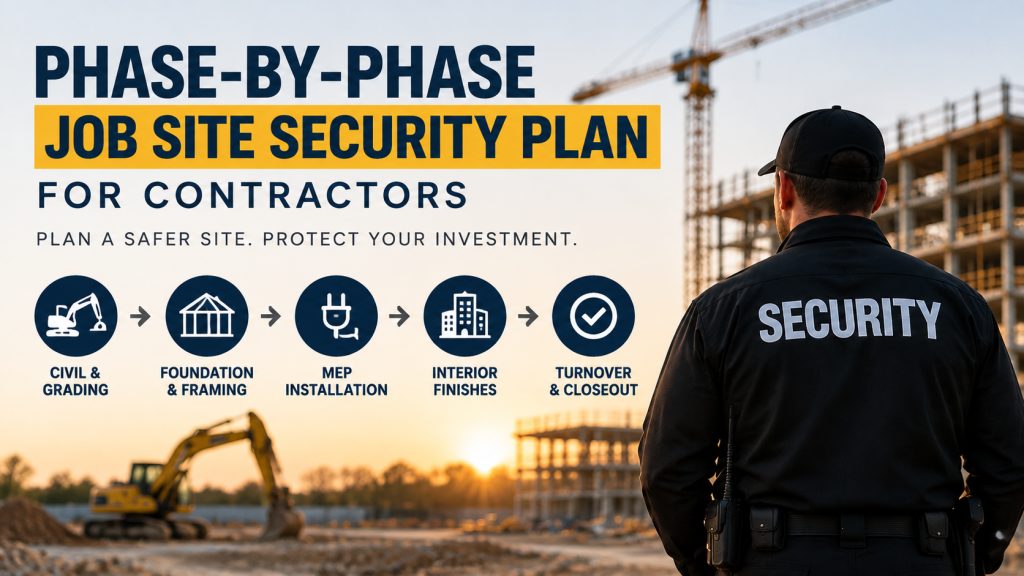
| Construction Phase | Primary Asset Vulnerabilities | Physical & Tech Controls | Recommended Guard Post |
|---|---|---|---|
| Phase 1: Civil & Grading (Pre-Construction) | Heavy machinery, diesel fuel, surveying equipment, trench trespassing. | Temporary perimeter chain-link, locked fuel caps, GPS telematics, solar camera trailers. | Overnight Mobile Patrol Sweeps (2 to 3 checks per night). |
| Phase 2: Foundation & Framing | Lumber bundles, structural steel, framing tools, fall hazard liabilities. | Solar light towers, secured material yards, locked scissor lifts, single vehicle access gates. | Mobile Patrol or 8-Hour Overnight Guard (10 PM to 6 AM). |
| Phase 3: MEP Rough-In & Dry-In | High-value copper wire reels, commercial gang boxes, HVAC coils, plumbing brass. | Hardened Conex containers with puck locks, just-in-time wire delivery, temporary core door locks. | Dedicated 12-Hour Overnight Guard (6 PM to 6 AM) + Armed Weekend Lockout. |
| Phase 4: Interior Finishes & Commissioning | Commercial appliances, fixtures, architectural finishes, unauthorized trade entry. | Digital access badges, active CCTV indoors, mandatory sub sign-in, trash compactor control. | Daytime Access Gate Attendant + Overnight Physical Foot Patrol. |
| Phase 5: Punch List & Owner Turnover | Property damage, vandalism, unvetted delivery drivers, package theft. | Permanent access readers activated, master key rotation, smart mailroom hardening. | Concierge or Front Desk Security transition; see concierge vs security guard roles. |
To evaluate baseline shift costs and pricing formulas for each deployment phase, review our detailed guide on how much construction site security costs per night.
Step-by-Step Security Execution by Project Milestone
1. Phase 1: Site Prep, Earthwork, and Grading
During the initial groundbreaking phase, your site consists mostly of acreage, dirt mounds, and heavy yellow iron:
- Perimeter Containment: Install 6-foot or 8-foot temporary chain-link fencing around the entire surveyed perimeter. Anchor fence posts into concrete footers at corner joints rather than temporary stands that can be tipped over easily.
- Heavy Equipment Defensive Parking: Practice defensive cluster parking every evening. Cluster small skid steers, trenchers, and mini excavators together and park 25-ton excavators around them with buckets lowered completely to the dirt; review our fleet defense guide on construction equipment theft prevention strategies.
- GPS Telematics Deployment: Ensure all rented or owned machines carry active, geofenced GPS tracking beacons programmed with evening movement curfews.
2. Phase 2: Structural Framing and Building Envelope
As framing lumber and structural steel arrive, site visibility changes dramatically:
- Lighting Towers: Deploy mobile solar LED lighting plants focused on main material staging compounds, cutting table yards, and ground-level entry portals.
- Equipment Lift Lockouts: Scissor lifts and boom lifts are frequently hotwired by intruders to access elevated building platforms. Install lockable battery disconnect switches and remove master keys.
- Enforce Single Gate Ingress: Padlock all secondary contractor gates. Funnel all deliveries and contractor vehicles through a primary gate monitored during shift changes; review gate control workflows in our manual on access control best practices for gated communities.
3. Phase 3: MEP Rough-Ins and Exterior Cladding (Maximum Risk Window)
Phase 3 represents the highest theft exposure of the entire project lifecycle. Copper spools, brass fittings, and trade tools enter the jobsite daily:
- Just-in-Time Copper Delivery: Strictly prohibit subcontractors from storing surplus spools of copper feeder cable on site over weekends. Deliver wire on the morning of installation and pull it directly into energized switchgear rooms; see mitigation tactics in how to stop copper wire and tool theft on active job sites.
- Hardened Conex Storage Compounds: Require trade subcontractors to store all high-value power tools in heavy-duty Conex containers fitted with steel padlock shrouds and case-hardened puck locks. Anchor smaller gang boxes directly to concrete floor slabs.
- Deploy Dedicated On-Site Security Officers: Transition from mobile patrol sweeps to a dedicated, stationary Texas DPS licensed security officer providing 12-hour overnight coverage (6:00 PM to 6:00 AM) and 24-hour weekend lockout protection.
4. Phase 4: Drywall, Interior Finishes, and System Commissioning
Once the building reaches dry-in and interior trades install fixtures, the security posture transitions toward access management:
- Mandatory Subcontractor Badge Ingress: Issue color-coded identification badges to verified tradesmen. Security officers stationed at access points check badges, maintain sign-in logs, and conduct vehicle inspections on departing subcontractor trailers.
- Active Building Lockdowns: Re-key temporary exterior doors. Ensure ground-floor windows and emergency exit doors are deadbolted from the inside at the end of each shift to prevent unauthorized after-hours re-entry.
- Comparing Technology vs Human Guards: Balance tech investments against physical guards using our operational guide on security guards vs surveillance cameras for job sites.
5. Phase 5: Punch List, Commissioning, and Client Turnover
As the project nears substantial completion, security focuses on preserving finishes and preparing the community for tenant occupancy:
- Package Room and Mail Amenity Hardening: Before leasing opens, secure mail facilities and install credentialed access readers to prevent immediate parcel theft; see our operational standards on how to prevent package theft in apartment buildings and condos.
- Transitioning to Operational Patrols: As residential tenants or commercial office staff move in, transition construction security officers into permanent multi-family patrol sweeps; review operational procedures in overnight security patrols for multi-family apartment complexes.
Downloadable Job Site Security Plan Checklist for Project Superintendents
Print and maintain this operational checklist in the job site trailer to audit daily security readiness:
1. Daily End-of-Shift Lockup
Superintendents confirm all equipment buckets are lowered, scissor lift batteries are disconnected, and tool Conex containers are locked with puck locks by 5:30 PM.
2. Perimeter Fence Inspection
Walk the outer fence line daily to detect cut chain-link ties, unauthorized gaps behind dumpsters, or breached emergency gates before nightfall.
3. GPS Geofence Verification
Verify that virtual telematics geofences and engine ignition curfew alerts are active across all staging machinery prior to Friday afternoon shutdowns.
4. Guard Tour Audit & DAR Review
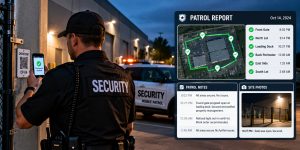
Inspect the security guard electronic GPS patrol tour breadcrumbs and Daily Activity Report every morning to ensure consistent post compliance; use our security vendor audit checklist to verify vendor performance.
For large-scale public-facing commercial venues, consult our foundational management manual on event security checklists for venue managers to audit emergency egress hardware.
Texas Statutory Standards and Private Security Licensing
When selecting and deploying physical security guard personnel across Texas construction projects, contractors must follow state regulatory mandates:
1. Texas DPS Private Security Bureau Mandates
Under Chapter 1702 of the Texas Occupations Code, anyone contracted to guard property, challenge visitors, or patrol construction sites must hold an active security officer license through a state-licensed security company (Class B or Class C contractor). Hiring uncertified night watchmen or independent laborers off payroll voids commercial insurance coverage in the event of an on-site shooting, fire, or catastrophic burglary.
2. Fire Watch and Life Safety Compliance
During Phase 3 and Phase 4, municipal fire marshals across Houston and Harris County frequently mandate a dedicated Construction Fire Watch when building sprinkler systems, standpipes, or fire alarms are taken offline. Texas DPS certified security officers can serve dual roles: logging hourly fire watch sweeps while deterring copper thieves and unauthorized trespassers.
If your project involves high-profile developers or contentious community opposition resulting in direct personal threats, explore dedicated close protection services in our guide on 7 signs you need a personal security detail.
Partner with Gods Armour Security for Phased Job Site Defense
Executing a scalable, phase-by-phase security plan requires an experienced, agile security partner. Gods Armour Security provides Texas DPS certified security officers, armed personnel, marked mobile patrol fleets, and GPS-verified guard tour systems tailored to the exact construction timeline of your project.
Our management leadership works directly with general contractors, project developers, and construction managers across Greater Houston, Harris County, and statewide Texas to minimize project liabilities, stop copper wire theft, secure heavy equipment, and keep projects on schedule and within budget.
Ready to customize a phased security plan for your upcoming job site? Request a job site security consultation and vulnerability assessment or contact our Houston command operations desk directly at (713) 878-9984.
Key Takeaways
- Scale job site security to match project phases: rely on mobile patrols during early grading, then scale to dedicated overnight guards during high-risk MEP rough-ins.
- Phase 3 (MEP rough-in) represents the highest risk window for copper wire feeder theft, gang box tool raids, and HVAC coil vandalism.
- Practice defensive equipment parking by boxing small skid steers and trenchers in with heavy excavators and lowering buckets completely to the ground.
- Require trade subcontractors to secure tools inside Conex containers with puck locks and avoid storing copper wire reels on site over weekends.
- Ensure your physical security provider holds an active Texas DPS Private Security Bureau license and provides GPS-verified patrol tour accountability.