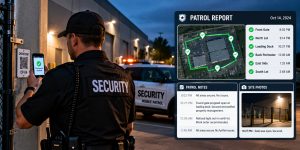
Across active commercial, industrial, and high-density residential developments in Greater Houston, the entrance gate is the single most vulnerable operational chokepoint on the jobsite. On any given workday, hundreds of individuals pass through the perimeter: framing subcontractors, electrical crews, mechanical trades, concrete ready-mix trucks, equipment haulers, material suppliers, municipal inspectors, and project stakeholders.
Without a formalized, enforced access control and digital logging system, a construction site operates in complete chaos. Unvetted laborers enter without safety inductions, delivery drivers drop costly materials in unmonitored zones, tool theft syndicates walk onto framing decks unchallenged, and unauthorized transport trailers haul away heavy machinery in broad daylight. When a serious workplace injury, catastrophic fire, or major burglary occurs, general contractors without accurate gate logs face severe civil liability, OSHA citations, and failed insurance claims.
Securing your jobsite perimeter requires transitioning from unmonitored gates to structured visitor and contractor management. This operational manual outlines gatehouse workflows, digital logging technologies, delivery vehicle inspection standards, and state regulatory guidelines tailored specifically for active construction projects throughout Houston and Harris County.
Phase 1: Common Access Control Failures on Houston Jobsites
Most jobsite safety violations, tool shrinkage, and material theft trace back to four common gate vulnerabilities:
1. Unattended or Permanently Propped Perimeter Gates
To avoid delivery traffic backing up onto busy Houston thoroughfares like Westheimer Road or the I-10 feeder, subcontractors often padlock gates open or remove chain-link panels. This open-door practice invites opportunistic tool thieves, scrap copper scavengers, and unauthorized trespassers into staging areas without resistance.
2. The Phantom Courier and Unauthorized Haul Scam
Organized criminal syndicates frequently arrive in generic commercial pickup trucks or flatbed trailers during early morning shift transitions (6:00 AM to 7:00 AM) or late afternoons. Posing as secondary haulers or material delivery drivers, they load skid steers, trenchers, or copper spools and drive away unchallenged; review heavy machinery loss data in our report on construction equipment theft statistics and prevention.
3. Paper Logbooks and Illegible Sign-In Sheets
Relying on a rain-soaked clipboard hanging from a temporary jobsite trailer offers zero security. Workers write illegible signatures, supply false subcontractor names, or skip signing in altogether. If an emergency evacuation occurs, superintendents cannot verify who remains trapped inside the structure.
4. Unmonitored Material Delivery Drops
Supply trucks frequently dump tens of thousands of dollars in copper wire spools, plumbing brass, or commercial tools into open laydown yards without getting a verified signature from the project superintendent; see preventative containment measures in our guide on how to stop copper wire and tool theft on active job sites.
Phase 2: Subcontractor and Delivery Management System Comparison
Evaluate the four primary access control systems deployed across Texas commercial construction sites:
| Access Control Method | Operational Mechanism | Ingress Speed | Audit & Forensic Value |
|---|---|---|---|
| Paper Sign-In Clipboards | Manual handwriting on paper sheets at the field office. | Slow; creates morning queues. | Near Zero; unverified handwriting, prone to loss, water damage, or forgery. |
| Turnstile with RFID / Biometric Badge | Full-height mechanical turnstiles tied to electronic subcontractor fobs or facial recognition. | Fast (15 to 25 workers / min). | High; real-time digital headcount and trade classification. Cannot screen vehicular delivery traffic. |
| Cloud QR Code Mobile Check-In | Tradesmen scan dynamic QR codes using smartphones to confirm daily safety orientation. | Moderate; relies on device reception. | Moderate; tracks orientation completion but cannot physically prevent non-compliant workers from walking on site. |
| Stationed Security Gatehouse Officer | Uniformed Texas DPS officer verifies photo IDs, matches bills of lading, inspects truck beds, and enforces PPE. | Controlled; 30 to 45 seconds per vehicle. | Maximum; physical human verification, dynamic problem solving, visual truck inspection, and legal detentions. |
For complete shift pricing formulas and nightly expenditure models for on-site personnel, review our comprehensive analysis on how much construction site security costs per night.
Phase 3: The 4-Tier Gate Intake and Verification Architecture
Implementing a resilient jobsite access control program requires dividing the entrance process into distinct operational zones:
1. Lane Segregation and Staging Queues
Designate two separate inbound vehicle lanes: a Worker Parking Lane routed into employee surface stalls, and a Commercial Delivery Lane with a dedicated staging turnout. This prevents concrete mixers and heavy lowboys from blocking municipal streets while checking credentials; see lane engineering in our manual on access control best practices for gated communities.
2. Mandatory Photo ID and Badge Verification
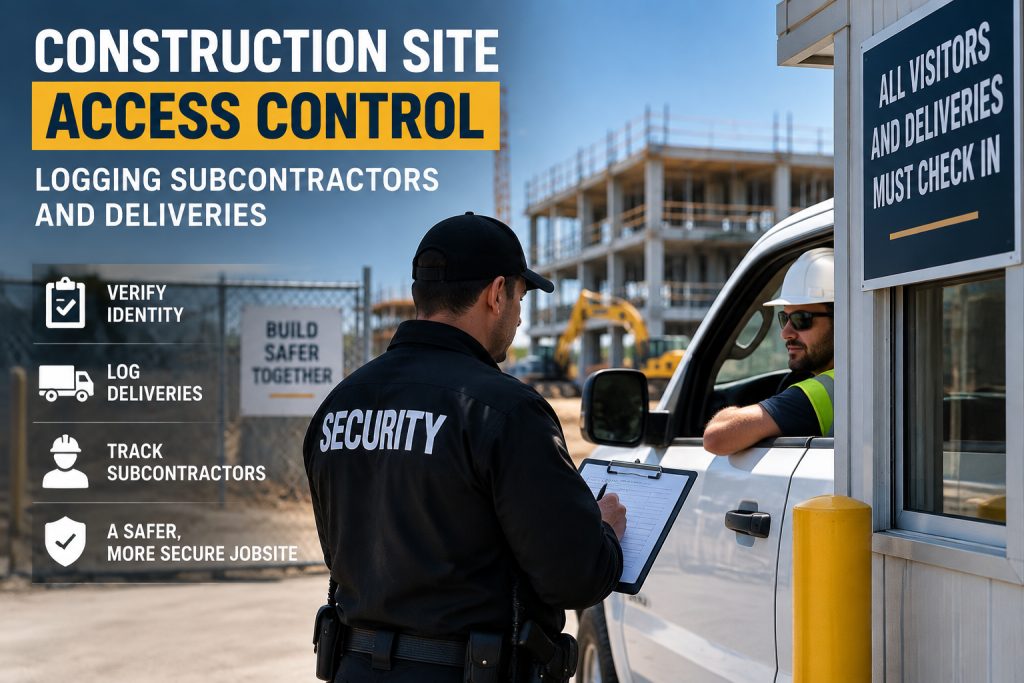
Every tradesman must present a government-issued photo ID (driver license, state ID, or passport). Cross-reference the name against the authorized subcontractor master roster. Once safety inductions are verified, issue a color-coded hard hat sticker or RFID wristband valid only for that specific project phase.
3. Commercial Delivery Ingress Protocols
For all material and logistics carriers, the gate officer must: demand the official bill of lading, verify the purchase order (PO) number in the site database, log the transport license plate, and contact the assistant superintendent via two-way radio before lifting the barrier arm.
4. Outbound Vehicle Cargo Sweeps
Access control is a two-way defense. Gate officers must inspect the open beds of subcontractor pickup trucks, utility vans, and departing trailers. Any high-value materials, uninstalled spools, or heavy tools leaving the jobsite require an authorized equipment release pass signed by the general contractor.
To integrate these gate workflows across each stage of construction from grading to turnover, download our printable phase-by-phase job site security plan template for contractors.
Phase 4: Safety Compliance, OSHA PPE Enforcement, and Fire Watch
A professional gate officer serves as the first line of defense for jobsite safety and municipal regulatory compliance:
1. Enforcing OSHA Personal Protective Equipment (PPE) Mandates
Under OSHA 1926 standards, no individual may enter an active construction footprint without mandatory protective equipment. Gate officers enforce a strict zero-tolerance entry policy: hard hats, high-visibility Class 2/3 safety vests, steel-toe or composite-toe boots, and ANSI-approved eye protection must be worn before stepping past the security threshold. Denying entry to non-compliant visitors eliminates severe liability citations before an OSHA inspection begins.
2. Emergency Headcounts and Muster Point Management
If a gas leak, structural collapse, or active fire occurs, municipal first responders require an exact count of personnel on site. Cloud-connected gate systems provide instant digital muster reports, showing every tradesman, inspector, and delivery driver currently logged inside the perimeter. Officers coordinate evacuation traffic and clear access gates for responding Houston Fire Department (HFD) apparatus.
3. Managing After-Hours Fire Watch Requirements
When hot work permits (welding, cutting, torching) are completed, municipal fire codes require continuous monitoring. Security officers conduct hourly fire watch sweeps of framing floors, logging structural integrity and fire extinguisher readiness while monitoring for late-night copper scavengers; explore shift procedures in our guide on overnight security patrols for multi-family complexes.
Phase 5: Texas Regulatory Standards and Legal Authority at the Gate
Deploying gatehouse security personnel across Texas involves specific statutory compliance mandates:
1. Texas DPS Private Security Bureau Licensing
Under Chapter 1702 of the Texas Occupations Code, any individual stationed at an access point to regulate entry, verify identification, search vehicles, or deny property access must hold an active security officer license through a state-licensed security contractor. Using independent day laborers, off-duty construction hands, or uncertified flagmen to perform guard functions voids commercial general liability coverage during an assault or vehicle collision at the gate.
2. Statutory Trespass Warnings under Texas Penal Code Section 30.05
To prosecute unauthorized trespassers effectively, proper legal notices must be established. Post prominent, weather-resistant signage at all perimeter gates reading: “Notice: Criminal Trespass. Restricted Construction Site. Texas Penal Code Section 30.05. All Visitors Must Sign In at Main Gate.” This statutory notice allows licensed security officers and Harris County deputies to arrest unauthorized individuals immediately without issuing prior verbal warnings.
3. Managing Vehicle Break-Ins and Staging Lots
Worker parking lots are frequently targeted for vehicle break-ins while trades are working on upper building levels. Stationing a guard at the access gate creates visible deterrence across surface stalls. Compare the cost-efficiency of on-site personnel versus electronic cameras in our detailed analysis on security guards vs surveillance cameras for job sites.
When selecting a qualified guard company to manage gate operations, utilize our structured security vendor audit checklist to verify vendor licenses, workers compensation limits, and supervisory capacity.
If project developers or executives visiting the jobsite face contentious labor union disputes, active protests, or direct physical threats, explore dedicated protection options in our manual on 7 signs you need a personal security detail.
Partner with Gods Armour Security for Houston Jobsite Access Control
Safeguarding active construction developments requires an disciplined access control program operated by seasoned, accountable professionals. Gods Armour Security provides Texas DPS certified gatehouse security officers, digital visitor logging systems, marked mobile patrol fleets, and perimeter defense solutions across Greater Houston, Harris County, and statewide Texas.
Our management team collaborates directly with general contractors and site superintendents to eliminate unauthorized ingress, log every commercial delivery, inspect departing transport cargo, and maintain uncompromising safety standards across your active project.
Ready to harden your jobsite entrance and streamline trade logistics? Request a complimentary jobsite access control consultation and security audit or contact our Houston command operations center directly at (713) 878-9984.
Key Takeaways
- Unattended or propped perimeter gates represent the primary entry point for tool thieves, scrap metal scavengers, and unauthorized transport haulers.
- Replace unreliable paper sign-in clipboards with cloud-based digital visitor tracking and verified photo ID screening.
- Establish dedicated staging lanes for commercial delivery trucks to prevent traffic congestion on surrounding Houston roadways.
- Enforce mandatory outbound cargo sweeps: no heavy machinery, spools, or gang boxes leave the site without an authorized written release pass.
- Ensure gatehouse personnel are licensed under the Texas DPS Private Security Bureau and enforce OSHA PPE compliance at the threshold.