A commercial property is most exposed at exactly the hours no one is watching it. Once the lights go down and the last employee leaves, an empty office park, warehouse, retail center, or construction site becomes an easy target for vandalism, break-ins, theft, and trespassing. For property owners and facility managers across Greater Houston, most property crime happens in this overnight window, and the damage is rarely just the loss itself. It is the broken glass, the graffiti cleanup, the insurance claim, and the tenants who no longer feel safe.
After-hours security is not simply a camera pointed at a dark lot. It is a layered plan built for the specific problem of an unoccupied property: deterrence that makes the site look watched, detection that catches a problem early, and a real response that reaches the property fast. This guide covers why closed sites get hit and how to protect them.
Phase 1: Why Closed Properties Get Targeted
After-hours crime is opportunistic. Offenders look for a site that is empty, dark, and slow to respond, and most commercial properties hand them all three. Understanding what draws them is the first step to removing it.
| Attraction for Offenders | Why It Draws Them | The Fix |
|---|---|---|
| No visible presence | An empty site with no patrol signals there is no one to stop or catch them. | Marked patrols and visible signage that show the property is actively watched. |
| Poor lighting | Dark corners, alleys, and lots give cover to work unseen. | Bright, even lighting and motion-activated fixtures across the whole site. |
| Easy access | Open gates, gaps in fencing, and unlocked side doors invite walk-on entry. | Secured perimeter: fencing, locked gates, and controlled entry points. |
| Slow response | A camera that only records means the offender is gone before anyone reacts. | On-site or patrol response that can reach the property while it still matters. |
The parking lot is often the first target, since it is open, valuable, and easy to reach. Our guide on how to stop car break-ins in commercial parking lots covers that exposure in depth.
Phase 2: Layered After-Hours Deterrents
No single measure secures a closed property. The goal is layers: each one an offender has to get past, and together enough friction to send them elsewhere. Four layers do most of the work.
1. Lighting
Bright, even lighting removes the dark cover offenders rely on. Motion-activated fixtures add a jolt of attention that makes a site feel watched the moment someone moves.
2. Secured Perimeter
Fencing, locked gates, and controlled access points force entry through a chokepoint and turn a casual walk-on into a deliberate, riskier act.
3. Cameras and Alarms
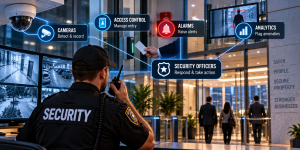
Cameras and intrusion alarms detect activity and preserve evidence, but they work best when tied to a response, not left to simply record an incident after the fact.
4. Security Patrols
A marked patrol is the layer that ties the rest together: visible deterrence, live eyes on the property, and someone who can actually respond when a light or alarm trips.
Lighting deserves particular attention, since poor illumination is behind so many after-hours incidents and is often the cheapest gap to close. For a deeper look at getting it right in enclosed structures, see our guide on parking garage security and lighting.
Phase 3: Why Patrols Beat Cameras Alone After Hours
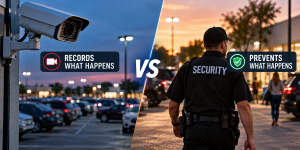
Most closed properties rely on cameras and little else, and offenders know it. A camera records what happened; it does not stop it. The gap between a camera and a patrol is the gap between evidence and prevention.
1. Deterrence Before Anything Happens
A marked patrol vehicle making visible rounds changes how a site looks to someone scouting it. An empty lot with a camera is an opportunity; the same lot with a passing patrol is a risk they will skip for an easier target.
2. Real Response, Not Just a Recording
When something trips a light or an alarm, an officer on patrol can be on scene while it still matters, interrupt the act, and call police with live information. A camera alone leaves you reviewing footage after the loss is done.
3. Catching the Small Problems Early
Patrol officers spot the things that precede a bigger loss: a cut fence, a propped door, an early sign of loitering, a burned-out light. Catching those on a round at 2 a.m. prevents the break-in that would have followed. For how patrol models compare across a large site, see our guide on foot patrol vs mobile vehicle patrol for large commercial lots.
Phase 4: Handling Trespassing and Loitering the Right Way
Trespassing and loitering are the most common after-hours problems, and how they are handled decides whether they escalate. Officers manage them within clear legal limits.
A trained officer identifies an unauthorized person, directs them to leave calmly, and documents the encounter. When someone refuses to go or returns after being warned, Texas law gives property owners and their authorized agents a path: a criminal trespass warning, after which a return to the property can be treated as criminal trespass and handled with police. The officer’s job is to hold that line without turning it into a confrontation, and to know exactly where their authority stops. We cover those legal boundaries in our guide on what security guards are legally allowed to do in Texas, and the de-escalation skills that keep these encounters calm in our guide on de-escalation techniques for security officers.
This article is general information, not legal advice. Trespass procedures and owner obligations depend on the specifics, so confirm your approach with a licensed Texas attorney.
Phase 5: Building an After-Hours Security Plan
The measures above work best inside a plan matched to your property’s hours, layout, and risk. A workable after-hours plan covers a few essentials:
- Map the vulnerable hours and points. Know when the property empties and which entrances, blind corners, and high-value areas need the most coverage overnight.
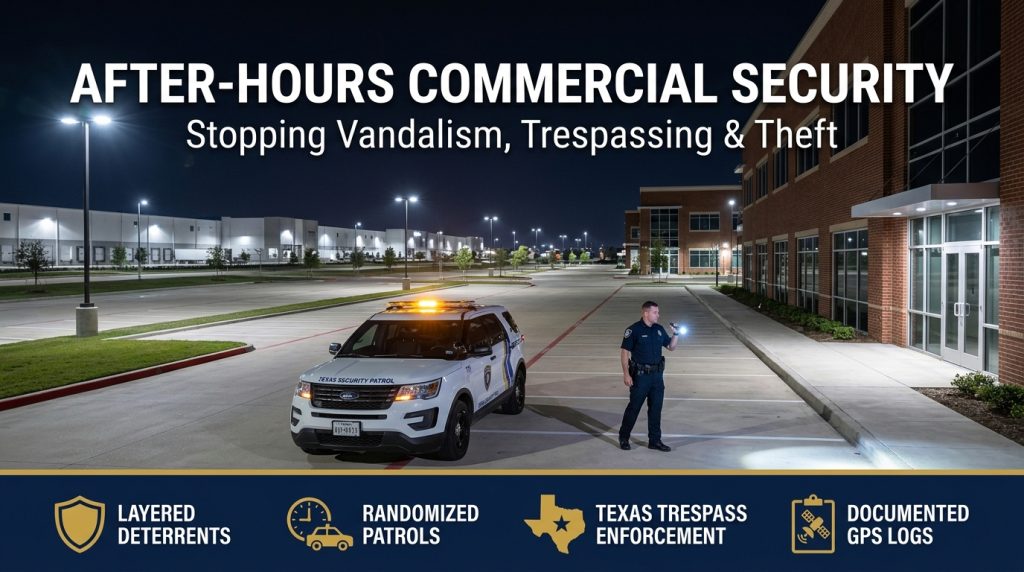
- Set the coverage model. Decide between scheduled patrol sweeps and a dedicated overnight officer based on the site’s size and risk level, and keep patrol routes randomized so they cannot be timed.
- Tie detection to response. Make sure a camera alert or alarm actually reaches someone who can act, not just a recording no one watches until morning.
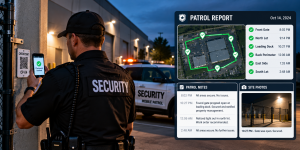
- Document everything. Time-stamped patrol logs and incident reports deter, support insurance and police, and show reasonable care if a claim is ever raised.
For multi-tenant centers where several businesses share the same after-hours exposure, the cost of that coverage can be split, which we cover in our guide on shared security cost models for strip malls and shopping centers.
Secure Your Property After Dark with God’s Armour Security
The hours your property sits empty are the hours it needs coverage most. God’s Armour Security provides Texas-licensed officers, marked mobile patrols, and GPS-tracked overnight coverage for office parks, warehouses, construction sites, retail centers, and commercial properties across Greater Houston, Harris County, and statewide Texas.
Our supervisory team reviews your property’s after-hours exposure, sets randomized patrol coverage around the vulnerable points, and provides the documented, visible presence that turns an easy target into one offenders skip. Explore our commercial security patrol services in Houston and our broader commercial property security.
Ready to protect your property through the overnight hours? Request an after-hours security consultation and property assessment or call our Houston operations desk directly at (713) 878-9984.
Frequently Asked Questions
Why are commercial properties more vulnerable after hours?
Once a property closes it is empty, often poorly lit, and slow to respond, which is exactly what opportunistic offenders look for. Most vandalism, break-ins, and trespassing happen in this overnight window because there is no visible presence to deter or catch them.
Do security cameras stop after-hours vandalism and break-ins?
Not on their own. Cameras record an incident but cannot intervene, so by the time footage is reviewed the damage is done and the offender is gone. Cameras work best paired with lighting, a secured perimeter, and a patrol or on-site officer who can actually respond.
What is the most effective way to prevent trespassing on a closed commercial property?
A layered approach: bright lighting, a secured perimeter with fencing and locked gates, and visible marked patrols. The patrol is the key layer, because it provides both the deterrent presence and the live response that hardware alone cannot.
How do security officers handle trespassers in Texas?
A trained officer identifies the unauthorized person, directs them to leave, and documents the encounter. If they refuse or return after a criminal trespass warning, Texas law allows the return to be treated as criminal trespass and handled with police. Officers act within clear legal limits and avoid escalating the situation.
Key Takeaways
- Closed commercial properties are targeted because they are empty, dark, easy to access, and slow to respond.
- Security works in layers: lighting, a secured perimeter, cameras and alarms, and patrols, each adding friction an offender must get past.
- Patrols beat cameras alone after hours because they deter before anything happens and provide real response, not just a recording.
- Trespassing and loitering are handled within legal limits: warn, document, and use a criminal trespass warning and police when someone refuses or returns.
- Build an after-hours plan around the vulnerable hours and points, a defined coverage model, detection tied to response, and full documentation.