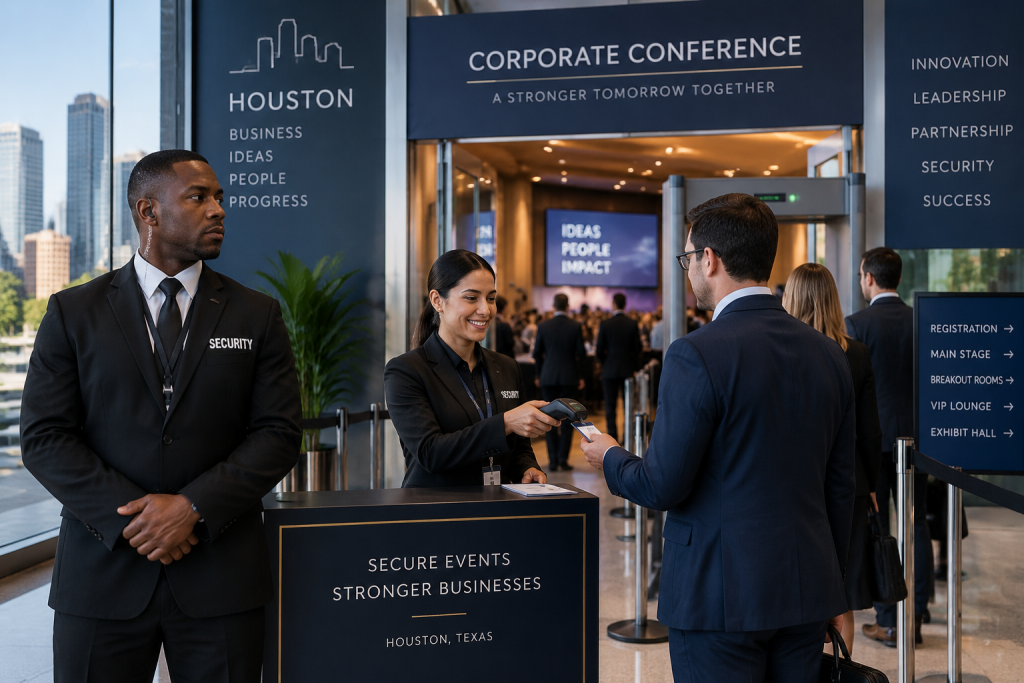
Corporate conferences, executive symposiums, and high-profile charity galas represent significant investments in brand reputation, intellectual property, and high-value networking. Unlike public festivals or sporting matches where security relies on visible physical deterrence, corporate event security demands a sophisticated balance: creating an impenetrable barrier against corporate espionage, activist disruptions, and unauthorized gatecrashers while delivering white-glove hospitality to board members, keynote speakers, and industry executives.
Major corporate hubs across Greater Houston, from downtown venues like the George R Brown Convention Center and the Hilton Americas to luxury hotels in the Galleria and The Woodlands, host thousands of business events annually. In these professional settings, security personnel must function as a seamless extension of the executive hosting team, blending discreet vigilance with polished corporate etiquette.
Whether you are producing an annual shareholder convention, an executive tech unveiling, or an upscale black-tie charity banquet, this comprehensive guide outlines how to design, deploy, and manage temporary security for corporate conferences and galas in Texas.
Phase 1: Assessing Corporate Threats and Vulnerabilities
Securing a corporate gathering requires evaluating non-physical threats alongside conventional venue safety. Commercial security risk models identify four primary threat vectors during business events:
1. Corporate Espionage and Intellectual Property Theft
Conferences featuring unreleased product demonstrations, proprietary technological roadmaps, or merger discussions attract corporate intelligence gathering. Unvetted attendees, third-party contractors, or unmonitored breakout rooms expose physical presentation files, unencrypted presentation monitors, and private executive conversations to unauthorized access.
2. Protest Activity and Activist Disruption
Energy forums, healthcare symposiums, investment summits, and political galas face planned disruptions from issue-driven activist groups. Coordinated demonstrators frequently purchase attendee badges under false pretenses to storm keynote stages, deploy noisemakers, or display banners to attract media attention. A proactive security plan positions discreet response teams within viewing range of the main dais to intercept stage-rushers within seconds.
3. Protecting High-Net-Worth Attendees and Keynote Speakers
Fortune 500 chief executives, celebrity keynote presenters, and foreign dignitaries face unique personal security risks. Integrating conference security with specialized discreet executive protection in Houston ensures that green rooms, private vehicle loading docks, and private backstage corridors remain strictly secured throughout the itinerary.
4. Alcohol Liability at Evening Galas and Award Dinners
Most corporate conventions conclude with evening cocktail hours, silent auctions, or formal seated dinners where alcohol flows freely. In Texas, corporate organizers and venue operators are held accountable under state Dram Shop statutes if an overserved attendee causes property destruction or a motor vehicle crash. Review our legal guide on Texas liquor law event security requirements to understand mandatory TABC oversight standards.
Phase 2: Multi-Tier Access Control and Credentialing Architecture
The foundation of professional conference security is an unyielding, structured access control protocol. Implementing a layered defense perimeter prevents badge-swapping, line crashes, and uninvited walk-ins.
| Security Checkpoint Tier | Facility Location | Operational Protocol | Personnel Uniform Standard |
|---|---|---|---|
| Tier 1: Exterior Perimeter | Parking garages, valet bays, main glass entry doors | Monitor vehicle arrival lanes, deter loitering, direct crowds toward the primary credentialing registration lobby. | Dark tactical trousers, marked tactical security polo, radio earpiece |
| Tier 2: Registration & Badge Verification | Lobby stanchion lines, electronic credential kiosks | Verify government photo IDs against master registration lists, ensure RFID lanyard badges are applied, conduct bag screening. | Tailored two-piece black suit, dark tie, discreet low-profile earpiece |
| Tier 3: General Auditorium & Trade Floors | Ballroom entry doors, exhibition hall aisles | Enforce room fire capacity limits, keep emergency egress corridors clear, monitor audience rows for disruptive posturing. | Tailored corporate blazer, suit slacks, guest hospitality presentation |
| Tier 4: Secure Restricted Backstage Zones | VIP speaker lounges, green rooms, loading service docks | Strict color-coded all-access wristband verification, physical guard presence at elevator banks, private escort staging. | Texas DPS Level III commissioned armed officer or close protection detail |
To accurately plan guard numbers across multi-room hotel setups, reference our formula guide on how many security guards per person for an event.
Phase 3: Conference vs Gala Security Operational Differences
While daytime conferences and evening galas often occupy the same physical venue space, their operational security postures differ significantly:
1. Daytime Business Conferences: Flow and Information Protection
- Continuous Credential Auditing: Attendees frequently take phone calls in common corridors and attempt to re-enter meeting rooms. Stationary guards maintain badge discipline at every ballroom doorway.
- Asset Protection During Meal Breaks: Exhibition halls filled with high-end audiovisual equipment, company laptops, and product prototypes are highly vulnerable during lunch transitions. Roaming floor guards patrol vendor booths while attendees are in general dining spaces.
- Loading Dock and Production Oversight: Manage freight elevator traffic and verify credentials for AV contractors, florists, and staging engineers during vendor turnover.
2. Evening Black-Tie Galas and Award Ceremonies: Hospitality and Discretion
- Discreet Suit Uniforms: Visible tactical gear looks out of place in a formal black-tie ballroom. Officers must wear tailored black suits, white dress shirts, and solid ties, blending in as professional executive security.
- Silent Auction and Cash Collection Defense: Charity galas feature physical auction tables, high-value jewelry displays, and mobile payment terminals. Dedicated guards maintain continuous physical custody over collection points and escort treasurers to bank deposit vaults.
- Parking Lot and Valet Security: Luxury vehicles left in downtown Houston parking facilities or hotel lots require active protection against vehicle theft. Stationary and mobile patrol officers maintain clear sightlines over valet waiting lanes and escort female attendees to their cars late at night.
When budgeting for these multi-shift corporate deployments, examine our comprehensive rate guide on event security costs in Houston to review supervisor rates, armed versus unarmed pricing, and holiday surcharges.
Phase 4: Venue Coordination and Texas Compliance Audits
Before launching a corporate conference, venue coordinators must align their operational roadmap with local municipal codes and emergency services:
1. Facility Walkthroughs and Ingress Distancing
Large hotel ballrooms often feature multiple interconnected service pathways. Conduct a full perimeter audit using our event security checklist for venue managers. Position registration tables at least 40 to 50 feet back from main exterior entry glass doors to prevent registration lines from spilling out onto public sidewalks during morning rush hours.
2. Emergency Evacuation Plans and Fire Code Clearances
The Houston Fire Department Fire Marshal strictly enforces public assembly capacity and aisle clearance regulations. Security officers conduct pre-door sweeps to confirm that heavy trade show pipe-and-drape curtains do not cover lit emergency exit signage and that secondary push-bar doors are never padlocked or blocked by staging crates.
3. Medical Response Pathways
High-stress executive symposiums and crowded banquets experience real medical emergencies, including cardiac events, diabetic distress, and slip-and-fall injuries. Security teams designate an unobstructed service elevator and rear loading dock bay as a sterile path for paramedics, ensuring city ambulances reach patients within minutes without creating public panic in main lobbies.
Phase 5: Critical Mistakes Organizers Must Avoid
1. Relying Exclusively on Hotel or In-House Venue Staff
Hotel staff and venue ushers provide excellent hospitality, but they are not licensed security professionals. Under Chapter 1702 of the Texas Occupations Code, non-licensed personnel cannot legally perform physical security duties, access ejections, or personal protection. Relying on unlicensed staff voids commercial insurance policies in the event of an altercation.
2. Failing to Establish a Dedicated Command Radio Channel
Never combine security, event production, audiovisual crews, and catering onto a single two-way radio channel. Security teams require an isolated tactical frequency with direct patch capabilities to the on-site event coordinator and lead venue manager.
3. Overlooking Media and Press Credentialing
Major corporate conferences attract press crews, trade bloggers, and freelance photographers. Without a designated, secure media pen and pre-cleared press credentials, unverified media crews can obstruct executive VIPs, disrupt private meetings, or record confidential discussions.
Partner with Gods Armour Security for Executive Event Protection
Your corporate brand reputation demands event security that reflects institutional excellence, rigorous preparation, and polished professionalism. Gods Armour Security delivers certified, fully insured, and Texas DPS licensed security personnel tailored specifically for corporate conferences, trade conventions, and luxury galas across Greater Houston, Harris County, and surrounding business communities.
Our management team designs custom access control procedures, coordinates discreet executive details, and provides articulate, suit-attired security officers trained to protect your people and intellectual assets while upholding the highest standards of executive hospitality.
Planning an upcoming corporate conference, symposium, or black-tie gala? Request a corporate event security consultation or contact our Houston command center directly at (713) 878-9984 to finalize your facility security footprint.
Key Takeaways
- Corporate event security requires balancing intellectual property defense, protest management, and VIP safety with polished executive hospitality.
- Deploy a four-tier access control framework: exterior perimeter monitors, registration credentialing, ballroom monitors, and restricted backstage guards.
- Galas and charity banquets demand tailored black-suit officer attire, continuous silent auction cash protection, and late-night parking lot escorts.
- Never use unlicensed hotel staff as security; all personnel must hold active credentials issued by the Texas DPS Private Security Bureau.
- Keep registration checkpoints set back 40 to 50 feet from main glass doors to eliminate crowded bottlenecks during morning arrival surges.