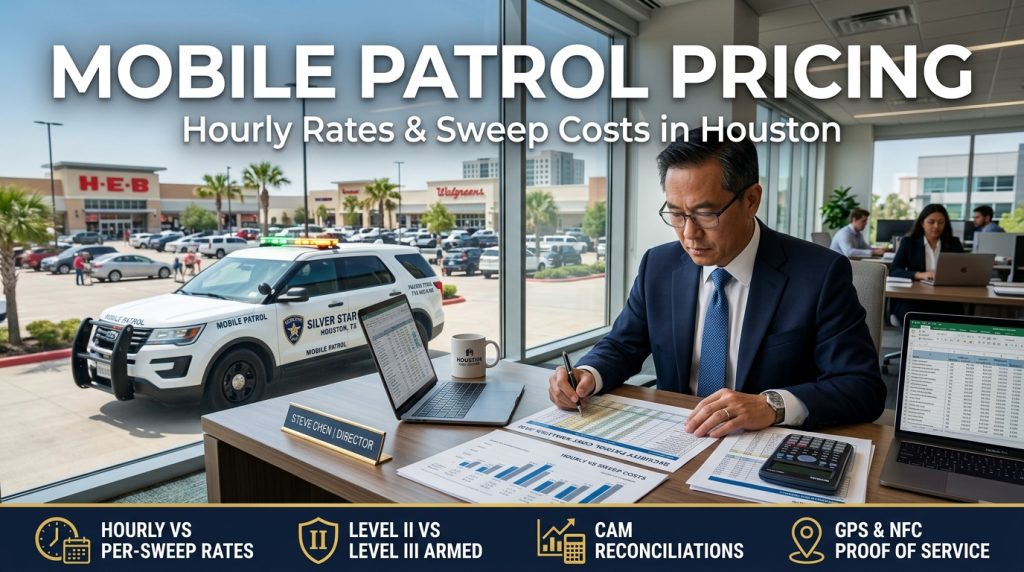
For commercial property managers, industrial yard operators, and retail facility directors in Greater Houston, determining physical security budgets often begins with a fundamental question: how much does mobile security patrol actually cost? While commercial decision-makers understand that marked vehicle patrols are far more economical than deploying full-time standing guards around the clock, obtaining clear pricing in the Houston market can be challenging.
Security pricing across Harris County is rarely one-size-fits-all. A 50-acre pipe yard along the Houston Ship Channel facing scrap metal theft requires a different tactical deployment than a 5-tenant suburban retail strip mall in Sugar Land. In the Houston commercial market, mobile security patrol generally follows two primary billing models: dedicated hourly vehicle patrol (ranging from $30.00 to $48.00 per hour) and shared per-hit (per-sweep) billing (ranging from $15.00 to $35.00 per physical site inspection).
Evaluating vendor bids requires understanding what those figures cover. A seemingly low bill rate can mask hidden fuel surcharges, substandard guard wages, lack of proper vehicle insurance riders, or unlicensed drivers operating in violation of Texas Private Security Bureau mandates. This pricing breakdown examines Houston mobile patrol rates, line-item cost drivers, contract terms, and how to verify that you receive documented coverage for every dollar billed.
The figures in this guide are general 2026 Houston-area market estimates to help you budget, not a quote. Actual pricing varies by provider, site, and scope, so request a written proposal for your property.
Phase 1: The Two Commercial Pricing Models Explained
Before comparing vendor proposals, commercial buyers must determine which billing structure matches their property layout, risk profile, and operating hours:
1. Dedicated Hourly Vehicle Patrol ($30.00 – $48.00 / Hour)
In a dedicated patrol model, a marked patrol vehicle and a licensed security officer are assigned exclusively to your commercial property for a continuous, uninterrupted block of time (typically 6 to 12 hours per night). The officer remains on site for the entire shift, executing continuous vehicular circuits, conducting foot rounds of mechanical rooms and dark corridors, verifying gate latches, and monitoring surveillance blind spots.
- Best Suited For: Large commercial properties (15+ acres), expansive industrial logistics terminals, auto dealerships, properties undergoing active construction, or sites experiencing repeated trespassing and catalytic converter thefts.
- Monthly Investment Range: For a standard 8-hour nightly shift (56 hours per week), dedicated vehicle patrol in Houston typically costs between $7,200 and $11,500 per month, depending on whether the post requires armed or unarmed security personnel.
2. Shared Per-Hit / Per-Sweep Billing ($15.00 – $35.00 / Visit)
Under a shared sweep arrangement, your facility is added to a mobile patrol officer’s geographic route. A marked security vehicle visits your property a set number of times each night (commonly 2 to 5 visits), spending approximately 10 to 20 minutes per inspection. During each visit, the officer conducts a complete vehicular loop, checks exterior doors, inspects dumpster enclosures, verifies lighting, and scans digital checkpoints before proceeding to the next scheduled client site.
- Best Suited For: Multi-tenant suburban strip malls, corporate professional parks, small light-industrial warehouses, and retail centers operating under tight Common Area Maintenance (CAM) budgets.
- Monthly Investment Range: A commercial property receiving 3 randomized sweeps every night (approximately 90 visits per month) generally costs between $1,350 and $2,800 monthly, providing visible deterrence at a fraction of dedicated staffing costs.
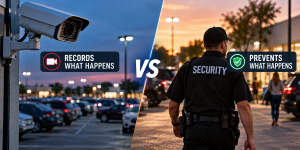
To compare the operational trade-offs between dedicated physical presence and mobile vehicle coverage, consult our analysis of mobile patrol vs dedicated stationed guards.
Phase 2: Houston Market Rate Comparison Matrix
The table below provides standard market rate benchmarks for commercial mobile security patrol across the Greater Houston metropolitan area. Rates reflect licensed, properly insured private security contractor averages:
| Service Tier | Deployment Structure | Estimated Houston Rate | Estimated Monthly Cost |
|---|---|---|---|
| Unarmed Shared Patrol (Level II) | 2 to 3 randomized vehicular sweeps per night (10–15 min each); digital NFC tag verification. | $15.00 – $25.00 per sweep | $900 – $2,250 / month |
| Armed Shared Patrol (Level III) | 3 to 5 randomized sweeps per night; armed commission officer; high-risk parking and property lockup. | $25.00 – $38.00 per sweep | $2,250 – $5,700 / month |
| Dedicated Unarmed Vehicle Patrol | 100% on-site marked vehicle patrol; uninterrupted 8-to-12-hour shifts; access gate management. | $30.00 – $38.00 / hour | $7,200 – $9,120 / month (8-hr shifts) |
| Dedicated Armed Vehicle Patrol | 100% on-site marked cruiser; Commissioned armed officer; continuous asset protection. | $36.00 – $48.00 / hour | $8,640 – $11,520 / month (8-hr shifts) |
| Emergency On-Call Alarm Response | Dispatched response to electronic burglar alarms; exterior breach check; liaison with local police. | $45.00 – $85.00 per dispatch | Billed per event (often bundled with monthly retainer) |
For shopping centers allocating common-area patrol expenses among multiple tenants under NNN leases, review CAM apportionment mechanics in our guide on shared security cost models for strip malls and shopping centers.
Phase 3: The Key Line-Item Factors That Drive Patrol Pricing
Security contractors calculate mobile patrol bill rates by factoring direct guard wages, fleet operational costs, administrative compliance, and insurance liabilities:
1. Officer Licensing (Level II vs. Level III)
In Texas, armed Level III Commissioned Security Officers command $4.00 to $8.00 more per hour in wages than Level II unarmed guards due to required state tactical training, firearms qualification, and psychological screening.
2. Patrol Fleet Overhead & Fuel
A reliable security vehicle incurs fuel expenses, regular preventative maintenance, tire replacements, and depreciation. Reputable security firms absorb vehicle costs into a transparent flat bill rate rather than adding variable monthly fuel riders.
3. Commercial Auto & General Liability Insurance
Mobile patrol contractors must maintain commercial auto liability alongside Commercial General Liability (CGL) and Assault & Battery coverage. Adding property ownership as an Additional Insured requires verified insurance capacity.
4. Dwell Time & Post Orders
A basic drive-through sweep costs less than a detailed post order requiring the officer to exit the cruiser, physically test 12 individual tenant doors, inspect rear trash corrals, and complete digital NFC checkpoint scans.
When comparing vendor bill rates against the fully loaded labor costs of building an internal security team, examine payroll taxes, benefits, and liability shields in in-house vs contract security guards: cost and liability breakdown.
Phase 4: Geographic and Risk Adjustments Across Houston
Within the Greater Houston metropolitan area, patrol pricing varies based on local crime incident density, route geography, and property accessibility:
1. High-Density Urban Hubs (Downtown, Midtown, Galleria, Medical Center)
Properties located in dense commercial centers often require officers to navigate multi-level parking structures, clear active pedestrian corridors, and address frequent street loitering. Patrol contractors typically charge toward the higher end of the pricing spectrum due to higher traffic congestion, tight time windows, and heightened premises liability exposure.
2. Industrial & Logistics Corridors (Houston Ship Channel, I-10 East, Baytown)
Industrial complexes, pipe storage yards, and chemical distribution hubs often require Level III armed security patrol officers. The primary threat vectors—high-value equipment theft, copper stripping, and organized cargo breach—warrant heavy-duty 4×4 marked patrol trucks, high-intensity LED searchlights, and rigorous physical perimeter checks.
3. Suburban Commercial Centers (Katy, The Woodlands, Pearland, Cypress)
Suburban strip centers, professional office buildings, and master-planned commercial complexes generally experience lower violent crime rates. In these areas, shared per-hit mobile patrol operates at peak cost efficiency: a patrol officer can service multiple adjacent commercial clients smoothly, keeping per-sweep rates in the lower $15 to $22 range.
To reduce after-hours criminal incidents and prevent unnecessary security expenditure through smart lighting and environmental design, review strategies in commercial property security after-hours: preventing vandalism and trespassing.
Phase 5: Spotting Red Flags in Unrealistically Low Patrol Bids
When soliciting bids for Houston mobile security patrol, commercial buyers frequently encounter cut-rate proposals advertising $10.00 sweeps or $20.00/hour dedicated patrols. In professional private security, rates below fair market value indicate operational shortcuts that compromise property safety:
- Unlicensed Drivers and Guards: Under Texas Occupations Code Chapter 1702, private security companies and individual officers must be licensed by the Texas Department of Public Safety (DPS) Private Security Bureau. Substandard providers often deploy untrained, unvetted personnel lacking active state registrations.
- “Phantom Sweeps” Without Telemetry Proof: Low-cost providers often promise 4 visits per night but perform drive-bys lasting 15 seconds without stopping, or miss visits entirely. Reputable contractors provide GPS geofence time-stamps and NFC checkpoint reports confirming actual on-site dwell times.
- Non-Compliant Patrol Vehicle Lighting: Under Texas Transportation Code § 547.305, private security vehicles in Texas are legally restricted to green, amber, or white auxiliary lights. Operating illegal red or blue flashing lights exposes property owners to unnecessary legal scrutiny.
- Missing Insurance Endorsements: A contractor offering cheap rates may carry minimum basic auto policies while excluding Assault & Battery coverage, leaving property owners exposed if a confrontation occurs in the parking lot.
To ensure potential security providers hold verifiable licensing, adequate insurance, and clear operational post orders, utilize the vetting checklist in our guide on 10 questions to ask before hiring a commercial security guard company.
Transparent Commercial Patrol Pricing with God’s Armour Security
At God’s Armour Security, we believe commercial property owners and facility managers deserve clear, predictable security pricing without surprise fees or unverified coverage. We are licensed by the Texas DPS as a security contractor and guard company (license no. B07347101), and we provide professional mobile security patrols, dedicated vehicle posts, and marked property sweeps across Greater Houston, Harris County, and statewide Texas.
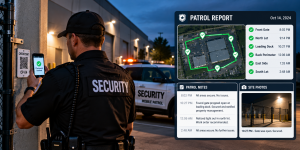
Every patrol vehicle in our fleet is equipped with GPS tracking, cellular dispatch terminals, high-output LED search arrays, and green/amber compliance lighting. Our officers scan physical NFC tags on your perimeter, generating verifiable inspection logs with time-stamped photos delivered directly to your inbox every morning. Explore our specialized commercial security patrol services in Houston and our broader commercial security services in Houston.
Ready to establish dependable, cost-effective security patrol for your commercial property? Request a commercial patrol cost breakdown and custom property assessment or call our Houston dispatch desk directly at (713) 878-9984.
Frequently Asked Questions
What is the average hourly cost for mobile security patrol in Houston?
In the Greater Houston market, dedicated commercial mobile security patrol typically costs between $30.00 and $38.00 per hour for unarmed officers (Level II), and between $36.00 and $48.00 per hour for commissioned armed security officers (Level III). Shared per-hit sweeps typically range from $15.00 to $35.00 per inspection.
How does per-hit patrol billing work for commercial properties?
Under per-hit billing, a security contractor assigns your facility to a marked vehicle patrol route. The cruiser visits your property an agreed number of times each night (e.g., 3 visits), spending 10 to 20 minutes inspecting doors, scanning NFC tags, and checking perimeter gates. You pay a flat rate per completed visit rather than paying for a continuous hourly guard.
Can security patrol expenses be passed through to tenants in a commercial lease?
Yes. In triple-net (NNN) and modified gross commercial leases, mobile patrol services are categorized as Common Area Maintenance (CAM) operating expenses. Landlords can pass these costs through to commercial tenants on a pro-rata basis based on square footage.
Do armed patrol officers cost more than unarmed patrol officers in Texas?
Yes. Texas DPS Level III Commissioned (armed) officers typically command $4.00 to $10.00 more per hour (or $8.00 to $15.00 more per sweep) than Level II unarmed personnel due to rigorous state firearms certification, specialized tactical training, higher employer insurance premiums, and greater liability exposure.
Key Takeaways
- Dedicated hourly vehicle patrol in Houston typically ranges from $30.00 to $48.00/hour, ideal for high-risk industrial yards and acreage.
- Shared per-hit patrol sweeps cost between $15.00 and $35.00 per inspection, providing budget-conscious deterrence for multi-tenant retail and office centers.
- Line-item costs are determined by officer commission status (Level II vs. Level III armed), vehicle maintenance, insurance coverage, and post-order dwell time.
- Verify patrol performance using GPS geofence reports, time-stamped photos, and NFC digital checkpoint scans to eliminate “phantom sweeps.”
- Ensure contractor vehicles comply with Texas Transportation Code § 547.305 (green, amber, or white lighting) and hold active Texas DPS PSB Class B licenses.