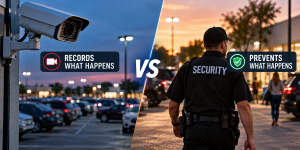
Selecting a private security contractor is one of the most critical fiduciary decisions a condominium association or Homeowners Association (HOA) board will ever execute. In residential communities across Greater Houston and Texas, private security guards represent the primary physical defense against vehicle break-ins, amenity vandalism, gate trespassing, and violent confrontation. However, hiring the wrong vendor exposes the board to catastrophic civil liabilities, guard absenteeism, and wasted community capital.
Too many HOA boards evaluate security proposals solely on the lowest hourly bill rate. Cut-rate security vendors frequently operate with minimum-wage guards, zero field supervision, fraudulent licensing practices, and bare-minimum insurance policies filled with catastrophic exclusions. When a violent crime occurs on site, property owners and board directors can face multi-million-dollar negligent security lawsuits.
To eliminate procurement guesswork, this comprehensive operational checklist outlines how condo and HOA boards must vet, audit, and contract private security vendors across Texas.
Phase 1: Legal Licensing and Regulatory Verification
Never review financial pricing proposals until a security provider passes strict state regulatory verification under the Texas Department of Public Safety (DPS) Private Security Bureau:
1. Texas Security Company License (Class B or Class C)
Under Chapter 1702 of the Texas Occupations Code, operating a private security company requires an active license issued by the Texas DPS. Request the vendor state license number and verify it directly through the Texas DPS TOPS regulatory database. Confirm the license is active, in good standing, and free from administrative suspensions or disciplinary sanctions.
2. Individual Guard Commission Levels (Level II vs Level III)
Ensure the vendor commits in writing to deploying only state-registered security personnel:
- Unarmed Officers (Texas DPS Level II): Appropriate for gatehouse entry logging and resident hospitality.
- Armed Officers (Texas DPS Level III Commissioned): Mandatory for properties requiring armed deterrence against felony property crimes, armed trespassing, or active neighborhood threats. Confirm officers hold active pocket cards and annual firearm qualification scores.
3. Psychological Clearance and Criminal History Auditing
Demand written verification that all assigned personnel have completed statutory state background checks, FBI fingerprint submissions, and 5-panel drug screening. For armed personnel, confirm completion of the Minnesota Multiphasic Personality Inventory (MMPI) or state-approved psychological assessment.
Phase 2: Comprehensive Insurance and Liability Checklist
General commercial insurance policies often contain hidden liability exclusions that leave the HOA fully vulnerable during a critical incident:
| Insurance Category | Minimum Recommended Limit | Mandatory Policy Endorsements & Red Flags |
|---|---|---|
| Commercial General Liability | 1,000,000 dollars per occurrence / 2,000,000 dollars aggregate | Must name the HOA and Property Management Company as Additionally Insured with Primary and Non-Contributory wording. |
| Firearms Liability Rider | 1,000,000 to 2,000,000 dollars dedicated rider | Red Flag: Many cheap policies carry absolute firearm discharge exclusions. Mandatory for all Level III deployments. |
| Workers’ Compensation | Statutory Texas limits (500,000 / 500,000 / 500,000) | Includes a formal Waiver of Subrogation in favor of the HOA, preventing guard injury claims against homeowners. |
| Commercial Auto Liability | 1,000,000 dollars combined single limit | Required whenever marked security patrol vehicles, golf carts, or utility vehicles operate on private community roads. |
For an in-depth breakdown of standard Texas bill rates and annual contract line items, review our companion guide on HOA security guard services pricing and contract guide.
Phase 3: Operational Technology and Guard Accountability
Modern condo and HOA security relies on operational transparency. A qualified security contractor must provide real-time proof of performance through dedicated technology:
1. GPS Real-Time Guard Tour Tracking
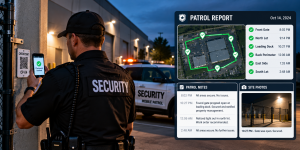
Require vendors to demonstrate their electronic Guard Tour Verification System during the interview. Officers must scan Near-Field Communication (NFC) tags or RFID checkpoints positioned at community vulnerabilities: pool pump houses, tennis courts, mail kiosks, and remote perimeter fence lines. Board members should receive automated digital patrol summaries confirming that sweeps were physically performed.
2. Digital Daily Activity Reports (DAR) and Incident Logging
Eliminate illegible paper logbooks. Modern providers deliver cloud-hosted Daily Activity Reports accompanied by time-stamped photographs for amenity rule violations, sprinkler leaks, burnt-out security lighting, and unauthorized parking tags. For multifamily properties managing parcel overflow, review our operational standards on how to prevent package theft in apartment buildings and condos.
3. Dedicated Field Supervision and 24/7 Dispatch Desk
Ask prospective vendors: Who inspects the guard on duty at 2:00 AM? A professional firm operates an active, round-the-clock dispatch operations center and conducts unannounced supervisory field audits to inspect officer alertness, uniform presentation, and post order compliance.
Phase 4: Evaluating Staffing Style: Concierge vs Tactical Guarding
Different residential communities demand different operational styles. The HOA board must ensure the vendor’s personnel profile matches the property demographic:
Luxury High-Rise Condominiums
Demands suit-attired hybrid security concierges who combine luxury front desk hospitality with active access control and CCTV monitoring. For a detailed comparison of lobby roles, explore our guide on concierge vs security guard differences.
Gated Single-Family Subdivisions
Requires dedicated gatehouse officers focused on vehicle barcode validation, commercial contractor visitor logging, and mechanical gate tailgating deterrence.
Sprawling Master-Planned Communities
Requires marked mobile patrol vehicles equipped with amber light bars, spotlight arrays, and automated license plate recognition to deter car prowlers across multiple street miles.
For high-profile community executives facing direct individual harassment or stalking, specialized physical security can be integrated alongside neighborhood assets; see our manual on close protection and security details for families.
Phase 5: Contract Terms, Service Level Agreements (SLAs), and Red Flags
Before signing a multi-year security contract, condo and HOA boards should verify that the agreement includes these protective contractual clauses:
1. Written Post Orders and Facility Auditing
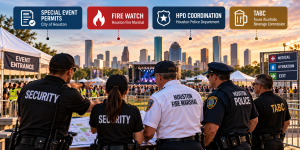
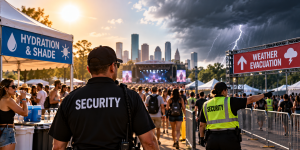
Demand that the vendor draft customized, site-specific Post Orders prior to officer deployment. Post orders must clearly define parking towing triggers under Texas Occupations Code Chapter 2308, clubhouse curfew hours, and emergency evacuation protocols aligned with standard facility audits; see our event security checklist for venue managers.
2. The No-Show Billing Penalty Clause
Absenteeism is the leading complaint among HOA boards. Protect your association by inserting a mandatory No-Show Penalty Clause: If a scheduled post remains unstaffed for more than 45 minutes without replacement, the security vendor must credit the HOA for the unworked hours plus an agreed contractual billing credit.
3. Clear Termination for Convenience Terms
Never sign an annual agreement that locks the association into multi-month dispute arbitration. Insist on a 30-day Termination for Convenience clause, allowing the HOA board to cancel the contract without penalty if performance standards decline.
If your community experiences escalating safety concerns or targeted tenant threats, review our diagnostic assessment on 7 signs you need a personal security detail.
Partner with Gods Armour Security for HOA and Condo Protection
Protecting residential communities requires a professional security partner dedicated to accountability, regulatory excellence, and neighborhood safety. Gods Armour Security delivers state-certified, Texas DPS licensed security officers, marked mobile patrol fleets, and hybrid concierge specialists across Greater Houston, Harris County, and statewide Texas.
Our management leadership works directly with HOA trustees, condominium boards, and property management firms to design custom post orders, deploy GPS-verified tour technology, and maintain rigorous supervisory oversight that safeguards property values and resident peace of mind.
Preparing an upcoming security RFP or auditing your current vendor performance? Request a complimentary HOA security consultation and site audit or call our Houston operations dispatch team directly at (713) 878-9984.
Key Takeaways
- Verify active Texas DPS company licensing and individual guard registrations through the state TOPS database before reviewing bids.
- Ensure insurance policies carry a minimum of 1,000,000 dollars in general liability and explicitly include firearms liability for armed posts.
- Mandate electronic GPS guard tour tracking with digital daily activity reports to verify physical patrol compliance.
- Match the guard profile to community expectations, balancing front desk hospitality with firm access control.
- Insist on site-specific Post Orders, a mandatory No-Show billing credit clause, and a 30-day termination for convenience option.