Nobody hires security guards for events expecting to use them. You hire them so that the night runs the way it was planned, and most of the time that is exactly what happens. Then a guest has four too many drinks, or two people who should have been seated apart end up at the same bar, and the value of having officers on site becomes obvious within about thirty seconds.
This is what that looks like from the inside, and what should be happening while it does.
The First Minute Matters More Than the Rest
Almost every incident at an event follows the same pattern. There is a period at the start when the situation is small and quiet, and a point after which it is loud and everyone is watching. The gap between those two states is short.
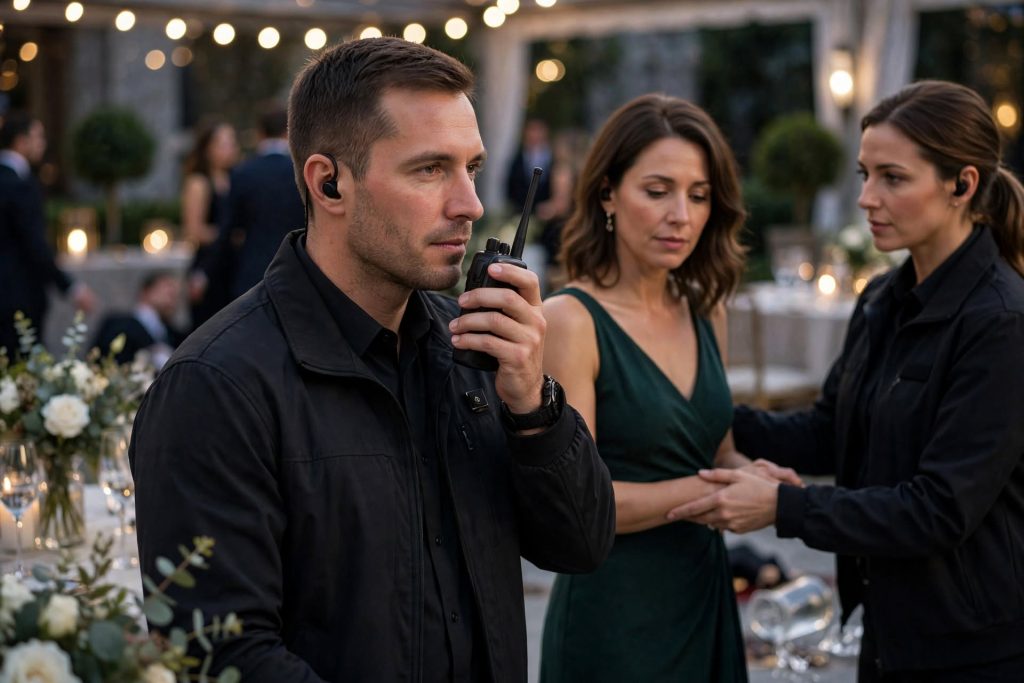
Officers are trained to work in that gap. A guest who is getting loud gets approached before he is shouting. Two people squaring up get separated before either one swings. A person who has had too much gets walked toward water and a chair before anyone has to carry him. Handled early, most of these end without a single other guest noticing.
That early response is the whole point of having officers positioned in the room rather than parked at the door. An officer who can see the floor sees things developing. An officer standing outside finds out when someone comes to get him.
The Situations That Actually Come Up
Certain things happen often enough that there should be a plan for each before the event starts.
A Guest Who Has Had Too Much to Drink
This is the most common incident at events serving alcohol, and it rarely needs to become a confrontation. An officer approaches, keeps the tone low, and moves the person somewhere quieter. Water, a seat, and a few minutes resolve a large share of these.
The part that needs planning is what comes next. If the person needs to leave, someone has to arrange a ride and make sure they get into it. Letting an impaired guest walk to their own car is a liability nobody should accept, and officers should have clear instructions to stop it.
An Argument Between Guests
Officers separate first and sort it out second. Getting two people out of each other’s sight defuses most of these on its own.
What happens after separation depends on the event and on the host’s wishes. Sometimes both stay and are kept apart for the rest of the night. Sometimes one leaves. That decision should belong to the host or the venue manager, and officers should know in advance who that person is.
Someone Who Was Not Invited
Uninvited arrivals show up at private events more often than people expect, particularly at weddings and celebrations tied to a named individual. Some are honest mistakes. Some are not.
An officer at the entrance handles this quietly by checking the list and stepping the person aside rather than debating it in front of a line. If the person is already inside, the approach is the same, done away from other guests. A host contact who can confirm or deny quickly keeps officers from making a call that is not theirs to make.
A Medical Situation
Officers are not medical personnel. What they do is recognize that something is happening, call emergency services immediately, clear space around the person, send someone to meet the ambulance at the entrance so responders are not searching the building, and keep the rest of the room from crowding in.
The part that gets overlooked is the meeting point. A venue with several entrances can cost responders minutes if nobody is waiting to direct them. That should be assigned before the event, not decided during one.
A Child Who Cannot Be Found
At family events this is the situation that turns a room upside down fastest. The response is to lock down exits first, then search, in that order. Officers move to the doors and the parking area while others sweep the interior. A description goes out over the radio immediately.
Most of these end within a few minutes with a child found under a table. The exits get covered anyway, every time, because the few minutes spent covering them are what make the outcome reliable.
When Law Enforcement Gets Called
Security officers are not police, and the line between the two matters.
Officers handle removal, de-escalation, documentation, and protection of people and property. Police handle crimes. When something crosses into criminal conduct, including assault, theft, threats, or property damage, officers call rather than handle it themselves. They then hold the scene, keep witnesses available where possible, and give responding officers a clear account of what happened.
A good security provider will tell you plainly where their role ends. One that suggests officers will handle anything that comes up is describing something other than private security.
Documentation
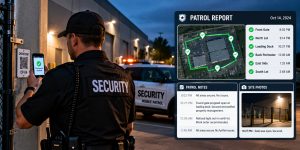
Every incident should be written up, including the ones that were resolved in two minutes. The report covers what happened, when, who was involved, what officers did, and who was notified.
This feels like a formality until you need it. Insurance claims need it. Venue disputes need it. Anything that turns into a legal matter months later needs it, and memory will not be enough by then. Written reports also protect the officers and the host by showing that a situation was handled according to an agreed procedure rather than improvised.
Ask for incident reports as part of the service, and ask when you will receive them.
If the Room Has to Empty
Rare, but it belongs in the plan. Fire alarms, weather, power failures, and threats all end with the same requirement, which is getting everyone out in an orderly way.
Officers should know the exits, including the ones guests do not use. They should know where people are meant to gather outside and how a headcount gets taken if one is needed. Someone should be assigned to guests who cannot move quickly on their own. None of this takes long to work out beforehand, and there is no working it out in the moment.
The Part That Does Not Get Noticed
The best outcome of hiring officers is that nothing in this article ever becomes relevant to your event. That is what the money buys, and it is difficult to see when it works.
What you can see is the preparation. A team that has walked your venue, knows the layout, has written post orders, and has told you exactly who decides what during the event is a team that is ready for the version of the night that does not go to plan. That readiness is worth asking about before you book, because you will not be able to assess it once the event has started.
For smooth events that never need incident response, see what special event security does before the doors open. And if you are planning a celebration at a private residence rather than a venue, learn what changes when security covers a home event.