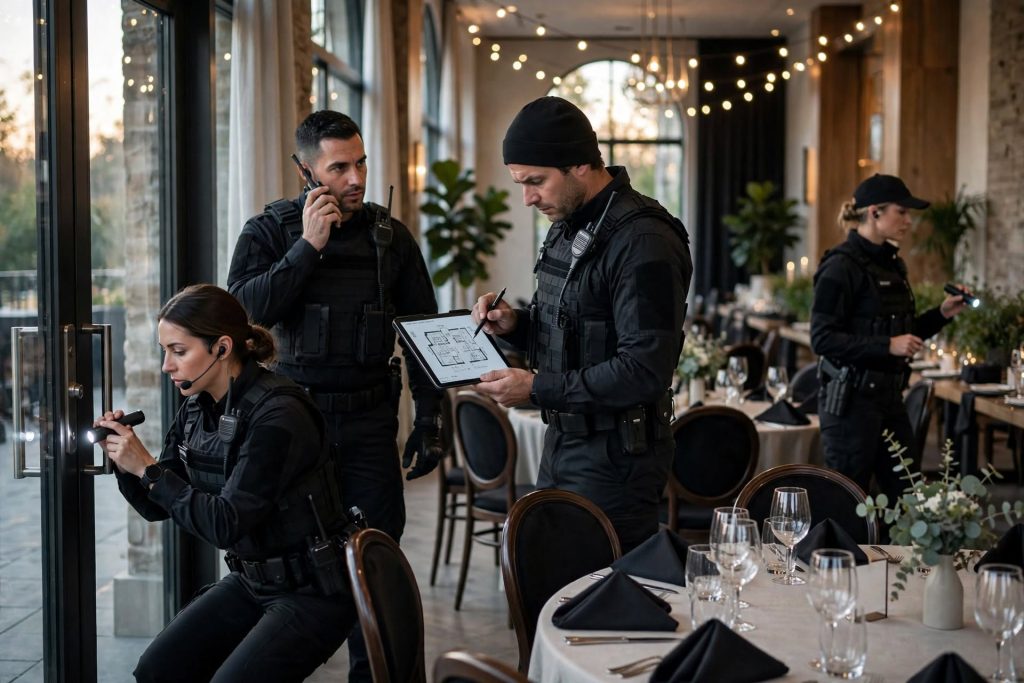
By the time guests arrive, the part of the job that decides how the night goes is already finished. Special event security guards are visible during an event, standing at doors and walking the floor, and that visible presence is what most people picture when they hire them. The work that actually prevents problems happens in the days and hours before anyone shows up. If that work gets skipped, officers spend the event reacting to things that could have been settled in advance.
Here is what should be happening before the doors open, and what it looks like when it is done right.
The Site Walk
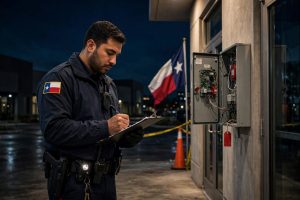
Someone from the security team should walk the venue before the event. Not look at photos, not review a floor plan, walk it.
The walk answers questions that a diagram cannot. How many doors are there, including the ones staff use and the ones that are supposed to stay locked? Where does the loading dock sit relative to the guest entrance? Can you see the parking lot from inside the building? Which hallways lead somewhere and which ones dead-end into a storage room that someone could slip into? Where are the restrooms, and are they on the way to anything a guest should not reach?
The walk also catches the things nobody mentions. A propped fire door that staff use for smoke breaks. A gate in the fence line that the venue forgot about. A second parking area on the far side of the property with no lighting. These come up on foot and almost never come up on a call.
For outdoor events and properties without permanent security, the walk matters more, because there is no existing setup to work from.
Post Orders
Post orders are the written instructions for each position. They say where the officer stands, what that officer is responsible for, what falls outside the role, who gets contacted when something happens, and what gets documented.
This sounds like paperwork and it is the single thing that most separates a detail that works from one that does not. Without written orders, every officer applies personal judgment to situations the host may already have decided how to handle. One officer turns away a guest whose name is spelled differently on the list. Another lets him in. The host finds out about both the next day.
Post orders should be built with the host, not handed to the host. The people running the event know things the security company does not, including which family member is not welcome, which vendor is allowed backstage, and what the plan is if a particular guest has too much to drink.
Access Planning & Credentials
Every event has people who belong in places guests do not. Vendors, catering staff, photographers, performers, and venue employees all move through areas that are otherwise closed.
Before the event, someone needs to decide how officers will tell those people apart from everyone else. Wristbands, lanyards, a printed list at the service entrance, or a vendor contact who vouches for their own crew all work. What does not work is deciding at seven in the evening while a florist stands at a locked door with an armful of centerpieces.
The same applies to the guest list itself. If entry depends on a list, the list needs to exist in a usable form before the event, with a plan for the plus-ones, the late additions, and the people who insist they were invited. Someone from the host side should be reachable to settle disputes, because an officer should not be the one deciding who gets to attend a wedding.
Coordinating With the Venue & the Vendors
Most venues have their own staff, their own rules, and sometimes their own security. Officers who show up without having spoken to them spend the first hour working out who does what.
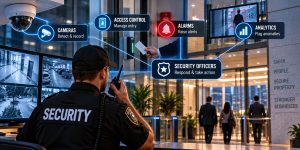
That conversation should happen beforehand. It covers which doors venue staff will manage, who holds keys, what the venue’s own policy is on removing a guest, how the fire marshal capacity is enforced, and who to find when something needs a manager. If the venue has cameras, it is worth knowing who is watching them and if anyone is watching them at all.
Vendors matter for a different reason. Caterers and production crews prop doors, park in odd places, and leave equipment near exits. Knowing their schedule in advance means officers can plan around it instead of chasing it.
The Pre-Shift Briefing
Officers assigned to an event should be briefed before they take their posts, not while they are standing on them.
A briefing covers the schedule, the layout, the post assignments, the guest count, the alcohol situation, and anything the host has flagged. It names the person in charge on the security side and the person in charge on the host side. It confirms how officers will reach each other. It repeats the parts of the post orders that matter most, particularly anything about removing a guest or contacting law enforcement.
It also gives officers a chance to raise things. An officer who worked the same venue last year may know that the side gate does not latch.
Setting the Communication Chain
During an event, decisions have to be made quickly, and the person making them should be established in advance.
That means naming one point of contact on the host side who can approve things in the moment. It means officers having a way to reach each other that works, which usually means radios rather than phones, because a phone in a pocket at a loud event is useless. It means everyone knows who calls emergency services if it comes to that, so that either one person calls or nobody assumes someone else already did.
Load-In Coverage
The hours before doors open are among the more exposed windows of any event. The venue is open, people are moving in and out, equipment and gifts and cash boxes are being set down in rooms nobody is watching, and the security posture that will exist at eight o’clock does not exist yet.
Load-in coverage is often the first thing cut from a quote to save money. It is worth keeping, particularly for events with valuable equipment or anything left unattended between setup and start.
What This Adds Up To
None of this is visible to a guest walking in. What a guest sees is an officer at the door who already knows their name is on the list, who knows where the coat check is, and who does not need to radio anyone to answer a question. That version of the job only exists because of the hours that came before it.
When you are comparing security providers, ask what happens in the week before the event. The answer tells you more than the hourly rate does.
Even with perfect preparation, things can still go sideways. See what happens when something goes wrong at your event. And if your event is a private celebration at a home rather than a venue, learn what changes when security covers a home event.