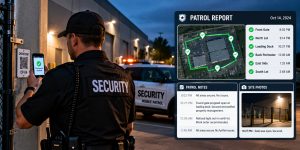

A job site is a property full of valuable material, protected by temporary fencing, unoccupied for sixteen hours a day. Houston runs thousands of them at any given time, spread across a metro area large enough that response times vary by twenty minutes depending on which side of the loop you are on. Construction site security services exist because the standard protections that work on a finished building do not apply to one that is still going up.
Three areas account for most of the loss, and each responds to a different part of the coverage plan.
Copper Theft
Copper is stolen from job sites more than any other material, and the reason is straightforward. It sells quickly, it is difficult to trace, and it sits in accessible places during specific phases of construction.
The exposure follows the schedule. Wire spools staged before rough-in, installed wire before drywall goes up, and copper pipe waiting for connection are all reachable. Once walls close, the exposure drops sharply. That means copper risk is concentrated into a window of weeks rather than spread across the project, and coverage should concentrate with it.
What makes copper theft expensive is not the metal. It is the damage done getting to it. Wire pulled from conduit destroys the conduit. Pipe cut out of a wall takes the wall with it. Replacement cost is a fraction of the rework, and the rework arrives during a phase where crews are already scheduled forward.
Officer presence during the exposed window is the direct answer. So is knowing the schedule, which is why a provider who asks about construction phases is giving you something a fixed patrol contract will not.
Equipment Watch
Heavy equipment and tools are the other reliable target, and they leave in a different way than copper does.
Small tools disappear quietly and in volume. Generators, compressors, saws, and power tools are easy to carry, easy to resell, and easy to lose track of across a site with multiple subcontractors. A lot of this walks off during working hours rather than overnight, which is worth saying plainly, because it changes what coverage would have prevented.
Larger equipment leaves differently. Skid steers, compact excavators, and trailers are taken with vehicles, usually overnight or during a long closure, and usually by people who came prepared. Equipment parked near a gate or a street edge is the easiest to take.
Fuel is a steady loss that most sites never quantify. It disappears in small amounts over long periods, which is exactly why nobody notices until an audit.
Coverage helps in specific ways. Officers checking equipment at the start and end of each round create a record of what was where and when. Gate logs make it possible to reconcile who was on site when something went missing. Positioning equipment away from the fence line and toward the interior of the site is a free change that officers can recommend after walking it.
After-Hours Patrol
Most construction loss happens when nobody is there, and in Houston that means nights, weekends, and the long holiday closures that come twice a year.
Patrol is usually the right structure for this rather than a stationed officer. Rounds at randomized intervals put presence on the property without paying for someone to stand on it for twelve hours, and randomized timing matters more than frequency. A patrol that arrives at the same time each night tells an observer exactly how long they have.
What officers do on a round is worth specifying. Walking the fence line for breaches. Checking gates and locks. Inspecting material laydown areas against what should be there. Verifying equipment is where it was left. Looking at the areas that are exposed during the current phase rather than following a route written at the start of the project.
Weekend and holiday coverage deserves separate attention. A site closed from Thursday evening to Monday morning gives someone three full days, and the first thing they establish is that nobody is coming.
Access Control During Working Hours
Daytime coverage does different work. An active site has subcontractors, deliveries, inspectors, and vendors moving through, often in numbers where nobody on site knows everyone by face.
A staffed gate logs arrivals, checks in subcontractors, verifies deliveries against what was expected, and turns away people with no reason to be there. That log becomes useful the moment something is missing, because it narrows a question that is otherwise unanswerable.
Access control also prevents a category of loss that gets attributed to theft when it is something else. Material taken by a subcontractor for another job, or a delivery signed for that never arrived in full, both show up as missing inventory.
Adjusting as the Project Moves
A site in month two and the same site in month ten are different security problems, and a coverage plan written once at the start will be wrong for most of the project.
Sitework and foundation phases have equipment exposure and little material. Framing and rough-in bring copper and lumber. Finish phases bring appliances, fixtures, and HVAC units, along with more subcontractors moving through daily. Each shift changes both what is worth taking and where it sits.
The practical approach is to review coverage against the schedule, increase it after large material deliveries and ahead of extended closures, and reduce it during phases where exposure genuinely drops. That requires a provider willing to change hours in both directions rather than holding a fixed contract.
Reporting That Feeds the Plan
Officer reports are the input that makes any of this improve. Fence damage recurring at the same point, vehicles appearing on multiple nights, activity concentrated on one side of the property, and losses following a delivery schedule all appear in written reports before they appear as a claim.
Reading those reports weekly, rather than filing them, is what separates a patrol schedule from a security plan. The patterns tell you where the next adjustment belongs, and adjusting on that basis costs considerably less than replacing what was taken.
Protecting an active jobsite? See our construction site security services in Houston.