
Marked mobile patrol, alarm response, and lock-up for Houston business, construction, and residential sites. A visible officer who shows up on a randomized schedule, checks the property on foot and by vehicle, documents every round, and responds when an alarm trips, for a fraction of a full-time guard.
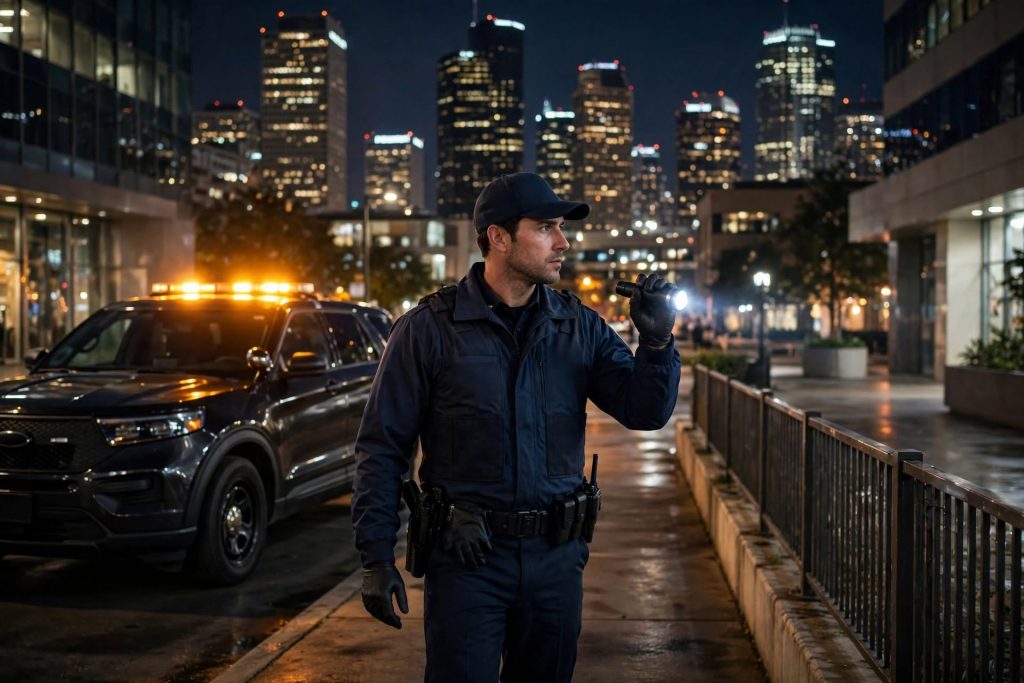
Not every property needs an officer standing post all day. A vacant building, a construction yard, a strip center after close, or a property manager with a dozen sites needs something different: a visible presence that comes and goes, checks the property, and is there when an alarm trips, without the cost of a guard on site around the clock.
God’s Armour Security provides mobile security patrol across Houston, with marked vehicles, randomized rounds, and officers licensed through the State of Texas, insured, and bonded. Every round is GPS-tracked and documented, so you are not paying for a drive-by you cannot verify. You are getting coverage you can see, with a record to prove it.
Mobile patrol fits the properties that need a presence and a response, not a post. These are the sites we cover most.
Empty buildings, closed businesses, and properties between tenants that are most exposed when no one is there.
Property managers and owners with several locations that one patrol route can cover on a schedule.
Job sites, equipment yards, and lay-down areas where theft happens overnight and on weekends.
Strip centers, shops, and offices that need after-hours checks and a visible deterrent on the lot.
Residential communities that want overnight rounds of the grounds, garages, and amenities without a staffed desk.
Plants, distribution sites, and fleet yards with large perimeters and after-hours exposure.
A patrol round is a checklist, not a lap of the parking lot. These are the points an officer works on every visit.
Fence lines, gates, and entry points checked for forced entry, tampering, or anything left open.
Doors and windows checked and secured, with lock-up and unlock handled as part of the schedule.
Burned-out lights, open gates, leaks, and other hazards flagged for management before they become a problem.
People on the property who do not belong there, moved along and documented, with police called when needed.
Parked vehicles, machinery, and materials checked for break-ins, theft, and catalytic converter cutting.
Open-door, motion, and intrusion alarms responded to and verified on site, fast.
Mobile patrol is more than a car driving past. It is a documented round, a real response, and a record you can check.
Marked-vehicle checks at varied times so the schedule is never predictable to someone watching the site.
A fast on-site response to alarm activations, to verify the trigger and act before a false alarm wastes a police call.
Opening and securing a property on schedule, so doors are never left unlocked overnight or over a weekend.
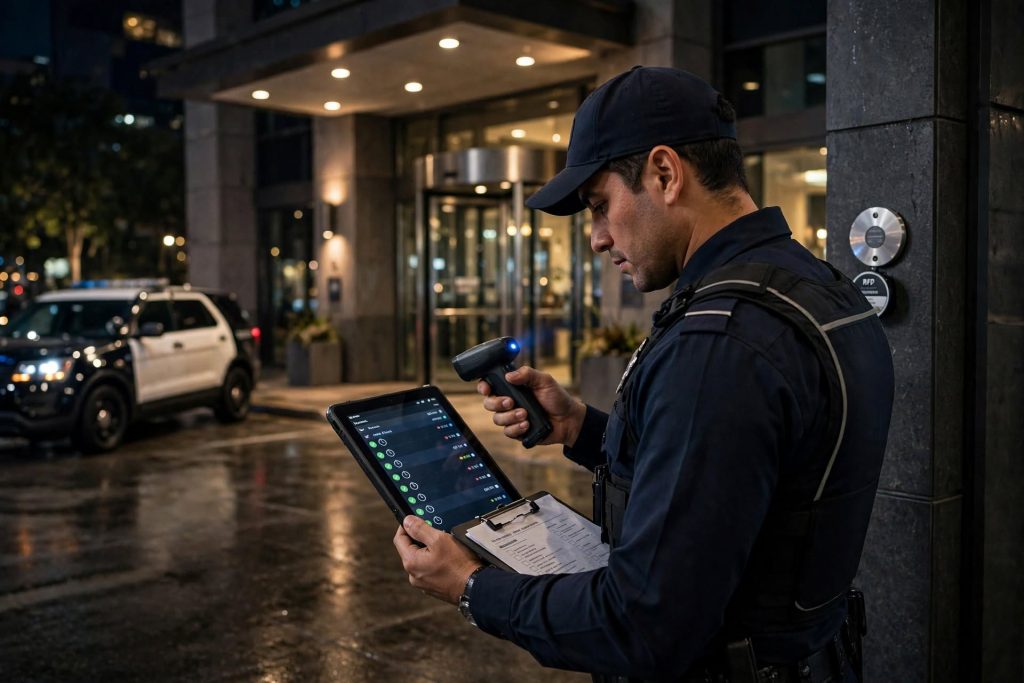
Every round GPS-tracked, with checkpoint scans that prove the officer covered the whole property, not just the gate.
Timestamped reports with photos and notes on every visit and incident, available to management.
A clear call tree for when to involve Houston police, the fire department, or your on-call contact.
A real patrol round follows the same disciplined steps every time, and leaves a record of each one.
The officer arrives at a varied time, so the visit never falls into a pattern a thief can plan around.
A GPS and checkpoint check-in marks the start of the round and ties it to the property.
Fence lines, gates, doors, lighting, and the lot swept for anything out of place.
Extra attention on the high-risk spots a site has, from a loading dock to a row of parked fleet.
A timestamped report with photos and any action taken, filed before the officer leaves.
Vehicle patrol covers distance. It moves an officer between buildings, lots, and the perimeter fast, puts a marked vehicle on the property as a visible deterrent, and lets one route reach several sites in a night. But a drive-through is not an inspection on its own.
So the officer gets out for the checks that matter: a door behind a structure, a stairwell, a garage level, a fence breach. We also set the timing to the site: scheduled rounds for a known window like a close, randomized rounds so after-hours coverage is never predictable, or a blend of both.
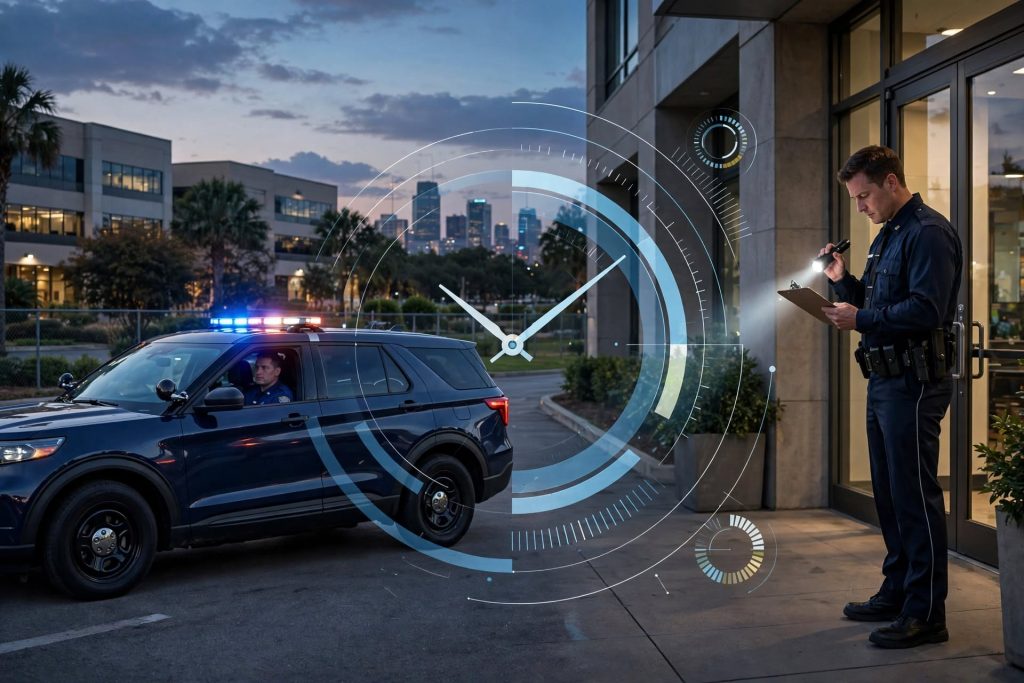
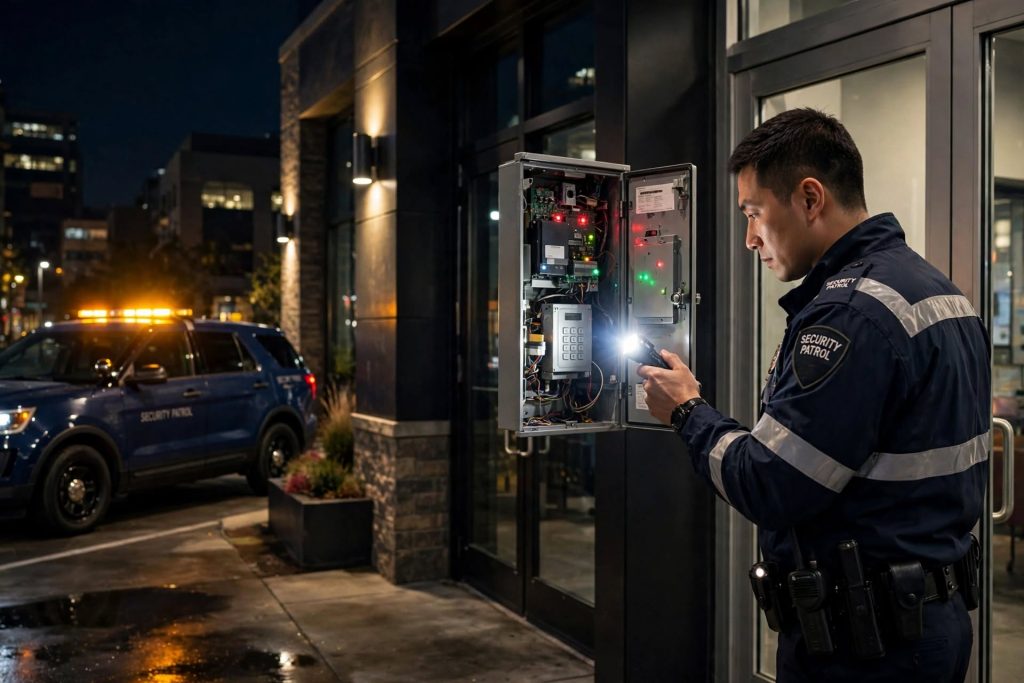
Most alarm activations are false, a door left open, a storm, an animal, and most police departments triage property-alarm calls to the bottom of the queue because of it. That leaves a gap: the one time the alarm is real, the response is slow, and the false alarms in between can cost a business in fines.
A patrol officer closes that gap. When your alarm trips, we dispatch to the site, verify what set it off, secure the property, and escalate to Houston police only when it is a real event, with documentation either way. Fewer false-alarm costs, and a real response the one time it counts.
Related guide: How Mobile Patrol Alarm Response Works
The problem with a lot of patrol services is you cannot tell if the car actually showed up. A quiet site looks the same if it was checked at 2 a.m. and the same if it was skipped. That is why documentation is not a nice-to-have, it is the whole point.
Every one of our rounds is GPS-tracked, with checkpoint scans at set points around the property and timestamped reports with photos. You get a record of when the officer arrived, where they went, what they found, and what they did, so you know the coverage you pay for is the coverage you get.
Mobile patrol is not always the answer, and neither is a full-time guard. Here is how the options actually compare.
Scheduled and random visits with real response, for sites that need a presence and coverage without a full-time post.
A fixed officer on site for properties that need continuous presence, access control, and an immediate response.
Rounds paired with your cameras and alarms, so the technology flags and a person verifies and responds.

If you manage several properties, a dedicated guard at each one is rarely the right spend. A patrol route can cover a dozen sites a night, giving each one a visible presence and a documented check for a fraction of the cost of staffing them all.
We build the route around your portfolio, set the number of visits each site needs, and give you one stream of reports across all of them. You see every round at every property in one place, and you have one accountable vendor and one direct line instead of a dispatch queue.
Most providers hide this behind a form. Here is how patrol coverage is priced in the Houston market, so you can plan before you call.
Marked-vehicle checks at scheduled and random times, with per-visit pricing that drops across a multi-site route.
A scheduled visit to open or secure a property, on its own or added to a patrol route.
A dispatched officer to verify and respond to an alarm, billed per call-out or built into a contract.
Per-visit cost drops as sites and visits are added to a route. Dedicated overnight coverage is quoted by the hour. Your final quote follows a review of the sites and the schedule.
God’s Armour Security is a family-owned company based in the Houston area, licensed, insured, and bonded, and staffed by officers licensed through the State of Texas. On patrol that difference shows: an officer who works a real round, documents it, and responds to an alarm like it matters, instead of a drive-by you cannot verify.
When you call, you reach our leadership directly, not a national dispatch line. Our officers know Houston, from Downtown and the Energy Corridor to the East End and the Ship Channel, and we build a patrol route that fits your sites and the hours they are most exposed.

Patrolling Houston
Rounds and alarm response
Tracked and documented
Texas licensed officers
In the Houston market, scheduled patrol rounds generally run from about $40 per visit, lock-up or unlock visits from about $35, and alarm response from about $75 per call-out. Per-visit cost drops as sites and visits are added to a route, and dedicated overnight coverage is quoted by the hour. We set the final quote after reviewing the sites and schedule.
It depends on the property, its hours, and its risk. Some sites do well with one or two overnight rounds, while a higher-risk or vacant site may need several. We set the frequency with you and keep the timing randomized so the visits are never predictable.
Both. Vehicle patrol covers distance and multiple sites and puts a marked vehicle on the property as a deterrent, while foot checks cover the doors, stairwells, garage levels, and blind spots a drive-through cannot inspect. We set the mix to the site.
Every round is GPS-tracked with checkpoint scans at set points around the property and timestamped reports with photos. You get a record of when the officer arrived, where they went, and what they found, so the coverage you pay for is the coverage you get.
Yes. When your alarm trips, we dispatch to the site, verify what set it off, secure the property, and escalate to Houston police only when it is a real event. On-site verification cuts the false-alarm calls that lead to fines.
Yes. Opening and securing a property on schedule is part of patrol, on its own or added to a route, so doors are never left unlocked overnight or over a weekend.
Yes. A single route can cover multiple sites a night, with the visit frequency set per property and one report stream across the whole portfolio. For property managers, that is far less than staffing each site.
For most sites, yes. Mobile patrol gives a visible presence, documented rounds, and alarm response for a fraction of a full-time guard. A high-traffic or high-risk site that needs continuous presence may still be better served by a dedicated officer.
Yes. God’s Armour Security is licensed, insured, and bonded, and every officer is licensed through the State of Texas. We build the patrol plan that fits your sites.
Tell us the property type, the number of sites, and the hours and coverage you are considering. We review it the same business day and put together a patrol route and proposal. You can also explore our Security Patrol articles for more guides on mobile patrol vs stationed guards, GPS reporting, and patrol costs.
Prefer to call?